
Pengi Editor's Note
The Pengi editorial team selected this Think Academy guide to early childhood social-emotional development. The five practical strategies are grounded in child development research and are directly applicable for parents and early childhood educators.
Source: Think Academy Blog
5 Effective Strategies to Foster Early Childhood Social-Emotional Development
Nurturing early social-emotional development lays a crucial foundation for children’s future success. It equips them with essential skills to navigate their emotions, form meaningful connections, respect boundaries, and thrive in group settings. In this article, we will explore five effective strategies that parents can implement at home to support their children’s growth during their early childhood years.
What Is Social-Emotional Development?
Social-emotional development is a crucial aspect of a child’s growth during the critical early years. It involves substantial brain development and the acquisition of essential skills that encompass regulating and expressing emotions effectively, forming meaningful relationships, exploring the environment, and cultivating a passion for learning. For instance, a significant part of this development is a child’s ability to establish and maintain important relationships with both adults and peers, which plays a vital role in shaping their social skills and emotional well-being.
How to Foster Social-Emotional Development
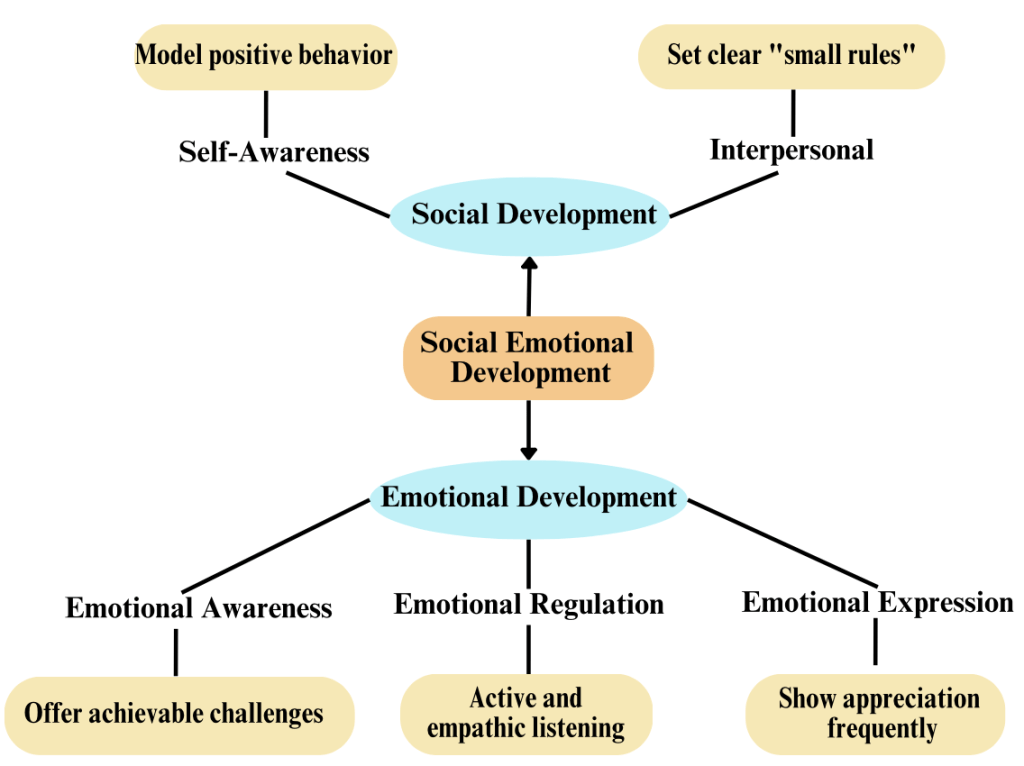
The social-emotional development of children is greatly influenced by the emotional expression and interaction styles of family members. Creating a trusting, supportive, and respectful environment at home is essential for this development. Here are five effective strategies for parents to keep in mind when interacting with their children:
1. Model Positive Behavior
Children learn by observing their parents’ behavior in relationships. Leading by example, such as apologizing when wrong and showing kindness to others, helps instill these qualities in children. Simple gestures like being polite and saying “hello” and “thank you” to people around them can make a significant impact.
2. Set Clear “Small Rules”
Introduce clear and concise rules that teach young children about order in social life. Instead of complex concepts, straightforward rules like “line up when buying candy” or “no shouting during a movie” help children gradually understand respect for others and basic social norms.
3. Engage in Active and Empathic Listening
Active and empathic listening is a powerful tool for parents to guide their children through intense emotions. Using gentle touches, maintaining eye contact, and leaning in provide comfort and create a safe space for children to express themselves. This fosters understanding, confidence, and a sense of security.

4. Offer Achievable Challenges
Encourage children to tackle achievable tasks that promote persistence and resilience. For instance, working together to build a LEGO tower and providing verbal encouragement when they feel frustrated, such as saying “You can do it” or “Keep trying, you’re almost there,” fosters a sense of accomplishment and responsibility.

5. Show Appreciation Frequently
Consistently expressing gratitude and kindness plays a vital role in nurturing children’s positive outlook on life. Each moment presents an opportunity to share kindness, whether it’s during a family meal or nap time. By modeling gratitude, parents effectively teach children the value of appreciating the people and things in their lives. For instance, a simple act like saying “Thank you for the delicious food” can instill a genuine sense of gratitude in children.
Final Words
Early social-emotional development is built through daily interactions, routines, and small challenges that help children develop focus, patience, and confidence. Alongside play, conversation, and emotional guidance, simple, structured activities can also support these skills by giving children opportunities to try, persist, and feel successful.
If you’re looking for a low-pressure resource to use at home, Think Academy offers free, downloadable math worksheets for PreK through Grade 10. For young children, these worksheets focus on early thinking skills like matching, sorting, patterns, and counting—activities that naturally support concentration, self-regulation, and a sense of accomplishment.
Try Pengi AI — Smarter Math Practice for Students
Pengi AI supports K–12 learners with personalized math practice, guided explanations, and feedback designed to help them build confidence and improve steadily.