
Pengi Editor's Note
The Pengi editorial team curated this Think Academy guide to afterschool program selection. The comparison framework and question list give parents a structured way to evaluate options — especially helpful when choosing between academic, enrichment, and hybrid afterschool formats.
Source: Think Academy Blog
Afterschool Programs: Navigating and Choosing the Perfect Fit for Your Child
In early childhood education, afterschool programs are a game-changer. For parents, it’s a flexible ally in managing time with their children, especially for dual-working families. Explore the transformative influence of quality afterschool programs on kids—building study habits, reinforcing academics, and sparking diverse interests. Let’s delve into the world of afterschool programs, providing a comprehensive guide to understanding, finding, and selecting the right program for your child. From unraveling the essence of afterschool initiatives to offering tips and resources for your exploration, we aim to empower you in making informed decisions for your child’s education.
What is an Afterschool Program?
In the USA, an afterschool program is an organized initiative providing activities and support for students beyond regular school hours. Aimed at enhancing academic performance and fostering development, these programs typically operate in the late afternoon and early evening. The schools or the providers usually offer a range of activities, including homework assistance, arts, and sports, creating a structured and supportive environment for students after the traditional school day.
How Do I Find Afterschool Programs Near Me?
Afterschool programs in the U.S. can be grouped into fee-based and nonprofit/public service categories. Fee-based programs require payment, while nonprofit options often provide low-cost or free services. They further differ based on collaboration with schools or independence; collaborative programs align with school curricula, while independent providers operate separately. These programs cover a range of focuses, including academics, arts, sports, and STEM.
Resource Hub: Recommended Afterschool Platforms
The following resources can help you identify suitable afterschool programs for children in your neighborhood:
Tips for Choosing Afterschool Programs
- Choose school-provided or school-affiliated afterschool programs for better alignment and support with the students’ in-school learning environment.
- Consider the curriculum offered by afterschool programs; opt for those with diverse and engaging activities to capture the child’s interest and provide a well-rounded experience.
- Prioritize programs with a focus on a balance between academic support and extracurricular activities to ensure comprehensive development and a positive afterschool experience.
Afterschool Program Schedules
A typical afterschool program schedule includes dedicated time for homework assistance, engaging enrichment activities like arts or sports, a nutritious snack break, outdoor play for recreation, and occasional specialized workshops. This balanced schedule aims to support academic growth while fostering creativity, physical activity, and overall personal development for participating children.
In examining daily schedules, afterschool program providers generally offer similar curricula. However, differences arise in factors like teacher-to-student ratios, staff qualifications, and enrichment depth. Fee-based programs often provide more enriching content and a wider array of activities.
Think Together
Taking Think Together as an example, a provider collaborating extensively with LAUSD, let’s explore the specific schedules of their afterschool projects. Think Together’s Afterschool Programs prioritize the safety of children while offering essential homework support and dynamic learning opportunities in various subjects.
Daily Schedule:
- 2:30 PM – 3:00 PM: Student sign-in.
- 3:00 PM – 3:10 PM: Students transfer to the classroom
- 3:10 PM – 4:30 PM: Engaging students in activities focused on their homework and enrichment learning activities.
- 4:30 PM – 4:50 PM: Enjoying the nutritious snack.
- 4:50 PM – 5:20 PM: Participating in outdoor sports and activities.
- 5:30 PM – 6:00 PM: Parent pickup.
SFUSD
Beyond reaching out to nonprofit after-school program organizations like Think Together, consider exploring reputable providers by visiting your school district’s official website. Using SFUSD as an example, the district’s website features a “List of Before and After School Programs,” where parents can discover contact details for after-school program providers tailored to their child’s school.
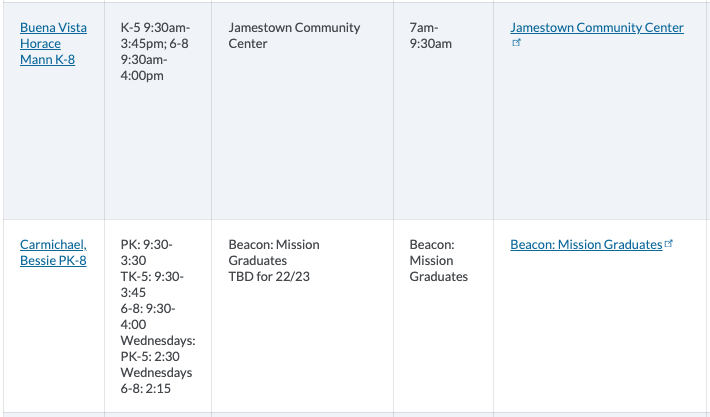
A Partial List of Before and After-School Programs of SFUSD
Eager to discover additional practical and efficient tips for early childhood education and parenting tips? Delve into the following articles that are sure to pique your curiosity!
- Before & After School Programs: Elevating Your Child’s Social Emotional Learning Skills
- Cultivating Child’s Social-Emotional Skills at Home: Guidance for Homeschooling Parents
Afterschool programs play an important role in building routines, supporting homework, and keeping children engaged after the school day ends. At the same time, many families look for simple ways to reinforce learning at home—especially on days when schedules are tight or afterschool options are limited.
If you’re looking for a low-commitment, flexible resource, Think Academy offers free, downloadable math worksheets for PreK through Grade 10. These grade-aligned worksheets are designed to support core skills, build good study habits, and help children practice independently at their own pace—whether alongside an afterschool program or at home.
Pengi AI — AI-Powered Math Tutoring
- Grades: K–12
- Format: AI-powered personalized tutoring, available 24/7 on any device
- Price: Free to start
- Features: Adaptive learning paths, step-by-step explanations, competition prep (AMC 8, AMC 10, MATHCOUNTS, Math Kangaroo), school curriculum coverage
- Best For: Students who want flexible, on-demand support — from core math skills to competition-level prep
- Pros: Always available, adapts to individual pace and level, covers both school math and competitions
- Cons: AI-based tutoring (no live human instructor)
Try Pengi AI — Smarter Math Practice for Students
Pengi AI supports K–12 learners with personalized math practice, guided explanations, and feedback designed to help them build confidence and improve steadily.