
Pengi Editor's Note: This article was originally published by Think Academy. We're sharing it here for educational value. Think Academy is a leading K-12 math education provider.
How to Divide 2-Digit by 1-Digit Numbers in 3 Easy Steps
Long division can seem complicated at first, but with a clear step-by-step process, dividing 2-digit numbers by 1-digit numbers becomes manageable. This guide walks through the method with worked examples.
What Is Division?
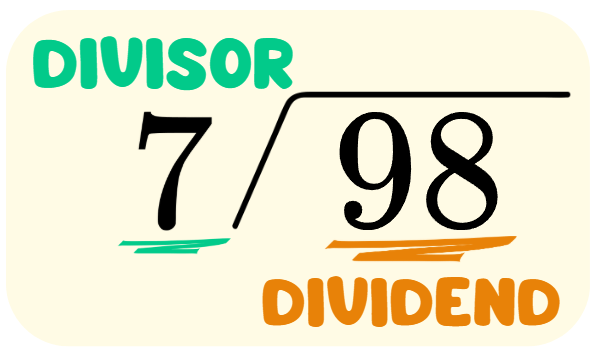
Division is splitting a number into equal groups. When we divide 84 ÷ 4, we're asking: "How many groups of 4 are in 84?"
The 3-Step Process: Divide, Multiply, Subtract (and Bring Down)
The steps in long division follow the pattern: D-M-S — Divide, Multiply, Subtract (then Bring Down if needed).
Example 1: 84 ÷ 4
Step 1: Divide
Look at the first digit: 8
Ask: How many times does 4 go into 8?
4 goes into 8 exactly 2 times
Write 2 above the 8.
Step 2: Multiply
2 × 4 = 8
Write 8 below the 8.
Step 3: Subtract
8 − 8 = 0
Bring down the next digit: 4
Now you have 04 (or just 4).
Repeat:
How many times does 4 go into 4? → 1 time
1 × 4 = 4
4 − 4 = 0
Answer: 84 ÷ 4 = 21
Example 2: 75 ÷ 5
Step 1: Divide
Look at 7: 5 goes into 7 once (5 × 1 = 5)
Write 1 above the 7.
Step 2: Multiply
1 × 5 = 5
Step 3: Subtract
7 − 5 = 2
Bring down the 5 → now have 25.
Repeat:
5 goes into 25 5 times (5 × 5 = 25)
25 − 25 = 0
Answer: 75 ÷ 5 = 15
Example 3: Division with a Remainder — 67 ÷ 4
Step 1: Divide
4 goes into 6 once (4 × 1 = 4)
Write 1 above the 6.
Step 2: Multiply
1 × 4 = 4
Step 3: Subtract
6 − 4 = 2
Bring down the 7 → now have 27.
Repeat:
4 goes into 27 6 times (4 × 6 = 24)
27 − 24 = 3
Answer: 67 ÷ 4 = 16 remainder 3 (or 16 R3)
As a fraction: 67 ÷ 4 = 16¾
Example 4: When the First Digit Is Smaller Than the Divisor — 36 ÷ 8
Step 1:
8 doesn't go into 3 (3 < 8), so look at both digits: 36.
8 goes into 36 4 times (8 × 4 = 32)
Write 4 above the 6 (the second digit).
Step 2: Multiply
4 × 8 = 32
Step 3: Subtract
36 − 32 = 4
Answer: 36 ÷ 8 = 4 remainder 4 (or 4 R4)
Tips for Success
- Know your multiplication tables: Division relies on multiplication — strong times tables make division much faster.
- Estimate first: Before dividing, estimate the answer. 84 ÷ 4 is roughly 80 ÷ 4 = 20. This helps you check if your answer is reasonable.
- Check your work: Multiply your answer by the divisor and add the remainder. The result should equal the original number. (16 × 4 = 64; 64 + 3 = 67 ✓)
Practice Problems
- 96 ÷ 3 = ?
- 72 ÷ 6 = ?
- 85 ÷ 7 = ?
- 54 ÷ 9 = ?
- 91 ÷ 8 = ?
Want more printable practice?
Explore the K–12 Worksheets Hub
Try Pengi AI — Smarter Math Practice for Students
Pengi AI supports K–12 learners with personalized math practice, guided explanations, and feedback designed to help them build confidence and improve steadily.