Pengi Editor's Note: This article was originally published by Think Academy. We're sharing it here for educational value. Think Academy is a leading K-12 math education provider.
How to Solve One-Step Linear Equations | Grade 5–6
Solving one-step linear equations is often the first big hurdle in algebra. Many students struggle with the idea of inverse operations and how to keep both sides of an equation balanced. With a few simple strategies, this concept becomes much easier to understand and apply.
What Is an Equation?
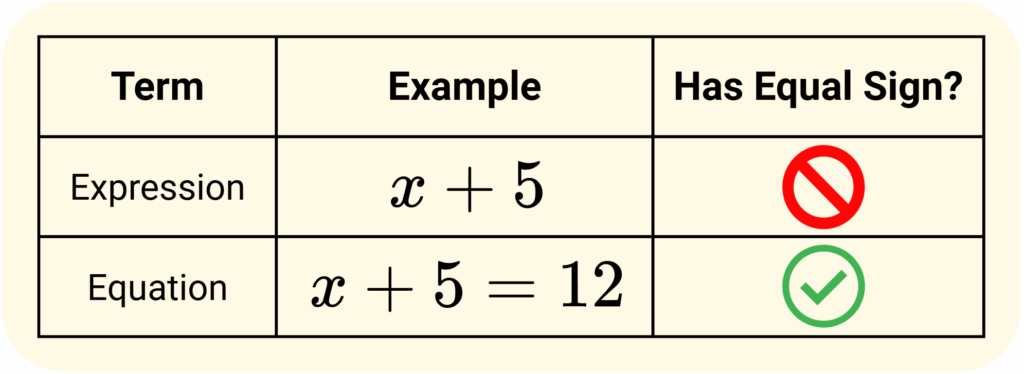
An equation is a mathematical sentence that says two expressions are equal. It has an equal sign in the middle.
Example:
𝑥 + 5 = 12
Here, 𝑥 + 5 is equal to 12.
Expression vs. Equation: What’s the Difference?
An expression includes constants (numbers), variables (letters that stand for unknown values), and operations like addition, subtraction, multiplication, or division. It does not have an equal sign.
For example:
𝑥 + 5
What Is a Solution?
A solution is the number that makes the equation true.
For example, in:
𝑥 + 5 = 12
the solution is 𝑥 = 7, because 7 + 5 = 12.
How to Solve One-Step Linear Equations?
Solving One-Step Equations with Addition
If the equation has subtraction, use addition to solve.
Example:
𝑥 − 8 = 3
To undo “− 8 “, add 8 to both sides:
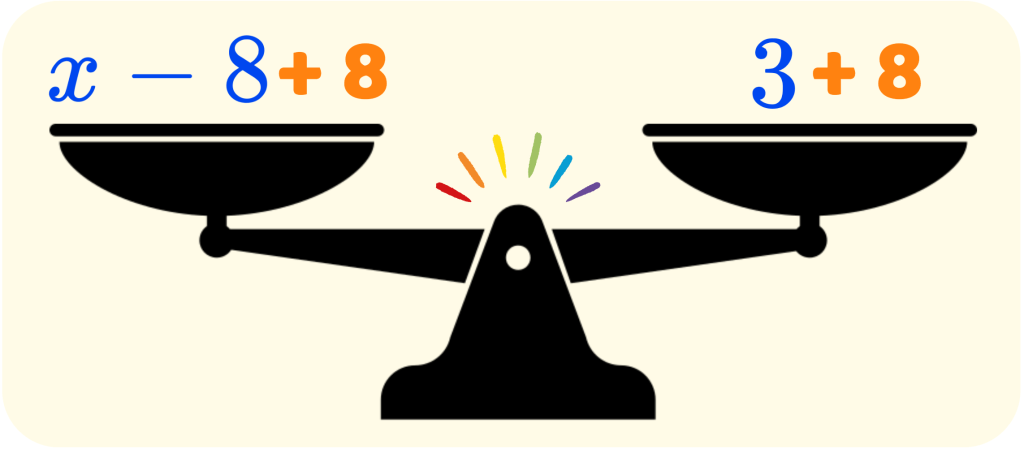
𝑥 = 11
Solving One-Step Equations with Subtraction
If the equation has addition, use subtraction to solve.
Example:
𝑥 + 9 = 15
Subtract 9 from both sides:
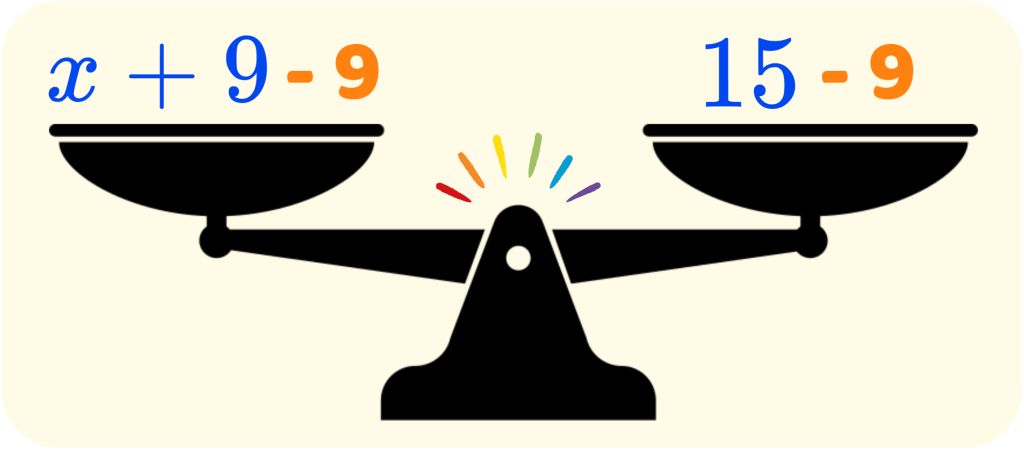
𝑥 = 6
Solving One-Step Equations with Multiplication
If the equation has division, use multiplication to solve.
Example:
𝑥 ∕ 4 = 5
Multiply both sides by 4:
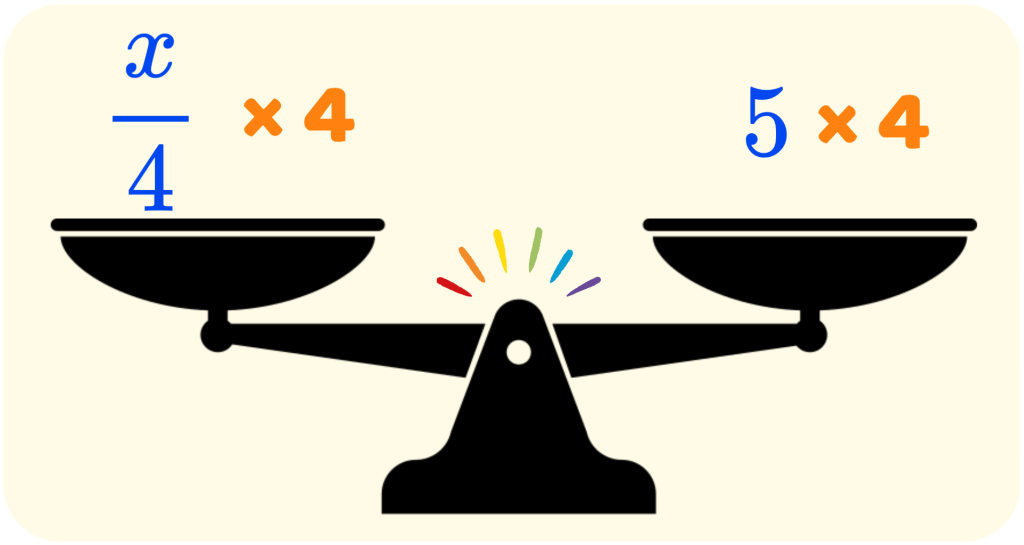
𝑥 = 20
Solving One-Step Equations with Division
If the equation has multiplication, use division to solve.
Example:
7𝑥 = 35
Divide both sides by 7:
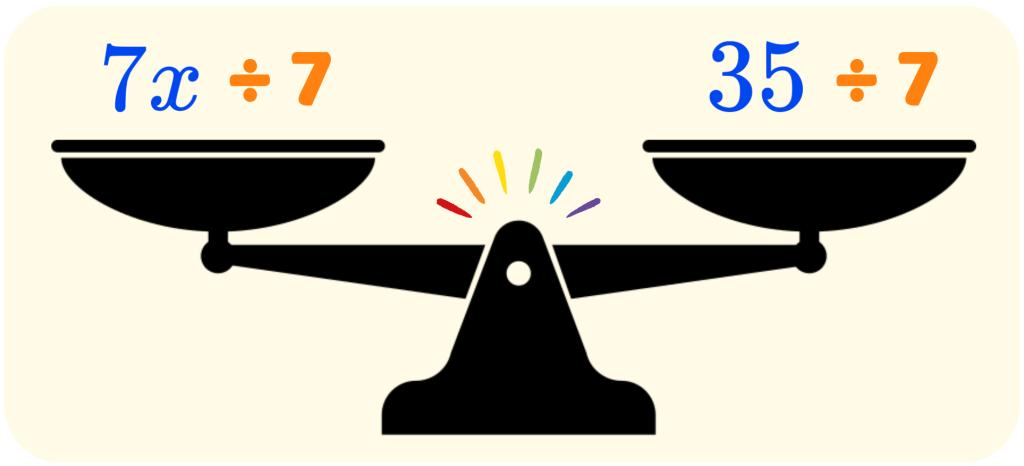
𝑥 = 5
Example Problems: Solving One-Step Equations
Example 1
Find the solution to the equation.
𝑥 + 13 = 25
Solution:
Subtract 13 from both sides:
𝑥 + 13 − 13 = 25 − 13
𝑥 = 12
Put it back into the equation: 12+13=15.
The answer is checked.
Example 2
The area of a rectangle is 24. One of its sides is 8 and the other is 𝑎. Express the area of the rectangle in terms of 𝑎, then solve for 𝑎.
Solution:
Area = Length × Width
8𝑎 = 24
8𝑎 ÷ 8 = 24 ÷ 8
𝑎 = 3
Check: 8 × 3 = 24
Summary: Keys to Solving One-Step Equations
- An equation shows that two expressions are equal using an equals sign.
- An algebraic expression is a mathematical phrase without an equal sign.
- The solution makes the equation true.
- To solve a one-step equation, do the opposite operation on both sides:
- If it’s addition → do subtract.
- If it’s subtraction → do add.
- If it’s multiplication → do divide.
- If it’s division → do multiply.
- Always check our answer by putting it back into the equation.
Additional Math Topics Grade 6 – with Free Worksheets
Want more printable practice?
Try Pengi AI — Smarter Math Practice for Students
Pengi AI supports K–12 learners with personalized math practice, guided explanations, and feedback designed to help them build confidence and improve steadily.