Pengi Editor's Note: This article was originally published by Think Academy. We're sharing it here for educational value. Think Academy is a leading K-12 math education provider.
Is Geometry Hard? Why It’s a Critical Step in Middle School Math
Geometry: The Turning Point in Middle School Math
When students transition from arithmetic and basic algebra into geometry, they often encounter the first real shift in how math works. No longer just about solving for x, geometry introduces visual reasoning, spatial understanding, and structured logic — skills that are foundational for higher-level math and critical thinking across disciplines.
In the U.S. school system, geometry is more than just another math subject — it’s a gatekeeper. It marks the moment where students move from calculating to understanding: from following steps to constructing arguments, from memorizing formulas to proving relationships between shapes, angles, and space.
That’s why many educators and parents see geometry as a “mathematical watershed” — a clear divide between surface-level math proficiency and true mathematical maturity.
Why Geometry Comes Early in Accelerated Tracks
Take a look at top public school districts like Pleasanton Unified in California. In the accelerated or Honors math pathway, students often complete geometry as early as 8th, or 9th grade, depending on readiness.
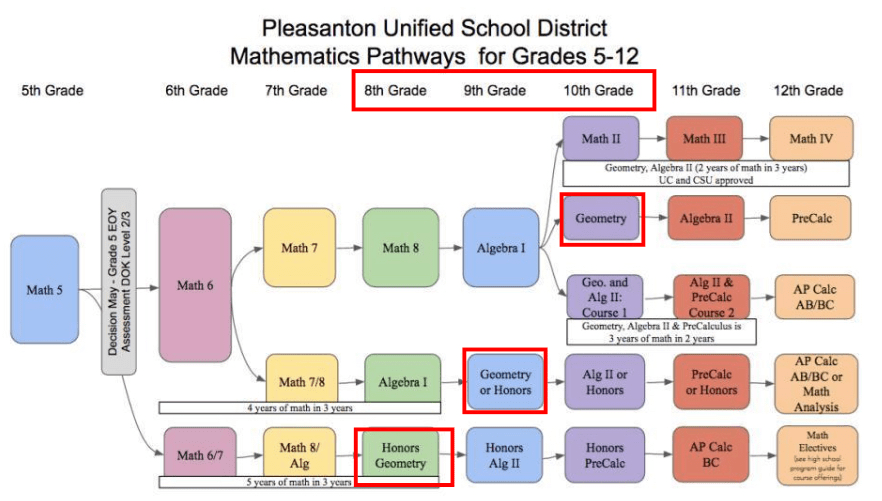
By learning geometry earlier, students are better prepared to:
- Enter Algebra II or Pre-Calculus by 9th or 10th grade
- Take advanced math electives or AP Calculus by junior/senior year
- Tackle AMC 10/12, SAT/ACT, and other standardized exams with confidence
In these cases, geometry becomes the foundation for unlocking advanced opportunities — from Honors placement to national math competitions.
Common Parent Question: What Makes Geometry Hard ?
One of the most common questions parents ask is: “Is geometry harder than algebra?”
The short answer is: not necessarily. Geometry isn’t harder — it’s different.
Why Do So Many Students Struggle with Geometry?
When students first encounter geometry, several challenges often come up. The key reason geometry feels harder than algebra is because the way it’s taught and the skills it requires are very different.
1. Algebra vs. Geometry: Different focus
Algebra is about numbers, Geometry is about shapes.
In algebra, students work with numbers and symbols, focusing on calculations and applying formulas. If you follow the steps, you usually get the right answer. Geometry, however, is all about shapes and spatial relationships. Students need to interpret diagrams and apply formulas in ways that may not be immediately obvious.
- Algebra: You apply formulas directly to solve problems.
- Geometry: You must analyze a diagram, identify relationships, and decide which formulas apply.
This is why geometry can feel more challenging: it requires a completely different way of thinking. It’s not just about plugging numbers into formulas—it’s about recognizing how the parts of a diagram relate to each other.
2. Algebra vs. Geometry: Different approach
Algebra has fixed steps, Geometry is all about logical reasoning and structure.
In algebra, problems typically have fixed steps that lead directly to the answer. For example, when solving an equation, students follow a clear process, and the steps are usually straightforward. In geometry, however, students are often asked to write proofs—which requires clear logical reasoning. Proofs are about showing why something is true, and that process isn’t always as easy to visualize.
- Algebra: You follow a set method to solve an equation.
- Geometry: You need to explain your reasoning step-by-step, and those steps must be logically connected.
A big challenge in geometry is that students often skip steps or don’t know how to structure their proofs, leading to confusion and incomplete answers.
3. Algebra vs. Geometry: Different skills
Geometry requires diagram interpretation, Algebra is about symbolic calculation.
Geometry problems are often based on complex diagrams that students need to quickly interpret. They need to identify angles, lengths, and symmetries—skills that are not always developed in earlier math courses. Algebra problems don’t require students to do this type of visual analysis.
- Algebra: There’s no diagram; the focus is on numbers and symbols.
- Geometry: You must analyze the relationships between different parts of the diagram and think about how to apply formulas to the diagram.
This is why many students feel overwhelmed by complex geometry problems—the diagrams alone can seem intimidating, and they may not know what to look for or how to break the problem down.
4. Algebra vs. Geometry: Different thinking
Algebra is more about rules, Geometry is more about flexible thinking.
In algebra, students often learn rules and step-by-step procedures that are predictable and easy to follow. Geometry, on the other hand, requires flexible thinking. Problems are often multi-step and can require creative solutions, and students must learn how to build logical arguments using formal mathematical language.
The Real Issue Isn’t Difficulty — It’s Missing Tools
So, what’s behind these struggles? The real issue isn’t that geometry is harder—it’s that many students don’t have the right tools to approach it effectively. Here are the three key tools students need to succeed in geometry:
- Visual understanding of diagrams: Geometry requires students to “read” diagrams and recognize hidden relationships (like symmetry, proportions, and angles). If students haven’t developed this skill, the diagrams can seem overwhelming.
- Auxiliary line construction: Many geometry problems become much easier when students know how to draw auxiliary lines to simplify the problem. Unfortunately, students aren’t always taught how to identify when and where to draw these lines.
- Mathematical language and reasoning: In geometry, students must be able to express their reasoning clearly in formal mathematical language, especially in proofs. Without this guidance, students often struggle to communicate their thought process effectively.
Why Geometry Matters
By the time students reach middle or early high school, geometry becomes more than just another math subject — it becomes a divider. It reveals whether a student is simply following steps or truly developing the critical thinking and problem-solving skills needed for higher-level math and beyond.
Geometry helps students strengthen abilities like:
- Spatial reasoning to visualize and understand shapes and relationships
- Logical thinking to build coherent arguments and proofs
- Problem-solving skills to tackle multi-step, complex questions
These skills not only improve performance in standardized tests (like the SAT/ACT) and math competitions (such as AMC 10/12), but also lay the foundation for success in advanced STEM fields.
Geometry on Standardized Tests
Geometry plays a significant role in tests like the SAT and ACT, covering essential areas such as:
- Angle and triangle relationships
- Circles and coordinate geometry
- Area, volume, and 3D reasoning
For many students, geometry determines whether they can progress to higher-level math courses. A weak understanding of geometry often leads to lower test scores, hindering progress in honors math courses and limiting opportunities in advanced STEM fields.
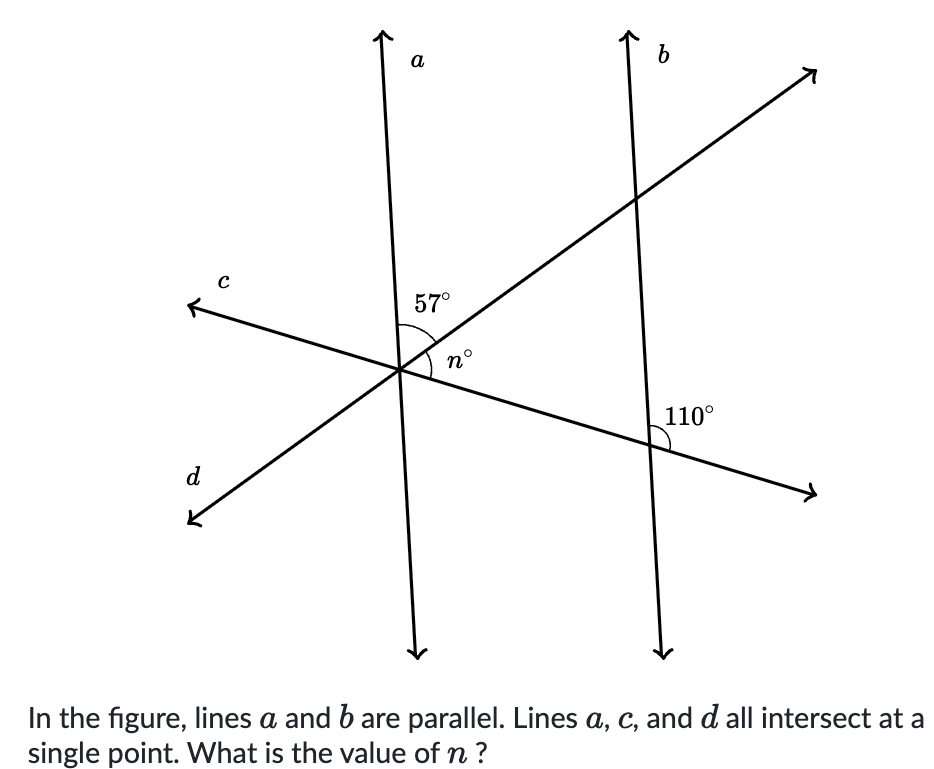
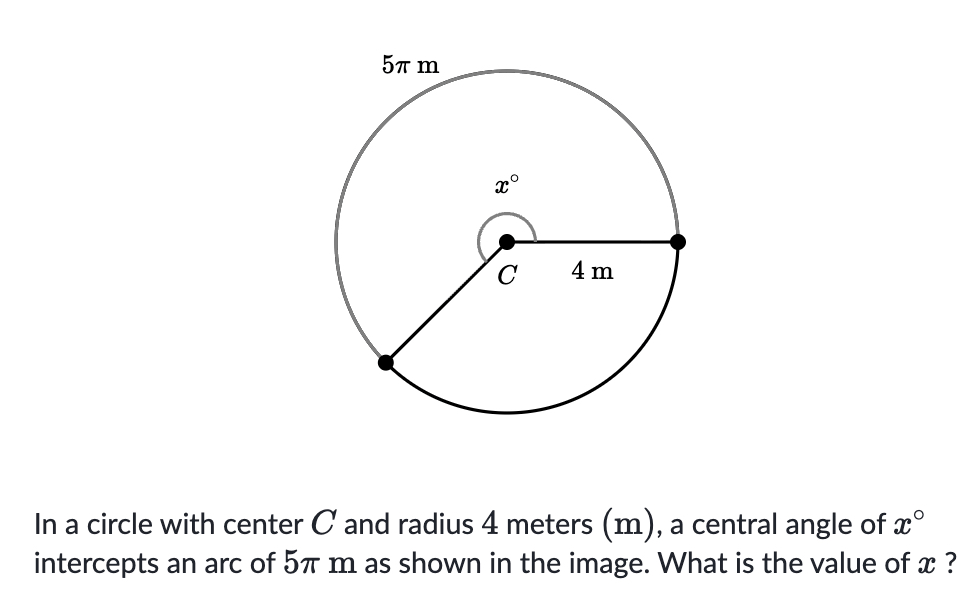
Reference: SAT practice questions from Khan Academy
Geometry on Math Competitions
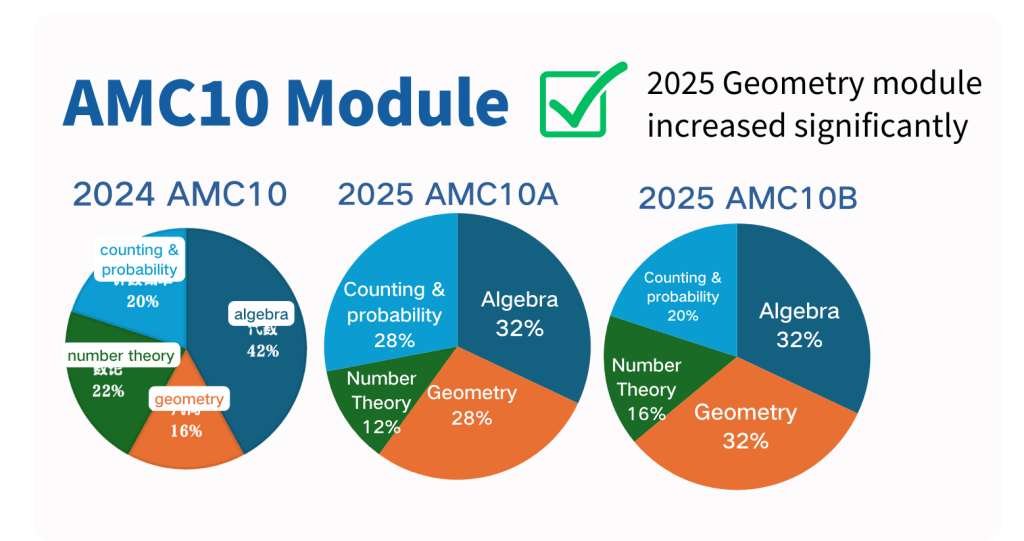
For students aiming to compete in math competitions like the AMC 10/12, geometry takes on an even greater importance. In these competitions, geometry accounts for around 30–35% of all questions. However, these problems are not simple textbook exercises. They require:
- Creative auxiliary line construction
- Multi-path problem solving
- A deep understanding of the “why” behind each theorem
These competition problems assess students’ critical thinking and geometric reasoning skills. Without a structured approach to thinking geometrically, even top students can lose points on these challenging problems.
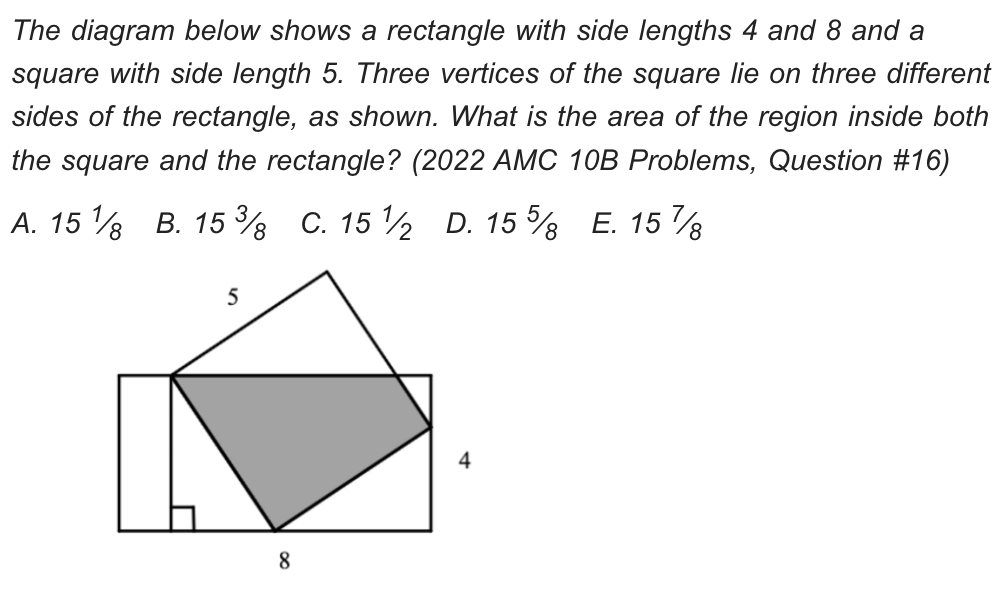
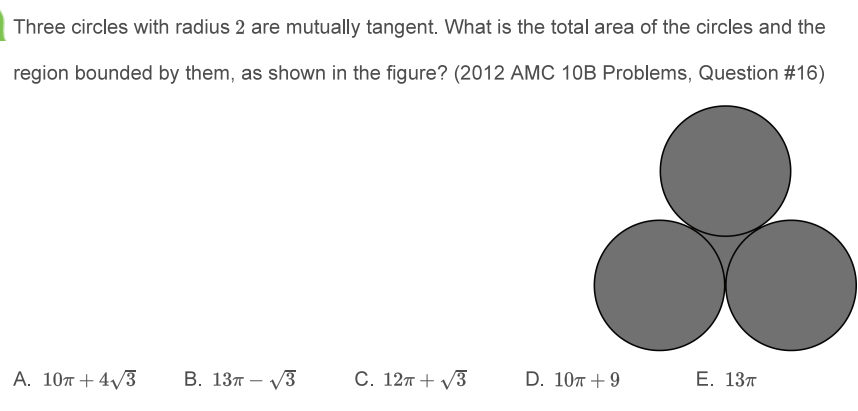
Reference: AMC 10 past exam questions
Take Free Evaluation
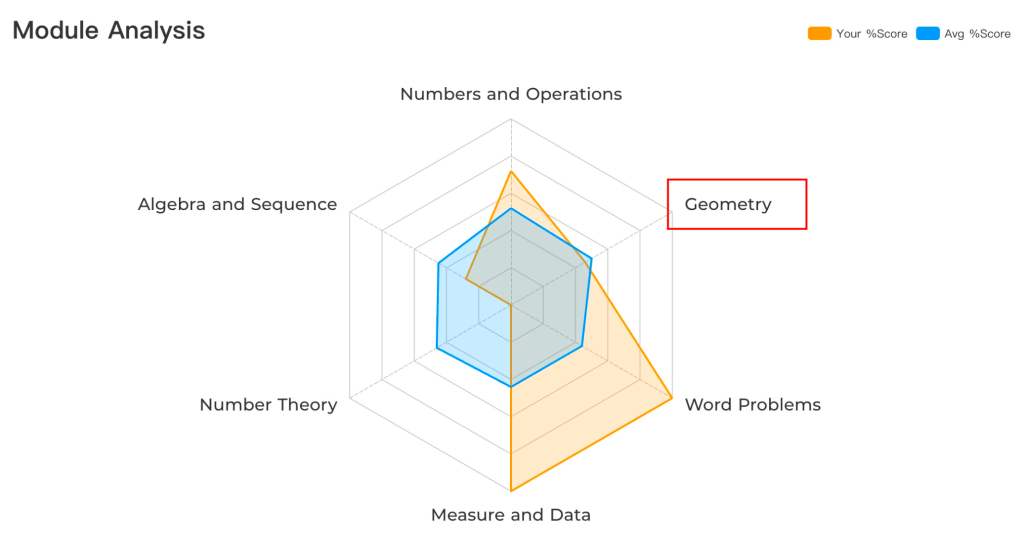
Identifying your child’s current geometry mindset can help you take the right next step.
- Are they stuck in formula-first thinking?
- Do they hesitate when facing diagrams with no obvious starting point?
- Are they aiming for AMC, SAT/ACT, or Honors Math — but unsure how to break through?
👉 Take our free evaluation and get a personalized roadmap for your child’s growth.
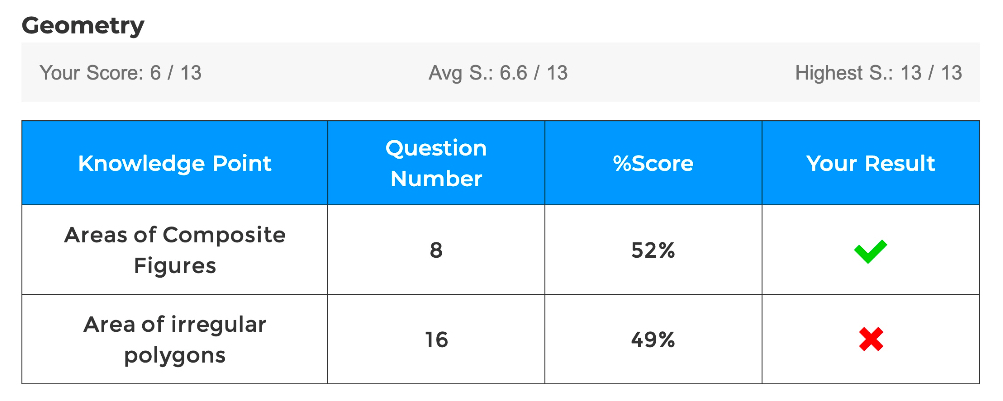
How We Teach Geometry
At Think Academy, our geometry program isn’t about rote memorization or quick shortcuts — it’s about developing real mathematical thinkers who can reason, prove, and solve problems effectively.
We’ve designed our courses to help students master geometry from the ground up, whether they’re aiming for success in the classroom, advanced placement, or preparing for competitive exams like the AMC 10.
Expert Teachers
Our instructors are deeply familiar with the U.S. high school math system, trained through a multi-round teaching program, and experienced in guiding students step-by-step through:
- Formal proof writing (not just “show your work”)
- Logical deduction and visual modeling
- How to actually think like a mathematician — not just follow formulas
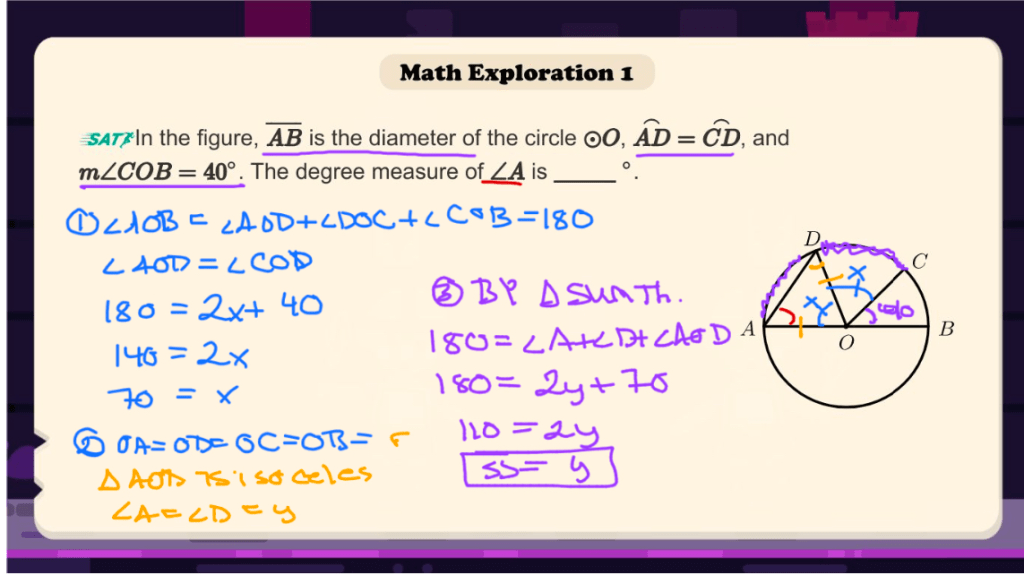
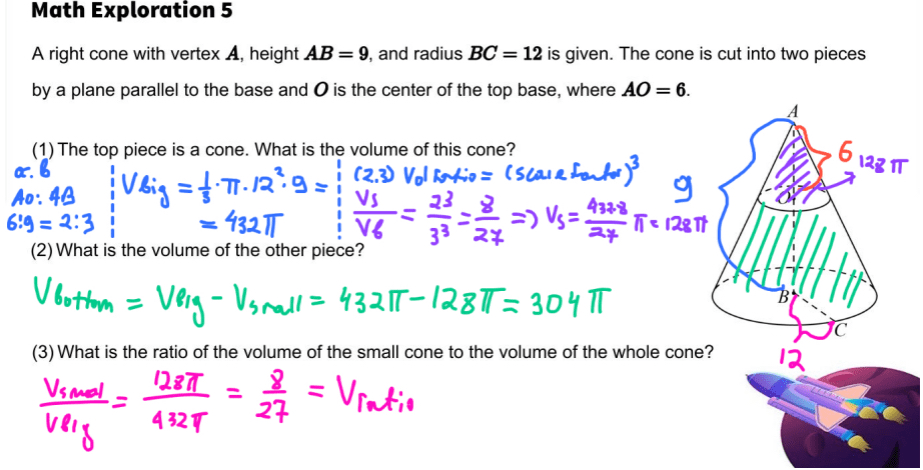
Screenshot of classnotes
Course Goals
| Learning Goals | Key Topics | |
|---|---|---|
| Foundation Building | Learn to write valid proofs and reason through diagrams | Circle GeometryCentral & Inscribed AnglesTangent, Chord, & Secant TheoremsPoints & Lines relative to Circles3D Geometry & MeasurementPrisms, Pyramids, Cylinders, and ConesSpheres and Similar SolidsAnalytic & Algebraic GeometryTransformations & SymmetryCoordinate ProofsConic Sections (Circles & Parabolas)Discrete MathPermutations, Combinations, & Probability |
| Comprehensive Strengthening | Tackle challenging problems using logical tools | |
| Advanced Transition | Bridge geometry with algebra and future topics |
Whether your child is struggling with core concepts or preparing for AMC competitions, our program adapts to help them grow — structurally and strategically.
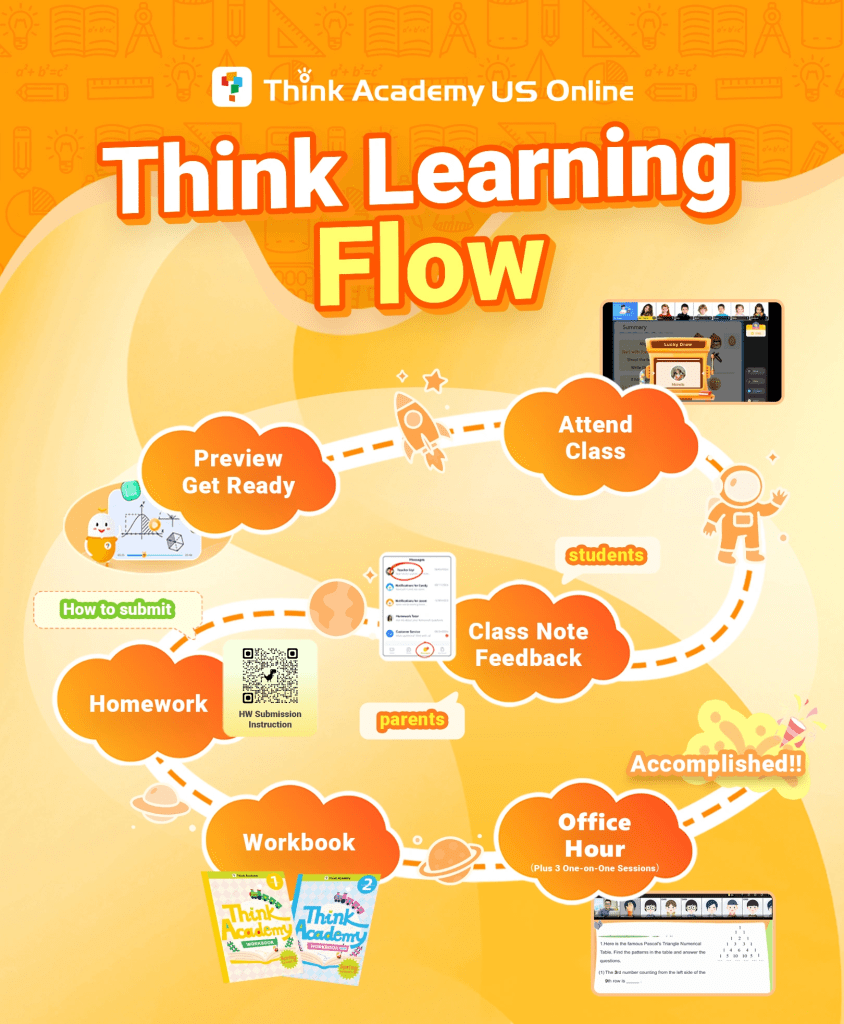
Learning Cycle
We don’t just teach — we help students absorb, practice, and reflect through a high-impact learning loop:
- Pre-class preview to activate prior knowledge
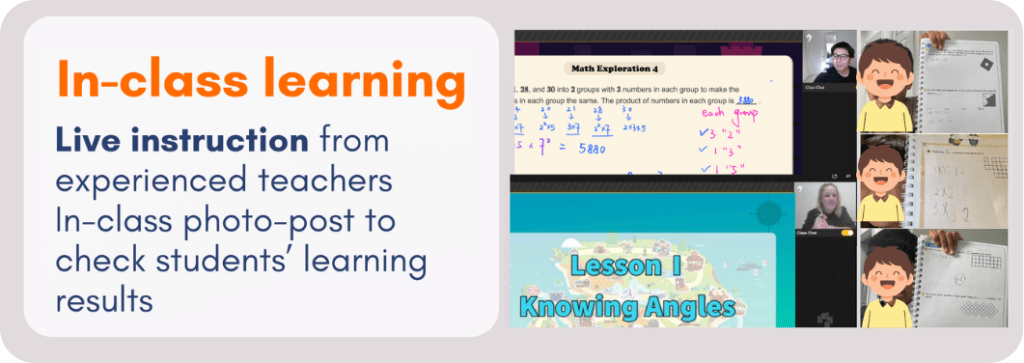
- Live, interactive lessons to guide discovery
- After-class homework with detailed video solutions
- Live Office Hours & 1on1 tutor to close gaps
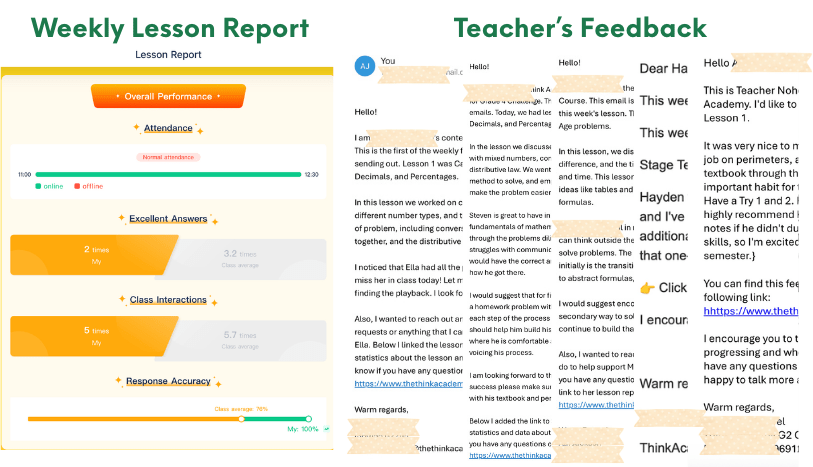
Real-time Feedback
- Our parent app keeps you connected 365 days a year — with weekly progress feedback to reach your child’s teacher anytime.
- Every class report goes beyond scores — you’ll know what your child is doing well, where they’re improving, and how you can support them at home.
Engaging Learning
Students Learn Better When They Enjoy the Process! We believe geometry doesn’t have to feel abstract or frustrating. In our classrooms, students stay engaged with:
- Engaging learning and challenge-based motivation
- Milestone stage tests + instructor walkthroughs
- A sense of achievement that turns “math anxiety” into “math confidence”
Real Results, Real Impact
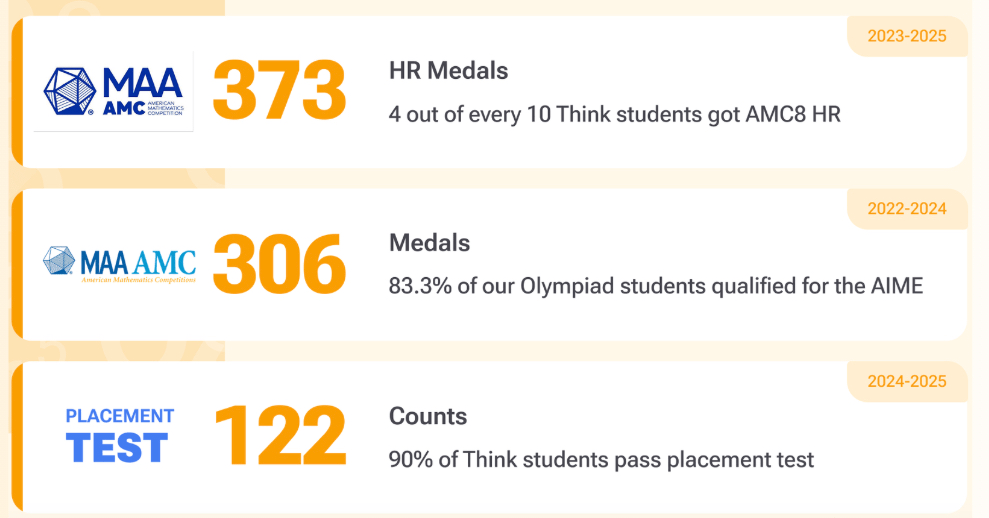
From struggling learners who’ve built a solid foundation, to AMC 10 qualifiers who’ve mastered advanced proof techniques, our students have gone on to:
- Excel in high school Honors and AP-level math
- Qualify for national math competitions
👉 Ready to see what structured, expert-led geometry learning looks like?
Try Pengi AI — Smarter Math Practice for Students
Pengi AI supports K–12 learners with personalized math practice, guided explanations, and feedback designed to help them build confidence and improve steadily.