
Pengi Editor's Note
This piece from Think Academy explores how to make summer homework actually work for kids, using a real student story and 5 practical steps backed by Think Academy's instructional approach. The Pengi editorial team selected it because the framework — clear expectations, step-by-step teaching, purposeful practice, review, and celebration — applies to any structured learning program, not just summer school.
Source: Think Academy Blog
Make Summer Homework Work: 5 Proven Steps for Better Habits
Summer homework: helpful or harmful? It's a question many parents and educators debate each year.
On one hand, some believe summer is a time for play, rest, and open-ended learning. On the other hand, advocates point to the risk of summer slide — a documented learning loss when students disengage from academics for months.
The answer isn't whether students have summer homework — it's how that learning is designed and delivered.
Why Traditional Summer Homework Often Fails
For many families, "summer homework" means a packet of worksheets, little guidance, and lots of nagging. Without teacher support or real engagement, even the best intentions turn into a "dead" checklist. Students miss the opportunity to build deeper understanding or stronger habits.
A Better Alternative — Guided, Enjoyable Summer Learning
What if summer work wasn't about pressure, but about curiosity, consistency, and confidence?
A structured approach works when it includes:
- Scientifically designed curriculum
- Teacher-guided lessons and follow-ups
- Interactive, enjoyable worksheets
- Personalized feedback on kids' work
- Clear progress tracking
When students enjoy the process, homework becomes more than an assignment — it becomes a habit they're proud of and benefit from.
Real Story: Leo and His Summer Learning Habit
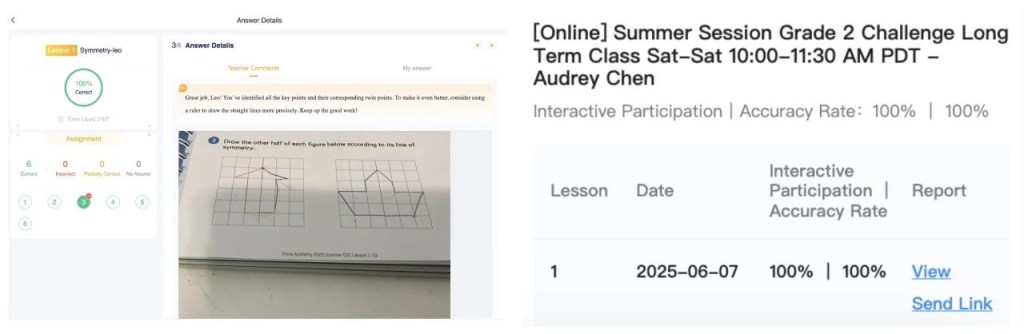
Meet Leo, a rising 2nd grader who continued his math learning in Think Academy's online summer class. On the first day, he demonstrated complete focus and scored 100% on his classwork.
Later that day, while waiting at the airport to fly back to China, his mom handed him puzzle toys to pass time. But Leo pulled out his homework instead.
"There's no table here," said his mom.
"Don't worry, I have a plan," Leo replied, setting up two suitcases as a desk and getting to work.
Leo's teacher shared the moment with colleagues — and they were all inspired. What kind of class builds that level of motivation? One that's meaningful, well-structured, and rewarding.
Why Students Come to Love Homework
Across programs with strong summer learning culture, teachers regularly share student work:
- Some students write out clean, step-by-step solutions
- Others decorate their pages with drawings
- A few even create their own practice problems after finishing homework
This isn't just academic practice — it's the sense of achievement and ownership of learning.
5 Steps to Make Kids Love and Benefit from Summer Homework
When summer learning is thoughtfully structured, student-centered, and motivating, homework turns from a burden into a habit kids actually enjoy.
Step 1: Set Clear Learning Expectations Before Class
Every lesson starts with pre-class preparation. Students know the topic, review key ideas, and arrive with questions in mind — ready to learn.
Step 2: Teach with Step-by-Step Clarity
In many schools — especially in lower grades — teachers often skip detailed modeling of how to solve problems step-by-step. This leaves students unsure how to show their thinking clearly.
Explicit problem-solving instruction is critical: teachers should write out full solutions, highlight key strategies, and walk students through each step. This not only makes lessons easier to follow — it also helps students develop independent thinking habits essential for long-term math learning.
Why it matters:
- Strengthens logical reasoning
- Encourages deeper conceptual understanding
- Makes error checking easier
- Prepares students for exams that award partial credit
Step 3: Assign Purposeful Homework
After class, students complete homework that reinforces what they've learned. Each worksheet should align with the lesson's key concepts and promote step-by-step thinking. The difficulty level should be balanced — challenging enough to engage, but approachable and rewarding. Keep homework to a reasonable time (around 30 minutes) to support consistency without causing burnout.
Step 4: Make Review Part of the Process
Homework isn't "done and gone." Effective programs include office hours or review sessions where teachers go over common errors, highlight great work, and answer questions.
Step 5: Celebrate Effort and Progress
Motivate students with small, meaningful rewards:
- Gold stars or points for on-time submission
- Homework shoutouts in the next class
- Visible teacher feedback — checkmarks, stickers, and praise
These little touches help kids feel proud of their work — and excited to do more.
Key Takeaway
The difference between "just doing homework" and meaningful progress isn't effort — it's fit and structure. Before deciding how much practice your child needs, understand where they are now and what kind of learning support will help them grow with confidence.
Try Pengi AI — Smarter Math Practice for Students
Pengi AI supports K–12 learners with personalized math practice, guided explanations, and feedback designed to help them build confidence and improve steadily.