Pengi Editor's Note: This article was originally published by Think Academy. We're sharing it here for educational value. Think Academy is a leading K-12 math education provider.
Math Kangaroo 3-Point Questions: The Most Common Types + How to Solve Them
When preparing for Math Kangaroo, most parents and students fixate on the end of the test. They spend hours trying to crack the difficult 5-point brainteasers. Meanwhile, the first section—the 3-point questions—is often ignored.
Before we dive in, let’s look at three misunderstandings:
- A: “3-point questions are too easy; we don’t need to practice them.”
- B: “We should rush through the start to save time for the hard problems.”
- C: “It’s okay to make a careless mistake on 1 or 2 easy questions.”
Here is the reality:
For competitive students, the 3-point section isn’t just a warm-up. It is the foundation. If the foundation cracks, the whole score collapses.
In this guide, we will explain why mastering Math Kangaroo 3-point questions is the smartest strategic move you can make.
- Common 3-point questions types
- Common mistakes in 3-point questions
- Sample questions in Lv1-4
- Free downloadable 3-point questions workbook
Why 3-Point Questions Matter
In Math Kangaroo Grades 1–4, the first 8 questions are worth 3 points each (24 points total). While they are technically the “easiest,” they play a critical role in the exam ecosystem.
1. The Pacing Engine
These questions are simple, but the trap is time management. For a top candidate, the goal isn’t just to “get it right.” The goal is to “speed-solve” with perfect accuracy.
Think of it this way:
Every time your child solves a 3-point question in under 45 seconds, they are “banking” time.
- If they struggle or hesitate here, they burn the clock.
- If they solve these efficiently, they accumulate precious minutes to spend on the complex 4&5-point questions later.
The Bottom Line: You win the award at the end, but you create the time to win at the beginning.
2. Psychological Momentum
The first 10 minutes determine the “vibe” of the entire exam.
Math Kangaroo 3-point questions are designed to let students settle in.
- If a student breezes through the first page, their brain says, “I got this.” They enter the middle section calm and confident.
- If they get stuck or make a silly error on Question 2, panic sets in. This anxiety clouds their thinking for the rest of the test.
The Bottom Line: We value these questions because they ensure your child enters the hard section with a winning mindset.
3. The “Opportunity Cost” of a Mistake
Here is the math: Losing a 3-point question is the most “expensive” mistake you can make.
Why? Because these are the points everyone else is getting.
If you miss a 5-point question because it was incredibly hard, you are in the same boat as most students. But if you miss a 3-point question due to rushing, you are instantly behind the pack.
- To make up for one careless error here, your child effectively needs to solve one extra 5-point question perfectly.
- That is a terrible trade. You never want to trade “easy points” for the hope of getting “hard points.”
The Most Common 3-Point Question Types
We have analyzed past exams to categorize the high-frequency Math Kangaroo questions for each level.
Lv 1–2 (Grades 1–2)
- Shape Recognition: Identifying simple 2D shapes, counting sides, or matching puzzle pieces.
- **Enumeration (Counting):**Systematically counting objects without missing one or double-counting.
- **Numbers & Word Problems:**Simple addition/subtraction stories (e.g., “Tom has 3 apples…”).
- **Logical Reasoning:**Basic pattern recognition or “heavier/lighter” comparisons.
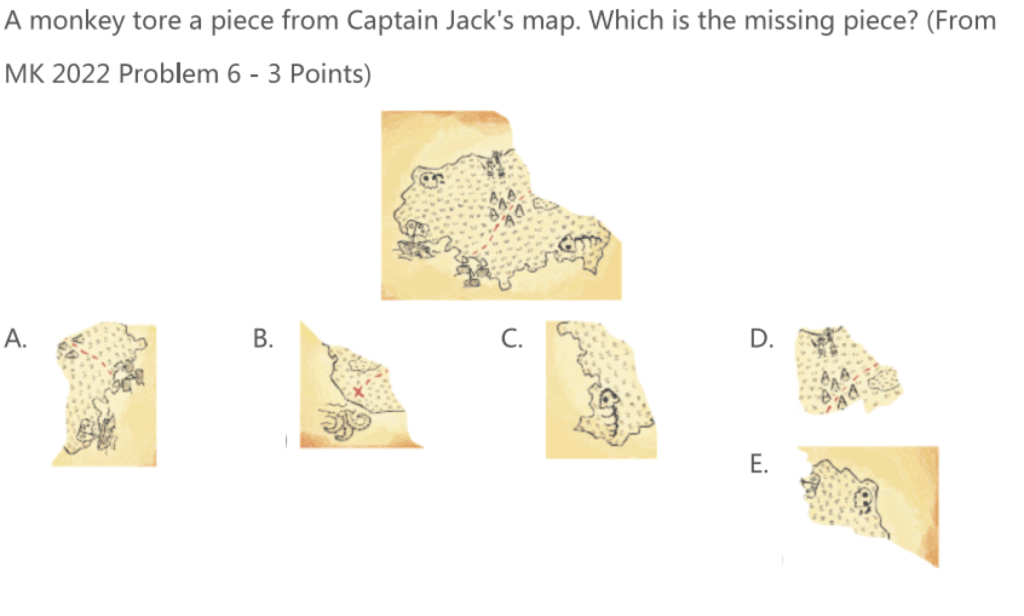
Math Kangaroo 2022 Problem 6 – 3 Points
Lv 3–4 (Grades 3–4)
- **Shape & Symmetry:**Visualizing how a paper unfolds, reflections, or counting blocks in a stack.
- **Enumeration:**More complex counting, often requiring a list or grouping.
- **Numbers & Word Problems:**Problems involving time, money, or multi-step arithmetic.
- **Logic Puzzles:**Simple deductive reasoning (e.g., ordering people in a line).
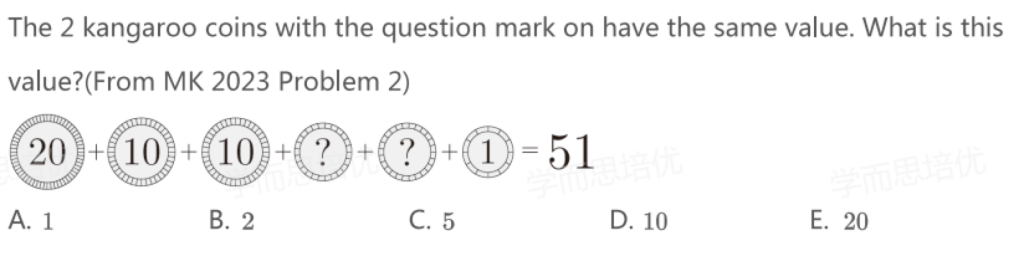
Math Kangaroo 2023 Problem 2 – 3 Points
How to Practice 3-Point Questions
Since these questions are not “hard,” practice shouldn’t be about learning new math concepts. It should be about process.
What 3-Point Questions Test
- Core Understanding: Can the child instantly recognize the topic and apply the right method?
- Speed with Accuracy: Can they solve it quickly without rushing into a trap?
- **Consistency:**Do they follow the same clean process every single time?
Common Mistakes to Avoid
Even smart kids trip on these hurdles:
- **The “Speed Read” Error:**Reading the first half of the sentence and guessing the rest.
- **Calculation Slips:**Thinking 2+3=6 because they are moving too fast.
- The “Not” Trap: Missing the word “not” in questions like “Which shape is NOT a square?”
The Step Solution Strategy
To ensure 100% accuracy on Math Kangaroo 3-point questions, follow this 3-step loop:
- Circle the Keyword: Before solving, circle the number or key requirement (e.g., “Less than,” “Total”).
- Quick Solve: Use the simplest method. Don’t overthink it.
- **Double Check:**Before marking the answer, ask: “Does my answer make sense?” (e.g., If I added two numbers, is the answer bigger than what I started with?).
Sample Question for 3 Points
Lv1-2 Sample question
Four of the numbers 1, 3, 4, 5, and 7 are used, one in each square, so that the number sentence is correct. Which of the numbers is not used? (From MK 2017 Problem 8 – 3 Points)
□+□=□+□
A. 1 B. 3 C. 4 D. 5 E. 7
Correct Answer: C (4)
Solution: Pair the “Smallest” with the “Largest”
Instead of randomly plugging in numbers, look for balance. To make two sides equal, we usually need to pair small numbers with big numbers.
- Take the smallest (1) and the largest (7). Sum = 8.
- Check the remaining numbers (3,5). Sum = 8.
- Since 1+7=8 and 3+5=8, the equation balances!
- The number left over is 4.
Why Students Get This Wrong:
- The “Random Guessing” Trap: Many students randomly pick numbers to fill the boxes (e.g., trying 1+3=4, then looking for 5+7… oh wait, that doesn’t work). Without a strategy (like pairing high/low), they get frustrated and run out of time.
- Calculation Errors: Some students find the right pairs but simply add wrong (e.g., thinking 3+5=9) due to rushing.
Lv3-4 Sample question
Denise fired a silver rocket and a gold rocket at the same time. The rockets exploded into 20 stars in total. The gold rocket exploded into 6 more stars than the silver one. How many stars did the gold rocket explode into? (From MK 2021 Problem 7)
A. 9 B.10 C. 12 D. 13 E. 15
Correct Answer: D (13)
Solution: The “Fair Share” Method
Instead of guessing numbers, visualize the problem.
- Total: 20 stars.
- Difference: Gold has 6 more than Silver.
- Remove the Extra: Take away the “extra 6” from the total. 20−6=14.
- Split Equally: Now, the remaining 14 stars are split equally between the two rockets. 14÷2=7 (This is the Silver rocket’s share).
- Add the Extra Back: The Gold rocket has 6 more. 7+6=13.
Why Students Get This Wrong:
- The “Half-Split” Trap: Many students see “20 total” and “6 more,” so they just do 20÷2=10, then add 6 to get 16. They forget that adding 6 to one side unbalances the total.
- Confusing the Questions: Some students correctly find Silver (7) but forget the question asked for Gold, so they pick an incorrect option or get stuck.
- Lack of Drawing: Without drawing a simple line diagram (Bar Model), students try to juggle the numbers in their head (x+y=20,x−y=6) which is prone to error at this age.
Next Step
Mastering the 3-point questions is the first step—it’s your child’s “ticket to play.” But to secure a National Top 20 Award, they must take that solid foundation and apply it to the tougher challenges ahead.
Once your child stops losing “easy points,” the real competition begins in the 4-point and 5-point zones. This is where most students get stuck, and this is exactly where our training makes the difference.
Targeted Math Kangaroo Prep Class
Our Math Kangaroo Prep Class assumes your child is ready to move beyond the basics. We offer an intensive program designed to reinforce high-frequency concepts and strengthen essential skills in a short period.
Our Curriculum Focus:
- We target the Common error 4-point problem types, focusing specifically on the mistake patterns that cause students to lose rhythm in the middle of the test.
- We decode the High-value 5-point MK problem types. These questions carry the highest weight and are the key decision-makers for top awards. We teach the specific strategies needed to crack them.
- We go beyond simple math to tackle problems involving complex logical conditions, multi-step reasoning, and deeper conceptual understanding.
Our Course Design
Step-by-Step Learning
- Start with the fundamental logic that children can master.
- Gradually transition to questions that require deeper thinking.
- Finally incorporate appropriately challenging exercises to guide them in enhancing their problem-solving abilities step by step.
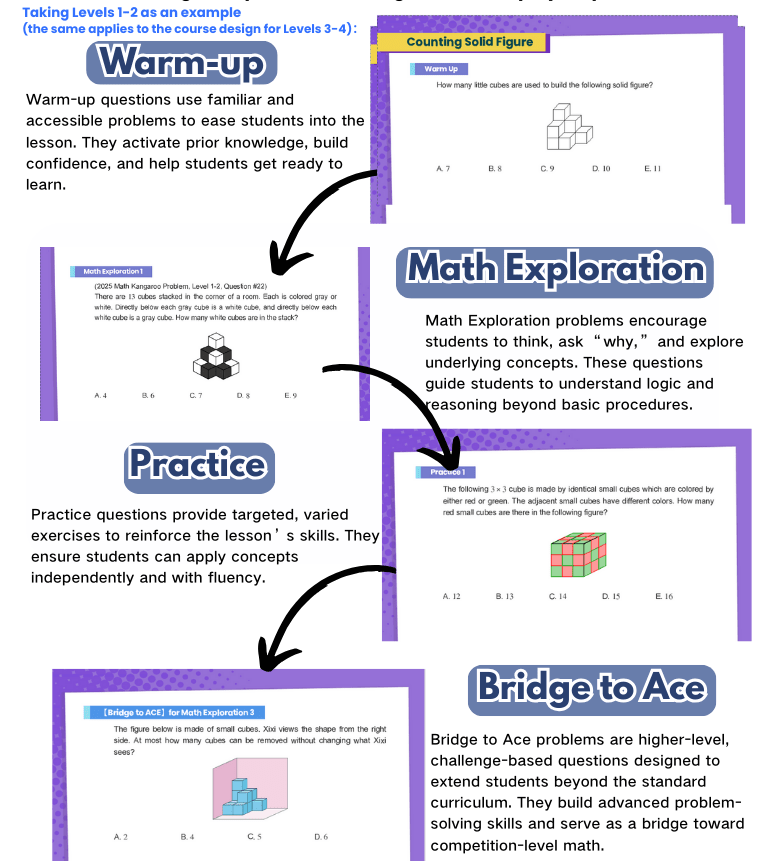
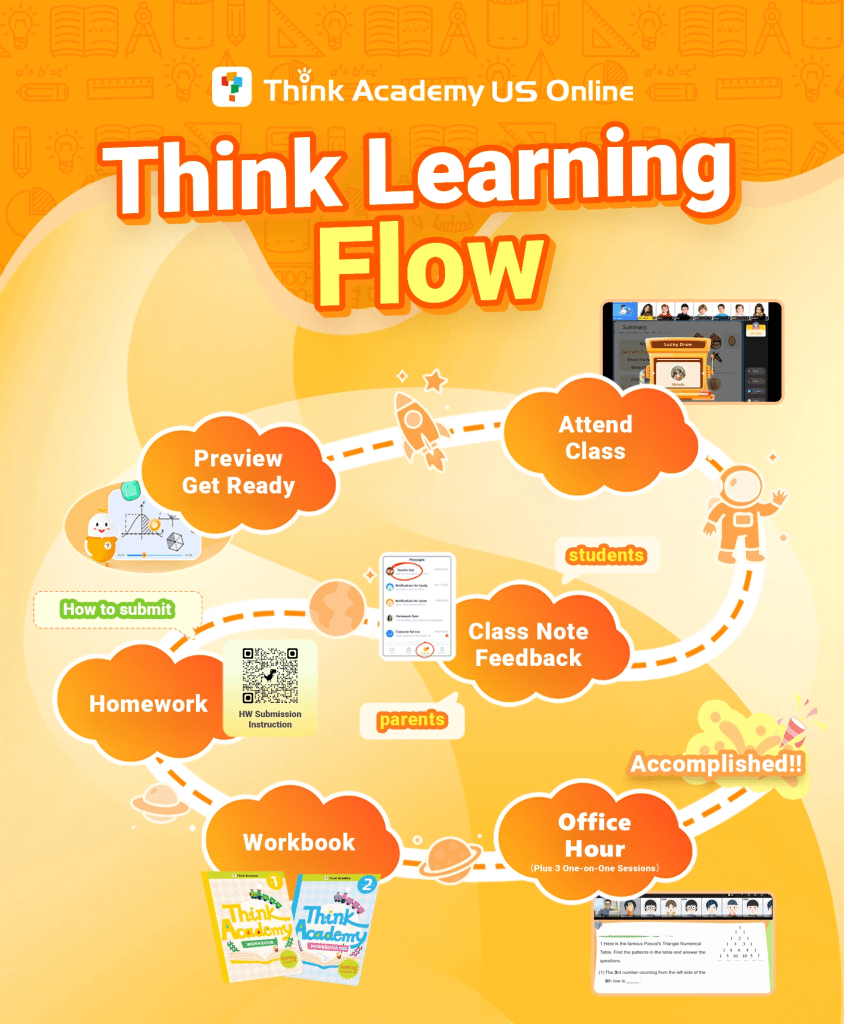
Our Efficient Learning Cycle
We don’t just teach — we help students absorb, practice, and reflect through a high-impact learning loop:
- Pre-class preview to activate prior knowledge
- Live, interactive lessons to guide discovery
- After-class homework with detailed video solutions
- Live Office Hours & 1on1 tutor to close gaps
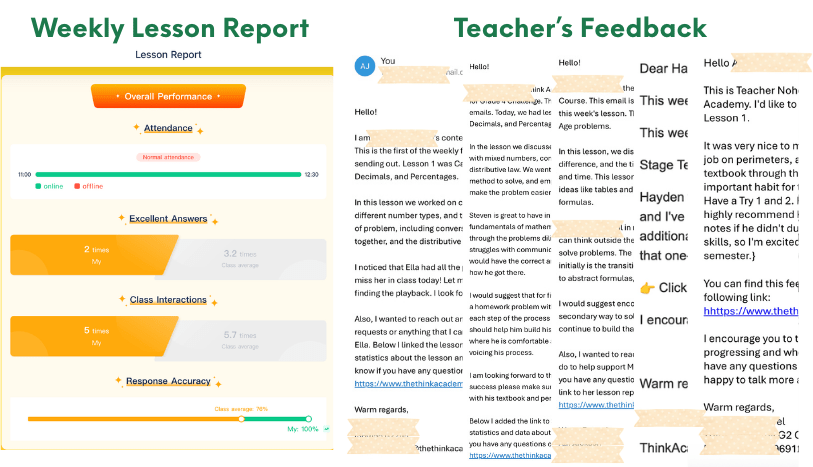
Our Weekly Feedback
- Our parent app keeps you connected 365 days a year — with weekly progress feedback to reach your child’s teacher anytime.
- Every class report goes beyond scores — you’ll know what your child is doing well, where they’re improving, and how you can support them at home.
Real MK Results
- 700+ award-winning students trained by Think Academy in 2025
- Perfect-score award rate: 4× the official average
- Top 3 award rate: 6× the official average
- Overall award rate: 70%, compared to the official average of 20%

Recommend Reading
- Math Kangaroo 5-Point Questions: The Most Common Types + How to Solve Them
- Math Kangaroo 4-Point Questions: The Most Common Types + How to Solve Them
- Math Kangaroo: How to Solve 3-, 4-, and 5-Point Questions for a Higher Score
Try Pengi AI — Smarter Math Practice for Students
Pengi AI supports K–12 learners with personalized math practice, guided explanations, and feedback designed to help them build confidence and improve steadily.