Pengi Editor's Note: This article was originally published by Think Academy. We're sharing it here for educational value. Think Academy is a leading K-12 math education provider.
Math Kangaroo 4-Point Questions: The Most Common Types + How to Solve Them
If you want your child to win a Math Kangaroo award this year, where do you think they should focus? Most parents focus all their energy on the hardest problems at the end—the 5-point questions. But here is the truth that may surprise many parents:
You cannot win a National Top 20 award just by being smart enough to solve the hard problems. You have to be stable enough to not drop the medium ones.
In Math Kangaroo Grades 1–4, the 4-point section (Questions 9–16) is worth a massive 32 points.
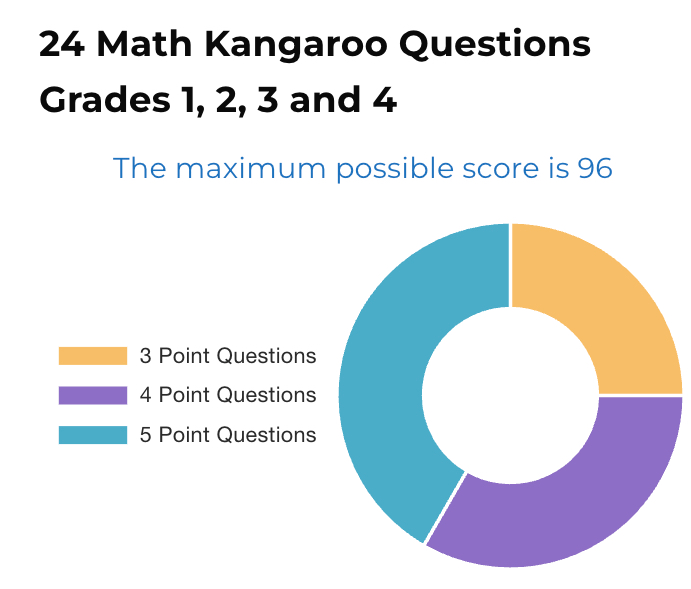
Math Kangaroo Grade1-4 Scoring
For a well-prepared student, this shouldn’t be a gamble. It should be a 90% accuracy zone. Why does this section matter so much? It comes down to two critical factors:
1. The Base Score
If your child conquers the 4-point section, they enter the final stage with a high base score. They only need to snag a few hard questions to secure an award.
But if they stumble here? They are forced to rely on the unpredictable 5-point questions to save them. That is a very risky strategy.
2. The Time
It is not just about the score—it is about time and rhythm management. If a student gets stuck on a medium-level question, they waste the mental energy needed for the hard questions later. A bad experience in the middle of the test often destroys the rhythm for the end.
Does this sound familiar?
“My child isn’t bad at math, but they get stuck in the middle and run out of time.”
So, how do we turn the 4-point section from a stumbling block into a reliable point bank? In this guide, we will break down exactly how to solve Math Kangaroo 4-point questions.
- Skills tested in 4-point questions
- Top mistakes in 4-point questions
- Common 4-point questions types
- Sample questions in Lv1-4
- Free downloadable 4-point questions workbook
Why 4-Point Questions Feel Harder Than They Look
Technically, 4-point questions are “medium difficulty”. However, for many students, they feel much harder than the start of the test. This is because they involve more information and more steps. The questions are more flexible, the conditions are tighter, and the traps are subtle. Students cannot just memorize a formula; they must understand the concept and organize their steps clearly. This is the “danger zone” where even strong candidates make avoidable mistakes. They know how to do the math, but they do it too slowly or carelessly.
What Really Test in Math Kangaroo 4-Point Questions
To score well here, your child needs three specific skills:
- **Concept Understanding:**Students need to know why a method works, not just memorize steps. If the question changes slightly, a memorized routine will fail.
- **Problem-Solving Choices:**A single problem might have three ways to solve it: an equation, a drawing, or making a list. The test challenges students to pick the fastest, most reliable method.
- **Accuracy with Structure:**When a problem has three steps, it is easy to make a small error in step two. Mistakes here are usually not due to intelligence—they are due to a lack of structured checking habits.
Top Mistake Patterns in Math Kangaroo 4-Point Questions
Do you often ask: “My child understood the concept. Why is the answer still wrong?”
4-point questions are a transition zone. They require more structure than the easy questions. When students use “easy question habits” on “medium question challenges”, they fall into these common traps.
1. Inertia & Misreading
This is the most common reason for lost points. Students see a familiar-looking question and their brain goes on “auto-pilot.”
- **Missing Keywords:**Ignoring limits like “at least,” “at most,” “exactly,” or “all different digits.”
- **The “Familiarity” Illusion:**They assume this problem is just like one they did yesterday, so they stop reading and start solving. They miss the one detail that changed.
- Answering the Wrong Question: They work hard to find X, but the question actually asked for X+5.
2. Mental Math Trap
4-point questions often have too much data for a child’s short-term memory. Trying to do it all in their head is a recipe for disaster.
- **Refusing to Write:**No diagrams, no lists, no tables—just staring and imagining.
- **Setup Errors:**They understand the story but fail to organize the knowns (e.g., length, width, total), leading to the wrong equation.
- **Messy Scratch Work:**Numbers are flying everywhere. When they need to check their work, they can’t even find their own calculation.
3. Precision & Unit Gaps
These are “focus” errors that happen when a student rushes.
- **Counting Errors:**The classic “off-by-one” error (fencepost problem), counting the same thing twice, or missing a case.
- **Unit Traps:**Forgetting to convert minutes to hours or centimeters to meters.
- **Incomplete Diagrams:**In geometry, students might look at the shape but fail to label the side lengths or miss hidden faces in a 3D block problem.
4. Focus Barriers
Sometimes the issue isn’t carelessness, but “math endurance.”
- **Fear of Long Text:**When a word problem looks like a paragraph, some students check out mentally. They just grab numbers and add them up to finish quickly.
- **Logic Gaps:**Calculation is fine, but “If A, then B” logic puzzles cause confusion. Students get stuck and end up guessing.
Summary for Parents
If your child keeps missing 4-point questions, saying “be more careful” is not enough. You need to identify the specific pattern:
- Is it a Reading issue? (Missed “at least”)
- Is it a Process issue? (Didn’t draw the diagram)
- Is it a Mindset issue? (Rushed because they were scared of the length)
The Most Common 4-Point Question Types
We have analyzed past exams to categorize the high-frequency “medium difficulty” questions for each level.
Level 1–2 (Grades 1–2)
1. Logical Reasoning & Fun Math
This is the most diverse category. It tests a child’s ability to think step-by-step rather than just calculate.
- **Balance Problems:**Using scales to find the weight of an object or comparing weights (e.g., “If 2 apples weigh the same as 1 pear…”).
- **Operations without Numbers:**Solving equations where numbers are replaced by symbols or shapes (e.g., △+△=10).
- Conditional Logic: Problems with “If… then…” rules.
- **Comparison Logic:**Ordering items based on clues (e.g., “A is taller than B but shorter than C”).
- **Minimum & Maximum:**Finding the smallest or largest possible number under certain rules.
- **Code Breaking:**Deciphering simple patterns or symbol substitutions.
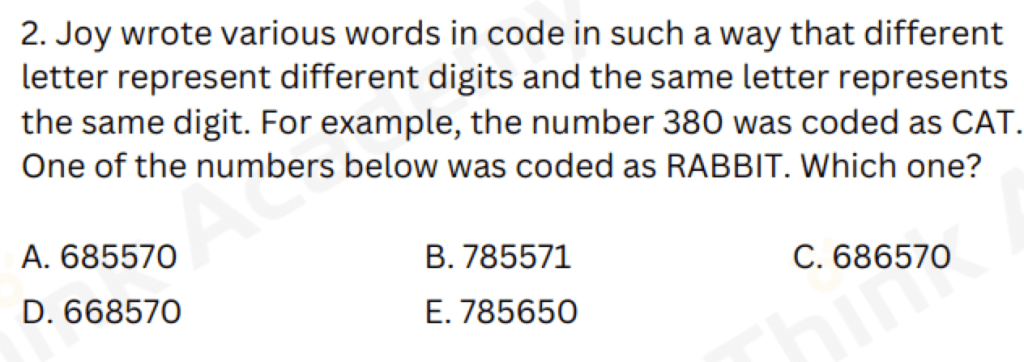
2. Word Problems
These questions require reading comprehension and translating stories into math.
- **Lining Up (Queuing):**Finding the total number of people in a line given a position (e.g., “5th from the front, 3rd from the back”).
- **Time Calculations:**Calculating duration or start/end times.
- **Intervals:**The classic “tree planting” or “cutting rope” problems (number of cuts vs. number of pieces).
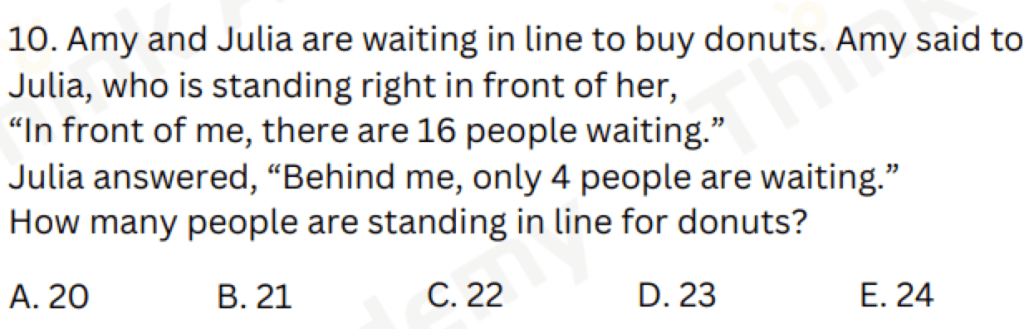
3. Geometry & Spatial Sense
Testing how well a child can visualize shapes in their mind.
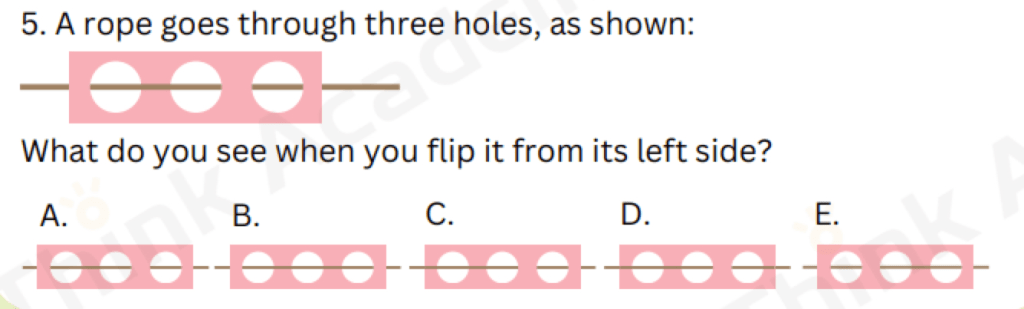
- Three Views: Identifying how an object looks from the top, front, or side.
- **Flips & Mirrors:**Identifying the reflection of an image.
- **Pathfinding:**Finding the shortest path or tracing a route through a maze.
Level 3–4 (Grades 3–4)
1. Logical Reasoning
At this level, logic puzzles become more layered and often require organizing data.
- **Logic Word Problems:**Complex scenarios that require deduction (e.g., “Who sits next to whom?” or “True/False” statements).
- **Equal Balance:**More complex scale problems involving substitution (e.g., replacing 3 circles with 1 square).
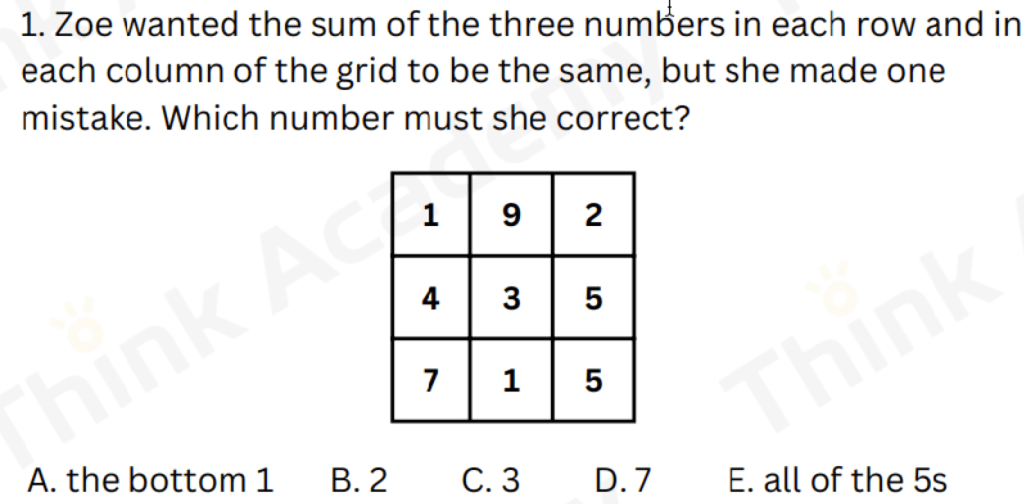
- **Fun Math Puzzles:**Number puzzles like Sudoku-style grids or filling in missing operations.
2. Word Problems
The stories get longer, and the math often involves “working backward” or understanding remainders.
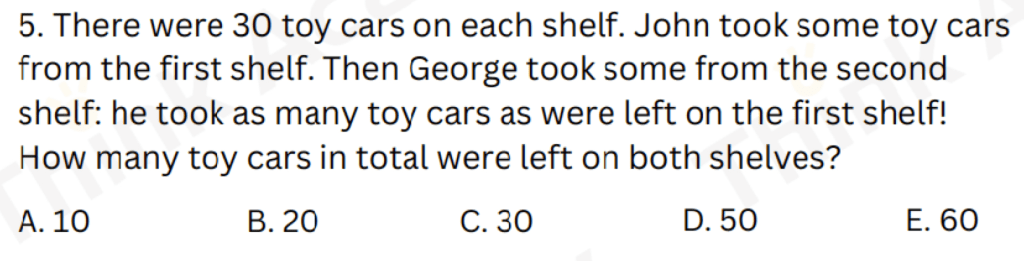
- **Basic Word Problems:**Multi-step arithmetic stories involving money, sharing, or travel.
- **Lining Up (Advanced):**Queuing problems that may involve overlapping groups.
- **Surplus & Shortage:**Problems about distributing items (e.g., “If I give everyone 2 apples, I have 1 left…”).
3. Geometry & Spatial Sense
Moving from simple shapes to calculations and 3D visualization.
- **Perimeter:**Calculating the boundary of irregular shapes, often by shifting lines.
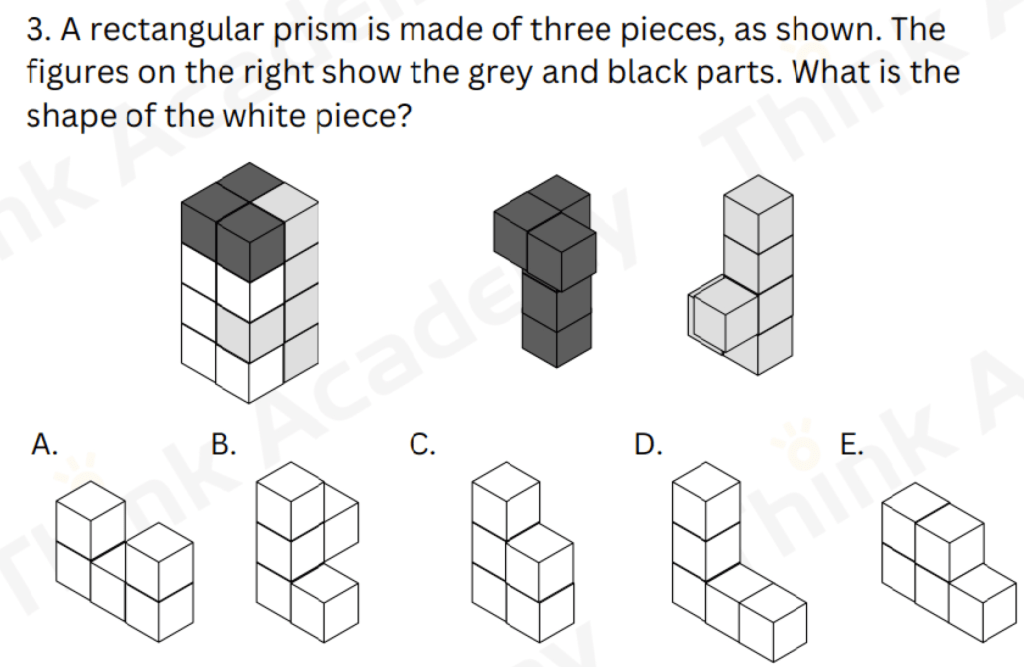
- **Forming Solid Figures:**visualizing how a flat net folds into a cube.
- Coloring Cubes: Counting painted faces on a stack of cubes or identifying patterns on a 3D block.
4. Enumeration & Number Operations
This category tests organized counting and number sense.
- **Enumeration (Systematic Counting):**Counting shapes, paths, or combinations without missing any or double-counting.
- **Max & Min:**Optimizing a result (e.g., What is the largest number you can get?).
- **Shape Values:**Assigning numerical values to geometric shapes.
How to Approach 4-Point Questions
The Goal
High Accuracy + Controlled Rhythm
You don’t need to be the fastest. You need to be the most stable. The goal is to bank these points without burning the mental energy needed for the final 5-point challenge. Do not let one single question destroy your exam rhythm.
Test-Day Strategy
- Do the “Sure Things” First: If you read a 4-point question and immediately know the method, do it now. This builds confidence and score.
- Mark the “Traps”: If a question has long text, confusing logic, or requires testing many cases, circle it and skip it.
- **Avoid the Mud Pit:**If you find yourself re-reading the same sentence 3 times or trying random calculations, stop. You are stuck. Skip it and come back later with a fresh mind.
Training Method
Don’t practice randomly. Practice by type. Your child should have a specific tool for each question category:
- **Multi-step Word Problems:**Circle keywords → Draw a bar model → Write the steps.
- **Logic Puzzles:**Draw a table → Check conditions one by one → Eliminate wrong answers.
- **Geometry:**Label all known lengths on the picture → Look for relationships (symmetry, equal sides) → Calculate.
- **Counting:**Choose a system (list or categories) → Count carefully → Check for duplicates.
Pro Tip: Train by “Mistake Pattern.” If your child always misses the “at least” condition, do 5 questions just on that topic. This is faster than doing 50 random problems.
Sample Question for 4 Points
Level 1–2: 4-Point Sample Question
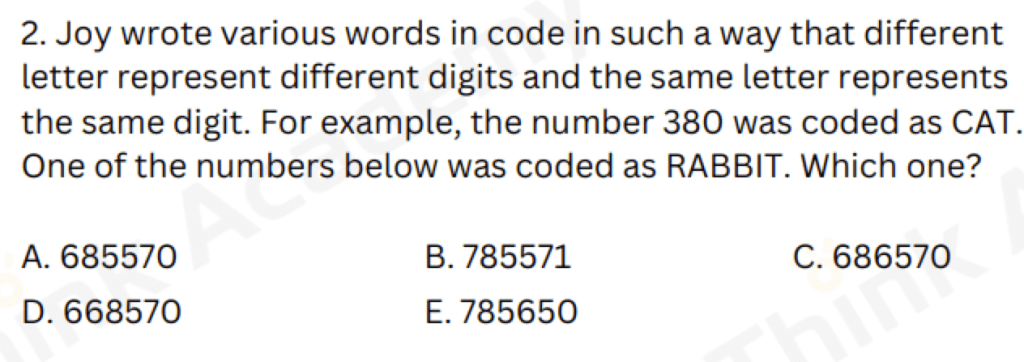
Math Kangaroo Lv1-2: 4-Point Sample Question – Code Breaking Problem
Correct Answer: B (SUCCESS)
Solution: Match the Pattern, Don’t “Read” the Code
Instead of guessing letters, students should look for the visual pattern in the number 5277155:
- The Middle Rule: Digits 3 and 4 are identical (77) → The word must have a double letter in the middle.
- The End Rule: The first digit (5) matches the last two digits (55) → The word must start and end with the same letter pattern (e.g., S…SS).
Check the options:
- A. FREEDOM: Has double ‘E’ (matches Feature A), but starts with F and ends with OM. ❌
- B. SUCCESS: Has double ‘C’ (matches Feature A). Starts with ‘S’ and ends with ‘SS’. (S = SS). This fits perfectly. ✅
- C. CONNECT: Has double ‘N’, but starts with C and ends with T. ❌
- D. DISCUSS: No double letters in the 3rd/4th spot. ❌
- E. MYSTERY: No double letters at all. ❌
Why Students Get This Wrong:
- Partial Checking (The “Fast Guess”): Students see the double “EE” in FREEDOM, think “Aha! Double letters!”, pick A, and move on. They fail to verify the second rule (the start/end letters).
- Wasting Time: They spend minutes analyzing the example word “BALL = 3488,” which is irrelevant to the answer. They don’t realize they can skip straight to the target code.
Level 3–4: 4-Point Sample Question
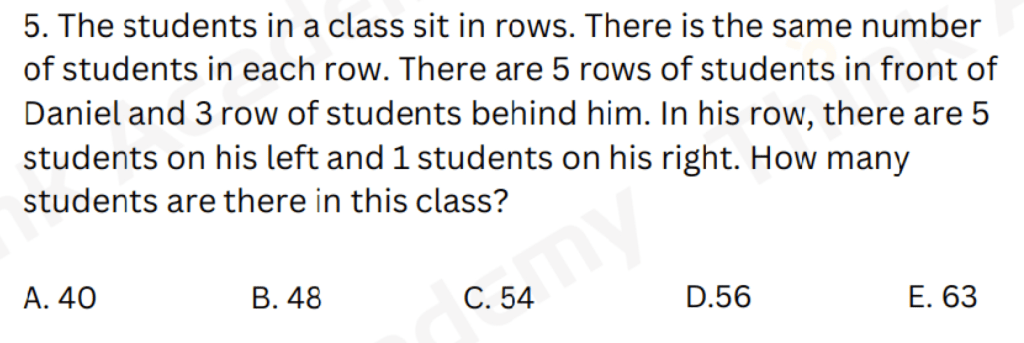
Math Kangaroo Lv3-4: 4-Point Sample Question – Enumeration Problem
Correct Answer: E (63)
Solution: Don’t Forget Daniel!
To solve this, we need to find the total number of rows and the total number of students per row, then multiply them.
- Count the Rows: 5 rows in front + 3 rows behind + Daniel’s own row (1) = 5+3+1=9 rows.
- Count Students per Row: 5 students to the left + 1 student to the right + Daniel himself (1) = 5+1+1=7 students.
- Calculate Total: 9 rows×7 students=63.
Why Students Get This Wrong:
- The “Invisible Me” Error (Off-by-one): Most students simply add the numbers they see in the text: 5+3=8 rows, and 5+1=6 students. Then they calculate 8×6=48 (Choice B). They forget to include Daniel himself in the count.
- Reading Without Drawing: Students who try to do this entirely in their heads almost always miss the “+1”. Students who draw a simple cross diagram (marking Daniel in the middle) rarely miss it because they can visually see Daniel standing there.
Practice 4-point questions with Think Academy’s Help
Free download practice questions
All the questions above are high-frequency test points adapted from MK’s previous years’ real exam questions by Think Academy. They are compiled and categorized by knowledge points and question types. Download the collection of 100 practice questions to help children efficiently train for 4-point questions.
Download MK Lv1-2 4-pointers Workbook
Download MK Lv3-4 4-pointers Workbook
Targeted MK Prep Class
Our Course Focus
An intensive pre-exam program designed to reinforce high-frequency Math Kangaroo (MK) concepts and strengthen essential skills in a short period of time. The curriculum covers:
- High-value 5-point MK problem types that have appeared frequently in recent years (these questions carry the highest point value and are key to determining whether a student can earn an award).
- Common error-prone 4-point problem types, focusing on patterns students most often miss.
- Problems involving complex logical conditions, multi-step reasoning, and deeper conceptual understanding.
Our Course Design
Step-by-Step Learning
- Start with the fundamental logic that children can master.
- Gradually transition to questions that require deeper thinking.
- Finally incorporate appropriately challenging exercises to guide them in enhancing their problem-solving abilities step by step.
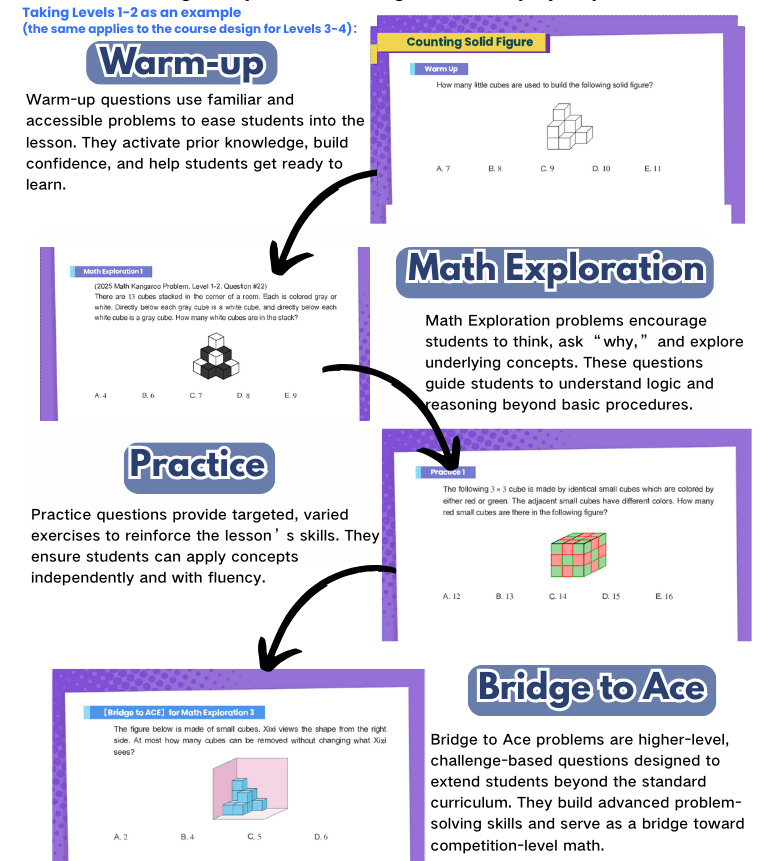
Our Efficient Learning Cycle
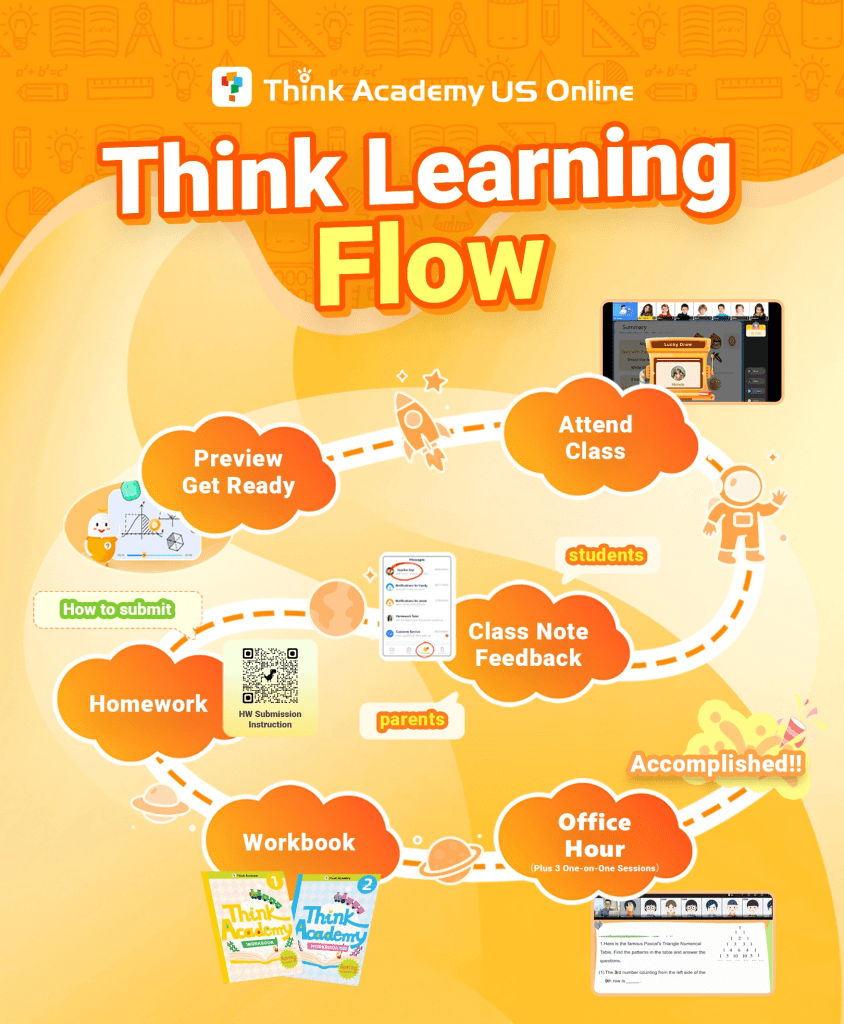
We don’t just teach — we help students absorb, practice, and reflect through a high-impact learning loop:
- Pre-class preview to activate prior knowledge
- Live, interactive lessons to guide discovery
- After-class homework with detailed video solutions
- Live Office Hours & 1on1 tutor to close gaps
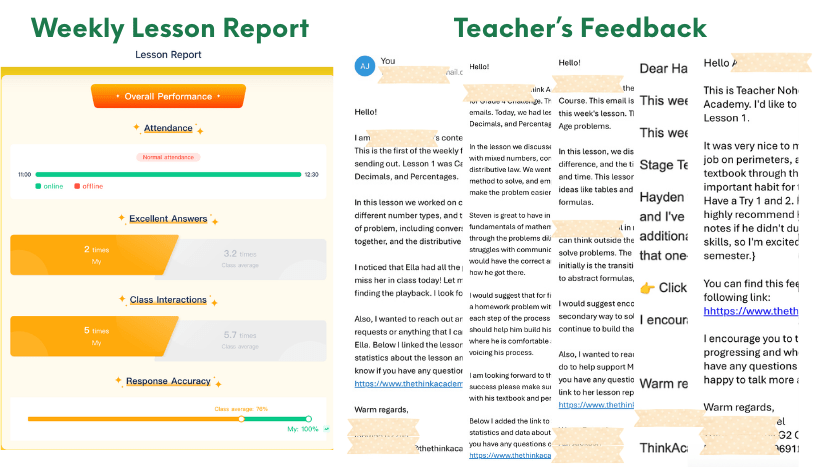
Our Weekly Feedback
- Our parent app keeps you connected 365 days a year — with weekly progress feedback to reach your child’s teacher anytime.
- Every class report goes beyond scores — you’ll know what your child is doing well, where they’re improving, and how you can support them at home.
Real MK Results
- 700+ award-winning students trained by Think Academy in 2025
- Perfect-score award rate: 4× the official average
- Top 3 award rate: 6× the official average
- Overall award rate: 70%, compared to the official average of 20%

Recommend Reading
- Math Kangaroo 5-Point Questions: The Most Common Types + How to Solve Them
- Math Kangaroo 3-Point Questions: The Most Common Types + How to Solve Them
- Math Kangaroo: How to Solve 3-, 4-, and 5-Point Questions for a Higher Score
Try Pengi AI — Smarter Math Practice for Students
Pengi AI supports K–12 learners with personalized math practice, guided explanations, and feedback designed to help them build confidence and improve steadily.