

Pengi Editor's Note: This article was originally published by Think Academy. We're sharing it here for educational value. Think Academy is a leading K-12 math education provider.
Online Geometry Lesson: A Guide to Improving Your Kid’s Geometry Skills
Geometry is one of those classes that looks “visual” on the surface—shapes, angles, circles—but quickly becomes a logic-and-writing class. Many students who did fine in Algebra suddenly struggle with geometry proofs, diagram reasoning, and multi-step applications.
If you’re a parent thinking:
- “My child understands formulas but can’t write proofs,”
- “Homework takes forever,”
- “They’re moving into Honors/Accelerated and need stronger fundamentals,”
- or “We want to prepare for SAT/ACT or AMC 10/12,”
This guide will help you understand what Geometry really tests—and how to build skills efficiently with a clear learning plan.
What Geometry Really Is
Algebra is mostly about computing and manipulating symbols. Geometry adds something new:
- Reasoning from a diagram (what’s given vs. what’s implied)
- Building a chain of logic (step-by-step justification)
- Explaining your thinking clearly (proof writing)
That’s why Geometry often becomes the turning point where students either develop strong mathematical thinking—or start losing confidence.
Why Geometry Is a “Gateway” Class in the US
In many US school pathways, Geometry is more than a required course. It often affects:
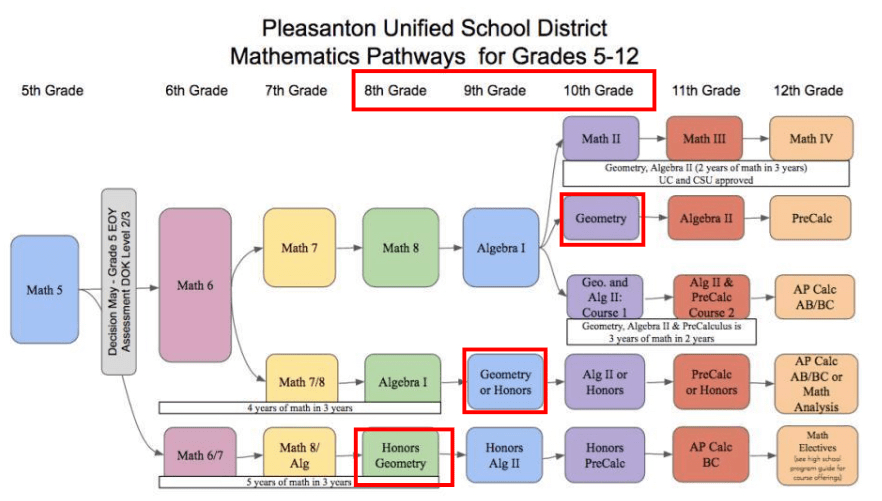
1. Placement into Honors/Accelerated tracks
Geometry is commonly a prerequisite for Algebra 2 / Pre-Calc, and performance can influence whether a student can move into advanced sequences.
2. Standardized tests (SAT/ACT)
Geometry concepts—triangles, similarity, circles, area—show up repeatedly in school tests and standardized exams.
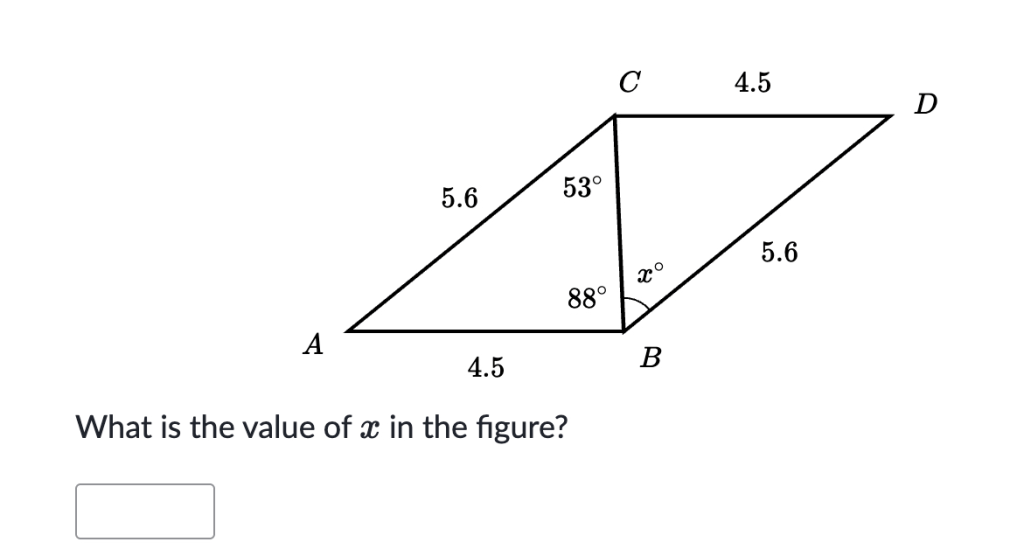
Reference: SAT practice question from Khan Academy
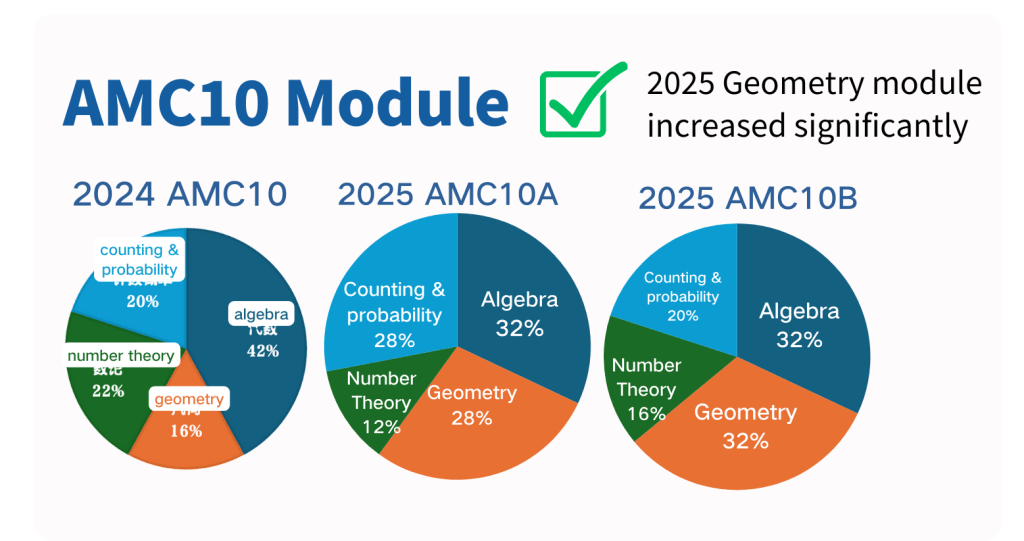
3. Math competitions (AMC 10/12)
Competition problems often assume students are comfortable with geometry reasoning, special triangles, similarity, and clever applications.
The 5 Most Common Geometry Struggles – How to Fix Them
1) Proof writing feels impossible
Many students don’t know how to start, what counts as a valid reason, or how to structure a proof.
Fix: learn proof templates + core theorems (angles, congruence, parallel lines) + how to “translate” a diagram into statements.
2) Students miss hidden information in diagrams
They may overlook equal angles, parallel lines, or congruent segments that are not explicitly labeled.
Fix: build “diagram reading habits”: mark givens, extend lines when needed, and list what must be true.
3) Similarity and proportions become confusing
Students memorize rules but don’t understand why ratios work or when AA similarity applies.
Fix: practice identifying corresponding parts + ratio setup + checking scale factors.
4) Right triangles & trig feel like a new language
Special triangles, trig definitions, and applications can overwhelm students if their triangle basics are weak.
Fix: master special right triangles, then move to trig values, then apply to real problems.
5) Application problems (area, surface area, circles) create careless mistakes
Students may use the wrong formula, miss a face/region, or misread what the question asks.
Fix: structured problem-solving routines + targeted practice on high-frequency question types.
A 15-Lesson Geometry Roadmap
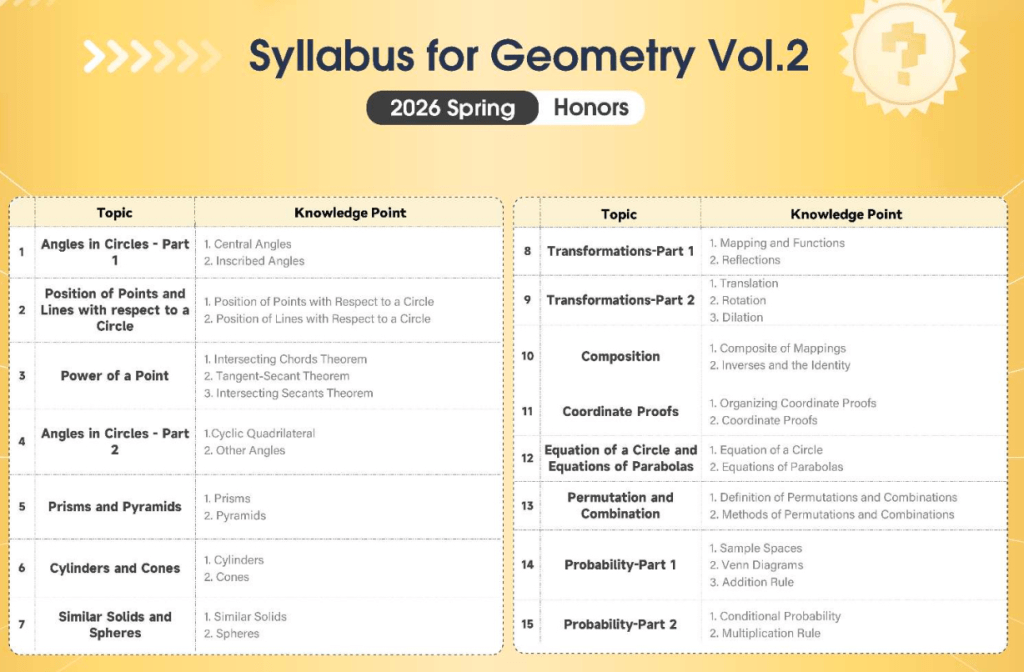
Here’s a streamlined 15-lesson pathway that mirrors how strong Geometry understanding is built: from fundamentals→ applications.
| Phrase | Learning Goals |
|---|---|
| Foundation Building | Learn to write valid proofs and reason through diagrams |
| Comprehensive Strengthening | Tackle challenging problems using logical tools |
| Advanced Transition | Bridge geometry with algebra and future topics |
How Online Geometry Class Works
A big reason students struggle in Geometry is that they never complete the full learning cycle. They watch a lecture, copy notes, and then get stuck alone on homework.
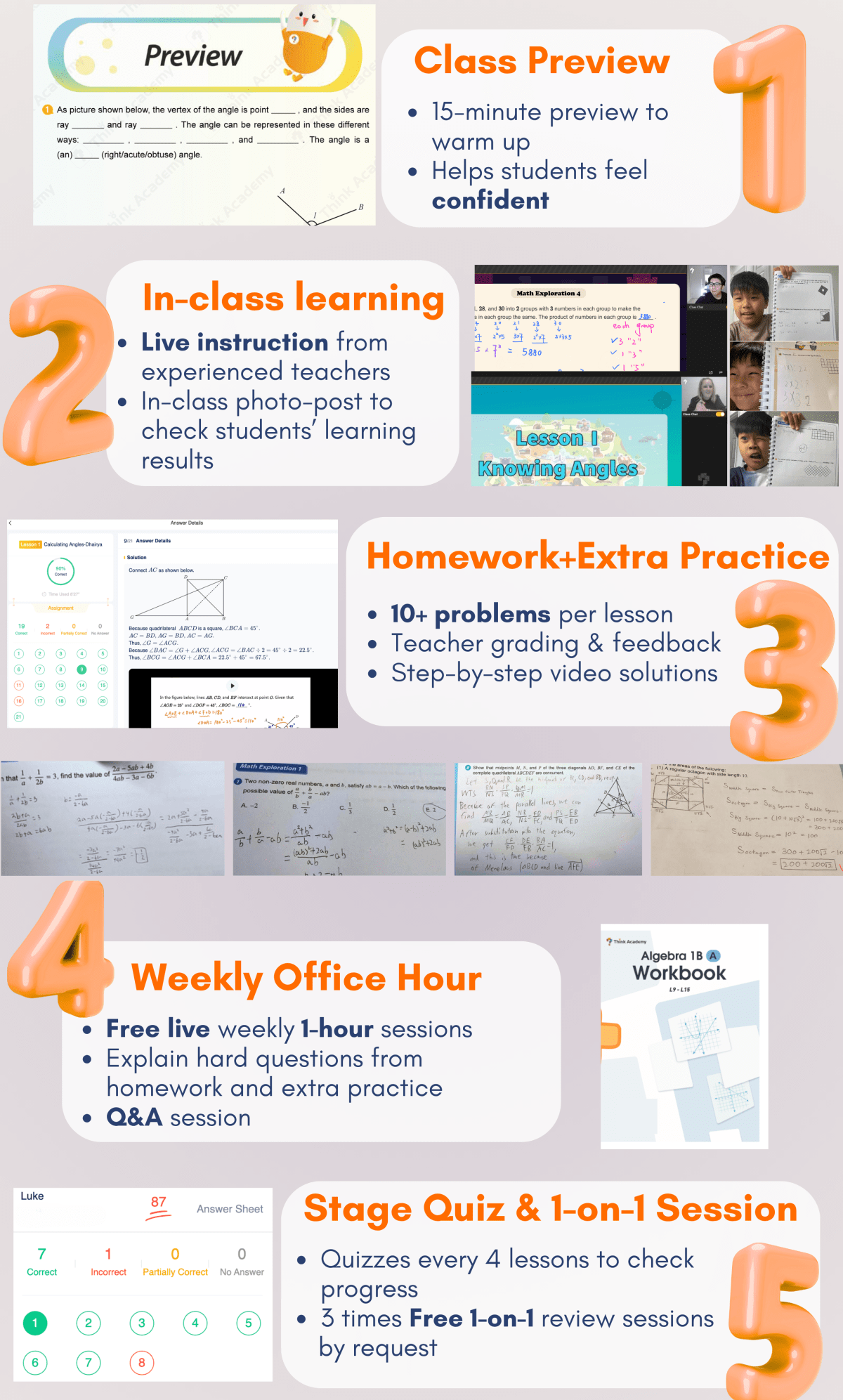
Our class is built around a complete loop:
- Before class: preview + key idea review
- During class: live instruction + guided practice + real-time feedback
- After class: homework with support + teacher correction + weekly learning report
- Ongoing help: office hours + 1on1 tutor support
This matters because Geometry skill improves through doing + explaining, not just listening.
What Parents Get
Parents often ask: “How do I know if my child is improving?”
You’ll get:
- Weekly progress feedback (what they mastered, where they slipped)
- Clear lesson reports (not just scores—skills and habits)
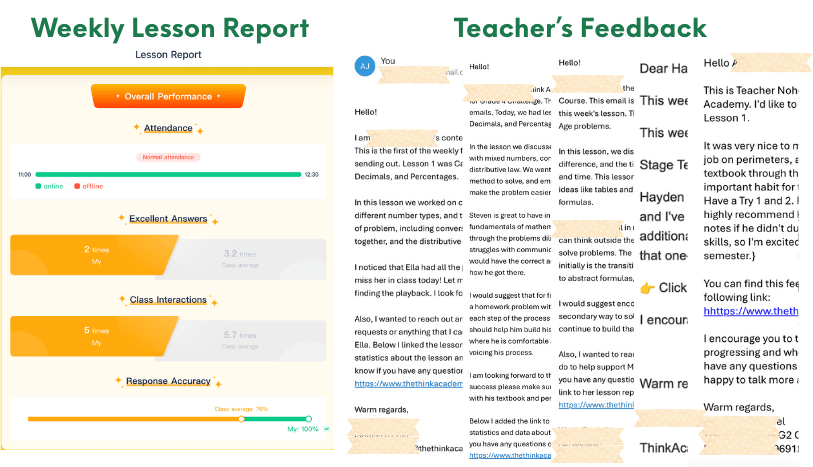
For many families, this is the difference between “we hope it’s working” and we can actually see progress.
Who This Class Is Best For
This Geometry course is a great fit if your child:
- is entering Geometry and wants a strong start
- needs help with proof writing and logical reasoning
- wants to move into Honors/Accelerated math confidently
- is preparing for SAT/ACT math or building foundations for AMC 10/12
FAQs
Q: How long is each class?
A: Typically 2 hours per session, structured as instruction + practice.
Q: Is the class taught in English?
A: Yes—English instruction, designed for US school math expectations.
Q: Does my child need prerequisites?
A solid grasp of basic algebra and arithmetic helps. If your child is unsure, a quick evaluation check can confirm readiness.
Q: How much homework is there?
A: Enough to build skill without burnout—plus support so students don’t get stuck alone.
Next step: Try Our Geometry Class
If Geometry is becoming stressful (or if you want your child to enter Honors math with confidence), a structured plan and live feedback can change everything.
Try Pengi AI — Smarter Math Practice for Students
Pengi AI supports K–12 learners with personalized math practice, guided explanations, and feedback designed to help them build confidence and improve steadily.