Pengi Editor's Note: This article was originally published by Think Academy. We're sharing it here for educational value. Think Academy is a leading K-12 math education provider.
Gifted Programs Across the United States: Developing Abilities in Public Schools
Public school gifted programs vary widely across states, but they all aim to provide advanced learners with more challenging, enriched educational experiences beyond the standard curriculum.
What Are Public School Gifted Programs?
Gifted programs in public schools identify and serve students who demonstrate above-average abilities in academics, creativity, leadership, or specific subject areas. These programs are typically funded and administered at the state or district level, which means policies, eligibility criteria, and quality differ significantly from state to state.
Common program types include:
- Pull-out programs: Students leave their regular classroom for enrichment sessions, typically a few hours per week.
- Self-contained gifted classes: Students spend most or all of their school day with peers identified as gifted.
- Gifted magnet schools: Entire schools dedicated to gifted education within a public school district.
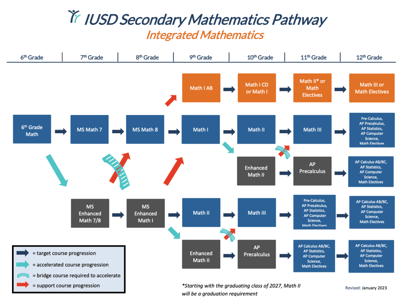
- Advanced coursework: Access to AP, IB, or accelerated courses.
- Cluster grouping: A small number of gifted students are placed together within a general education class.
How Are Students Identified?
Identification processes vary but commonly include:
- IQ testing (often requiring a score of 130+ or in the top 2–5%)
- Achievement test scores
- Teacher and parent nominations
- Portfolio reviews or performance assessments
- Psychological evaluations
Many districts use a combination of these measures to create a more holistic profile of a student's abilities.
Overview of Gifted Programs by State
California
California does not mandate gifted programs at the state level. Districts may choose to offer them using general education funds. Historically, California had a state-funded Gifted and Talented Education (GATE) program, but the categorical funding was eliminated in 2013. Some districts maintain robust programs; others have scaled back significantly.
Key districts with notable programs:
- Los Angeles Unified: Offers GATE identification and designated GATE schools.
- Palo Alto Unified: Known for strong enrichment programming.
- Cupertino Union: Serves advanced learners through differentiated instruction.
Texas
Texas law requires school districts to provide gifted and talented (G/T) services to identified students. The state allocates funding for G/T education.
Highlights:
- Students are identified in Grade 2 and reassessed annually.
- Programs must include a student performance plan.
- Students can accelerate in core subjects including math, reading, and science.
New York
New York City runs one of the largest gifted programs in the nation through its Gifted & Talented (G&T) program. Students take a standardized test in pre-K or Kindergarten, and high scorers are offered placement in:
- District G&T programs (for students scoring in the 90th percentile or above)
- Citywide G&T programs (for students in the 97th percentile or above)
New York State as a whole does not mandate gifted services statewide, leaving decisions to local districts.
Florida
Florida has a strong legal framework for gifted education. Students identified as gifted are entitled to a free appropriate public education (FAPE) through an Individual Educational Plan (EP), similar to students with disabilities.
Identification requires:
- A need for a special program
- A majority of characteristics of gifted students
- Superior intellectual development (IQ of 130 or higher)
Illinois
Illinois law requires school districts to provide differentiated instruction for gifted students, though the form of programming is left to districts. The state formerly funded the Illinois Gifted Education program but those funds have largely been discontinued.
Chicago Public Schools maintains a selective enrollment program, where students apply to gifted-track or magnet programs beginning in Kindergarten.
Washington
Washington does not mandate gifted programs but does offer optional Highly Capable (HC) programs, which districts choose to operate. Seattle Public Schools is known for its Highly Capable Cohort (HCC), which offers an accelerated curriculum in self-contained classrooms.
Massachusetts
Massachusetts recognizes gifted students but has no statewide mandate for gifted programming. Districts operate independently. However, many districts—especially in suburban areas—offer advanced coursework, enrichment pull-outs, and talent development programs.
Virginia
Virginia requires local school divisions to identify and serve gifted students. The state defines giftedness broadly to include intellectual and academic abilities as well as creative, leadership, and visual/performing arts talents.
Georgia
Georgia has a well-developed gifted program administered by the Georgia Department of Education. Students who qualify participate in gifted services beginning in Grade 3. Gifted education in Georgia operates through resource classes, cluster grouping, and special schools.
Comparison: Mandatory vs. Optional Gifted Programs
| State | Mandate Gifted Programs? | State Funding Available? | Notes |
|---|---|---|---|
| Texas | Yes | Yes | Strong statewide framework |
| Florida | Yes | Yes | FAPE model, similar to special ed |
| Georgia | Yes | Yes | Well-structured, broad definition |
| Virginia | Yes | Partial | Includes arts and leadership |
| New York | Partial (NYC only) | Partial | Highly competitive city program |
| California | No | No (funding removed) | District-by-district variation |
| Illinois | Encouraged | No (funding removed) | Selective enrollment in Chicago |
| Washington | No | No | Optional HC programs |
| Massachusetts | No | No | Locally administered |
What Should Parents Know?
- Identification is not universal. Just because your child is gifted doesn't mean they will be automatically identified. Stay proactive.
- Quality varies widely. A gifted designation in one district may mean a specialized school; in another, it may mean a folder of extra worksheets.
- Testing prep can help. Many families work with outside enrichment programs to prepare students for gifted screening tests.
- Advocacy matters. Parents who actively communicate with schools and request testing or appropriate services tend to get better outcomes.
Additional Resources for Gifted Families
Try Pengi AI — Smarter Math Practice for Students
Pengi AI supports K–12 learners with personalized math practice, guided explanations, and feedback designed to help them build confidence and improve steadily.