Pengi Editor's Note: This article was originally published by Think Academy. We're sharing it here for educational value. Think Academy is a leading K-12 math education provider.
Webinar Takeaway: Planning Your STEM College Application from Grade 8/9
In this webinar, Think Academy’s Head of High School Department, Dennis Wang, shared insights on planning STEM college applications for students starting from Grade 8 or 9. As the landscape of college admissions evolved, the 2024 application cycle presented unique challenges. Acceptance rates to top schools continued to decline, hitting historic lows for both early and regular applications. Additionally, many Ivy League institutions gradually reinstated standardized test requirements, emphasizing the importance of academics in the application process. Amidst this uncertainty, questions arose about the predictability of college admissions. What GPA was necessary for acceptance to a top school? How could students stand out in competitive STEM fields? Was participation in STEM competitions essential? Read on to see the key takeaways from the webinar.
Play
[Webinar] Starting from G8/G9: Plan Your STEM College Application
How Do College Admission Officers View Your Application?
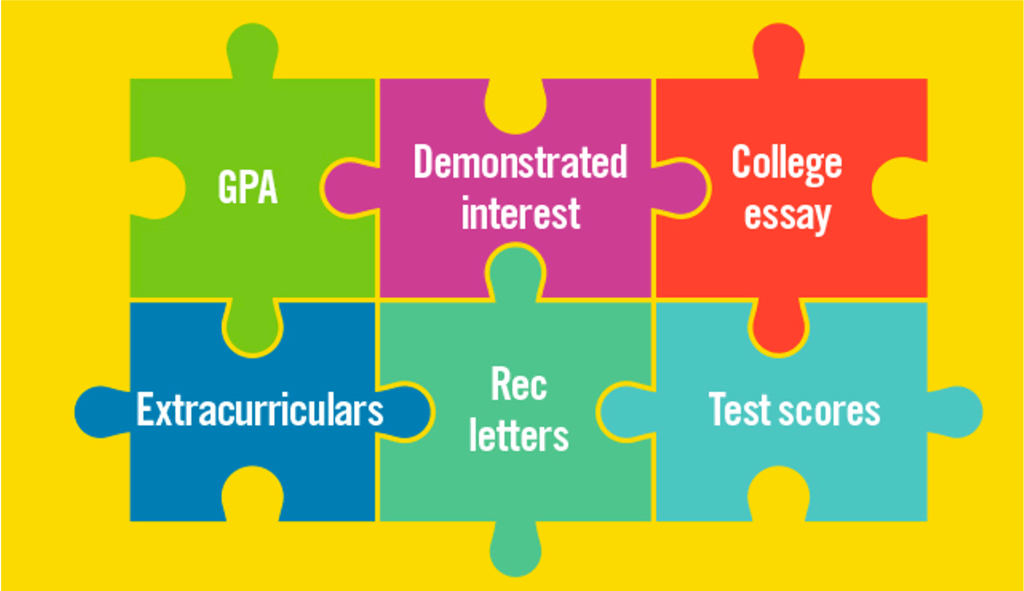
College application factors encompass a range of elements including GPA, class rank, essays, extracurricular activities, competition awards, recommendations, standardized tests, hobbies, and legacy status. Admissions officers conduct a holistic review, categorizing these factors into academic and non-academic realms, with academic achievement carrying the most significance in prestigious school admissions.
Academic Level – GPA
- Unweighted GPA: Follows traditional scoring method with a full score of 4.0.
- Weighted GPA: Typically out of 5.0 and influenced by course difficulty.
- UC GPA: Standards for University of California system applications. Minimum GPA requirements for UC admission: 3.0 GPA for California residents, 3.4 GPA for nonresidents.
Academic Level – Difficulty of Curriculum
- Course difficulty hierarchy: AP/IB > Honors > Regular.
- Course difficulty directly impacts weighted GPA.
- Encouraged to select the most challenging courses within one’s ability.
Student Ranking (Class Rank)
- Ranking based on student GPA.
- Top 20 admission criterion: Top 10% of the school.
- Recent trend: Decline in importance of school rankings; emphasis on standardized test scores. Private schools still value class rankings.
Non-Academic Factors
- Controllable factors: Extracurricular activities, awards, interviews, talent/ability.
- Uncontrollable factors: Legacy, race, family background, etc.
Importance of Factors
- Admission preferences and assessment criteria vary by university.
- Top 30 preference: Academic achievement holds utmost importance; uniqueness valued by top private schools.
Advice
- Strive for excellence in all aspects of your application, starting from this summer.
4 Misconceptions about College Applications
Misconception 1: 9th-grade GPA isn’t important, and a low GPA is acceptable.
- UCLA’s 2022-2023 Admission Statistics show that nearly 60% of students have a perfect GPA (unweighted), and less than 7% of students have a GPA below 3.75.
- Even a public school in California ranked 101st in the nation has 21% of students with a perfect GPA.
Clarification:
- Every year’s GPA is crucial in the competitive landscape of college admissions.
- While a GPA of 3.8 serves as the minimum threshold, a perfect 4.0 GPA significantly distinguishes applicants in the admissions process.
Misconception 2: Colleges no longer care about SAT scores.
- Several prestigious institutions, including Harvard University, Yale University, MIT, California Institute of Technology, Dartmouth, have reinstated the SAT requirement.
- Most admitted students submit standardized test scores:
- Brown University: 54% submitted SAT.
- Penn: 49% submitted SAT.
- University of Michigan: 54% submitted SAT.
Clarification:
Colleges still value SAT scores, aiming for scores at or above the school’s median:
- Ivy League: 1550+
- Top 20: 1500
- Top 30:1450
- Top 50:1400
Misconception 3: Take more “easy” courses to improve your GPA.
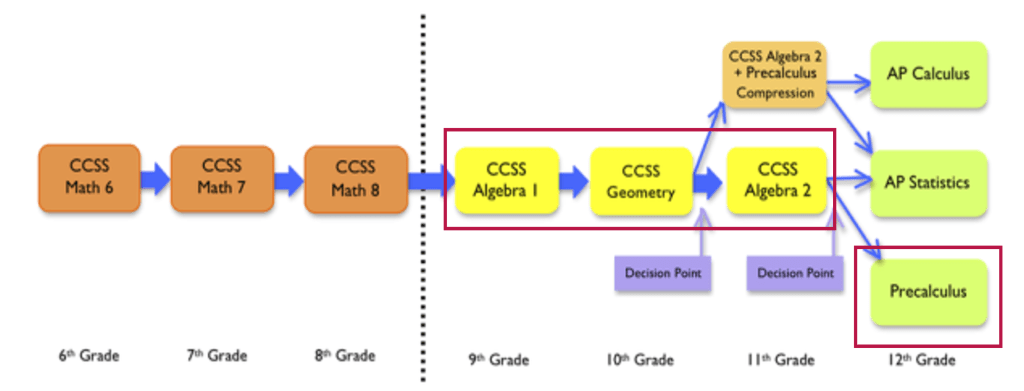
- For instance, in U.S. high schools, options like Algebra 1 in grade 9 and Precalculus in grade 12 are often considered less challenging.
- Nearly 40% of Harvard’s admitted students have reached Calculus BC level, and less than 10% of them have learned Precalculus according to the common core progress.
- Honors courses at top high schools are rigorous, demanding strict selection criteria. Aspiring students targeting esteemed institutions should excel in these challenging classes.
Clarification:
- Avoid easy courses; high grades may indicate a lack of challenge.
- STEM-focused students should select advanced math and science courses.
Misconception 4: Competition awards are no longer important.
Importance of competitions:
- They offer low barriers to entry and are easier to prepare for compared to other academic extracurriculars.
- Common prestigious competitions include Mathematics (AMC 10/12), Physics (Physics Bowl, F=ma), and Biology (USABO).
- For instance, Gunn High, a leading public school in the Bay Area, even includes “sign up for AMC” in its course outline.
- Over 20% of Harvard students have engaged in math or science competitions, making them among the most popular academic activities, second only to community service, sports, student unions, and other pursuits.
Clarification:
- Outstanding students actively participate in competitions to gain a competitive edge.
- STEM students should focus on their strengths and prepare for competitions during grades 8-10.
Final Words
Across school choices and academic milestones—whether public or private schools, early education, or academic tests—math readiness often determines what comes next. Understanding your child’s current level and long-term math track early helps families make confident, well-informed decisions.
A Think Academy Free Math Evaluation offers personalized insight into your child’s math foundation, acceleration readiness, and the most suitable learning path ahead.
If you’re not ready for an evaluation and simply want more practice materials, Think Academy also provides free, downloadable math worksheets for PreK through Grade 10. These grade-aligned resources are designed to help students build and reinforce core skills at their own pace.
Try Pengi AI — Smarter Math Practice for Students
Pengi AI supports K–12 learners with personalized math practice, guided explanations, and feedback designed to help them build confidence and improve steadily.