
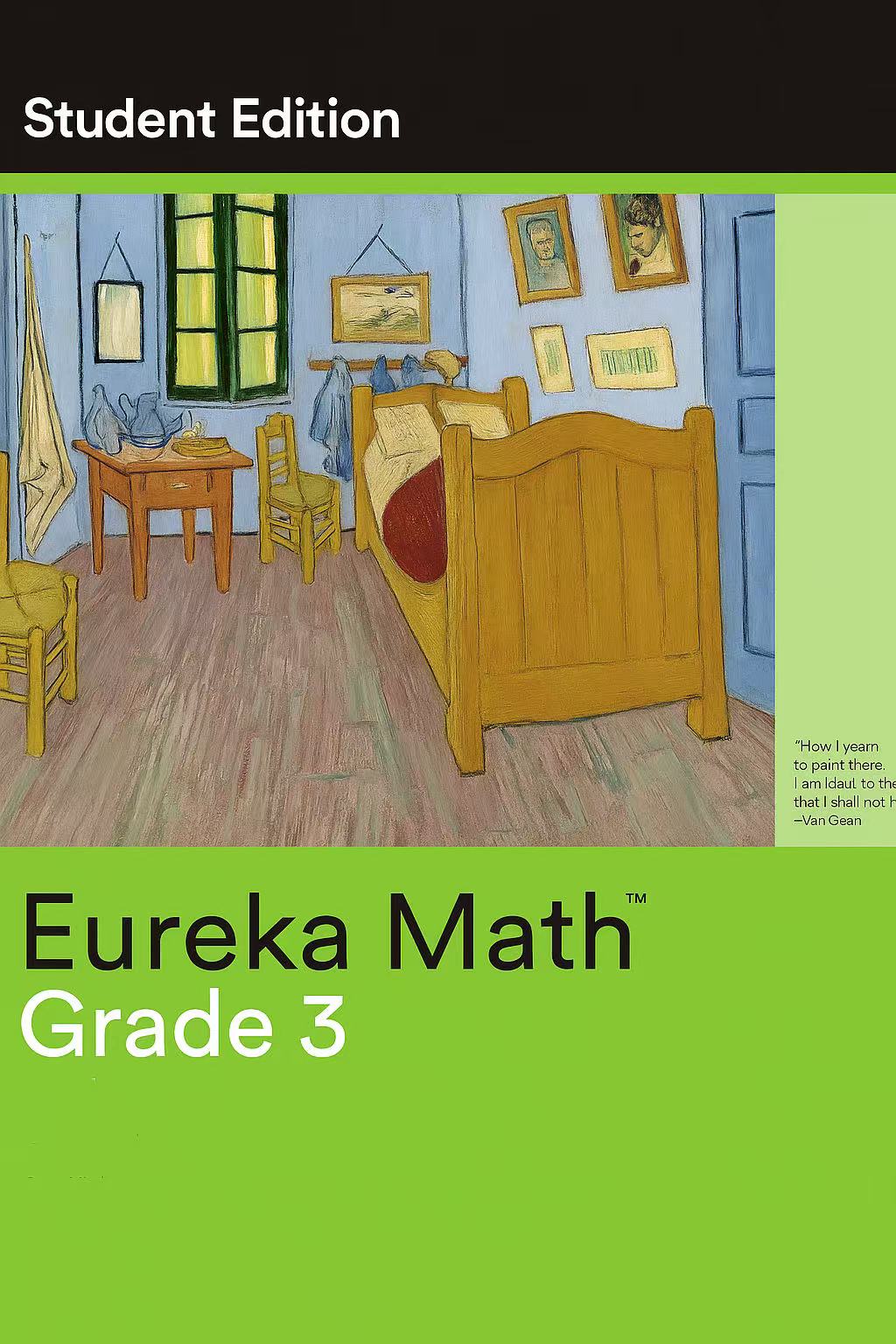
Eureka Math, Grade 3
Eureka Math Grade 3, published by Great Minds, is a rigorous third-grade mathematics curriculum that builds a deep conceptual foundation across core arithmetic and measurement topics. The program guides students through multiplication and division with all single-digit factors, multi-digit addition and subtraction using the standard algorithm, fractions and equivalent fractions on the number line, and geometry concepts including area, perimeter, and attributes of two-dimensional figures. Students also develop skills in metric measurement, data analysis, rounding, and real-world problem solving, following a carefully sequenced progression aligned to the Common Core State Standards.
Chapters & Lessons
Frequently Asked Questions
- Is Eureka Math Grade 3 right for my child?
- Eureka Math Grade 3 is one of the most rigorous third-grade math programs in the US and consistently ranks at the top of EdReports. It is a great fit if your child learns well from structured, conceptual lessons that use visual models like arrays, tape diagrams, and number bonds. The program digs deep into multiplication and division rather than rushing through topics, which some kids love and others find intense. If your child did well in second-grade math and enjoys understanding the "why" behind math, not just the "how," Eureka Grade 3 is an excellent choice.
- Which chapters or concepts are hardest in Eureka Math Grade 3?
- Most third graders find Chapter 5 (fractions on the number line) the most challenging — the jump from whole numbers to fractions with a visual number line model is a significant conceptual leap. Chapter 7 (area and the distributive property) is also tough because it links geometry to multiplication in an abstract way. Many students also struggle with the fluency sprints throughout Chapters 3, 4, and 5 (multiplication and division using units of 2, 3, 4, 6, 7, 8, and 9) since this program expects mastery of all single-digit facts by year end.
- My child is weak in multiplication. Where should they start in this textbook?
- Start at Chapter 1, which builds the conceptual foundation — equal groups, arrays, and what multiplication actually means. Do not skip Chapter 2 on division as an unknown factor, because understanding multiplication and division together is how Eureka builds fact fluency. Then work through Chapters 3, 4, and 5 in order, which introduce specific multiplication units (2s, 3s, 4s). Each chapter uses the same visual models consistently so your child builds confidence before the numbers get harder. Rushing to memorize facts without these chapters often backfires later.
- What should my child study after finishing Eureka Math Grade 3?
- After Eureka Math Grade 3, the natural next step is Eureka Math Grade 4, which extends multiplication to multi-digit numbers and introduces fractions as numbers on the number line. Alternatively, enVision Mathematics Grade 4 or Pengi Math Grade 4 are solid options. If your child demonstrated strong conceptual thinking throughout Grade 3, they may be ready for enrichment with AMC 8 prep materials. The fraction and area foundations from Grade 3 are critically important — make sure those are solid before starting Grade 4.
- How can Pengi help my child with Eureka Math Grade 3?
- Eureka Math Grade 3 moves fast and the lesson structure can be hard to follow at home. Pengi can break down any Eureka lesson — for example, explaining why the distributive property in Chapter 7 works using arrays, or walking through fraction number lines step by step in Chapter 5. If your child freezes on timed fluency practice, Pengi can generate custom fact drills at exactly the right pace. Parents often find Eureka homework confusing too — Pengi can explain the parent-facing problem formats so you can better support your child each evening.
Ready to start learning?
Jump into your first lesson for Eureka Math, Grade 3. Free, no account required.
Start Learning