Pengi Editor's Note: This article was originally published by Think Academy. We're sharing it here for educational value. Think Academy is a leading K-12 math education provider.
Area of Parallelogram: Definition, Formula And Worksheets
Ever seen a slanted rectangle and wondered, “Is that still a rectangle?” It might be a parallelogram—a clever four-sided shape with secrets hidden in its angles. In this guide, we’ll break down what a parallelogram is, how to find its base and height, and how to calculate its area with confidence.
Looking for extra practice? Scroll to the bottom to download free printable worksheets!
Definition of parallelogram
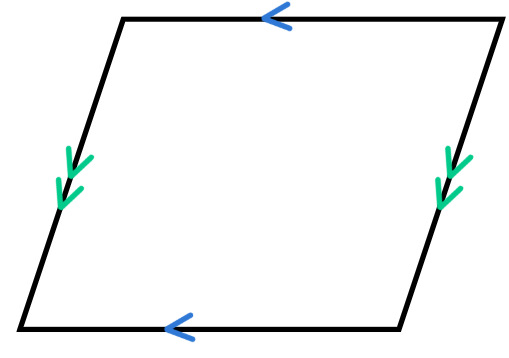
A parallelogram is defined as a quadrilateral (a four-sided polygon) where both pairs of opposite sides are parallel.
Now, when it comes to finding the area, two parts of a parallelogram matter most: the base and the height.
But wait — how do we know which side is the base?
- If the parallelogram is sitting flat, the bottom edge is usually the base.
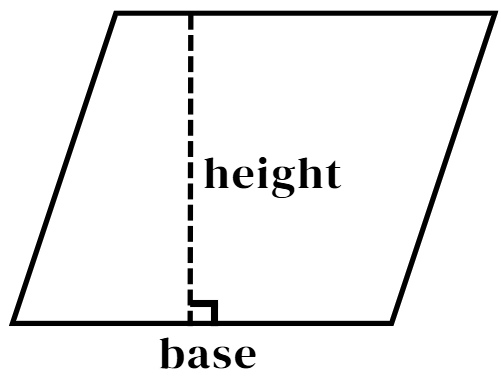
- If it’s tilted or slanted, any side can be used as the base — as long as we know how to find the correct height for it!
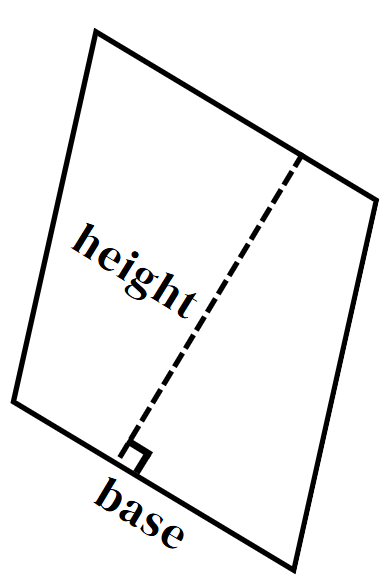
The height is the straight-up distance from the base to the opposite side — like a ladder leaning against a wall. It must be perpendicular (forms a 90° angle) to the base.
Sometimes, the height falls outside the parallelogram. That’s totally okay! Just imagine dropping a straight line from the top down to the base. As long as it’s at a right angle, it counts as the height.
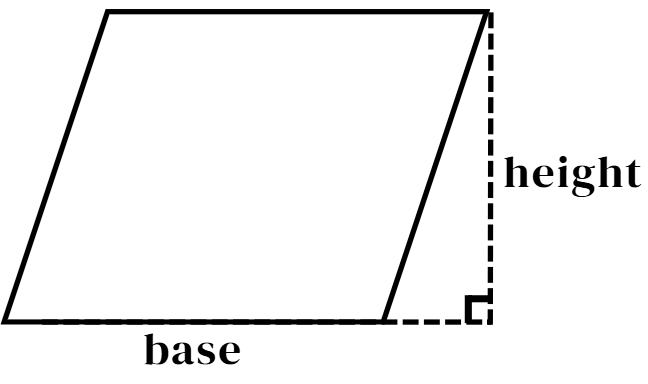
So whether the base is flat or slanted, the rule is the same: Height must be perpendicular to the base, even if it’s outside the shape!
Once you’ve got the base and the height, you’re all set to find the area.
Parallelogram Area Formula
We often think of rectangles when we hear the word “area.” But how do we find the area of a parallelogram? Let’s break it down with a trick!
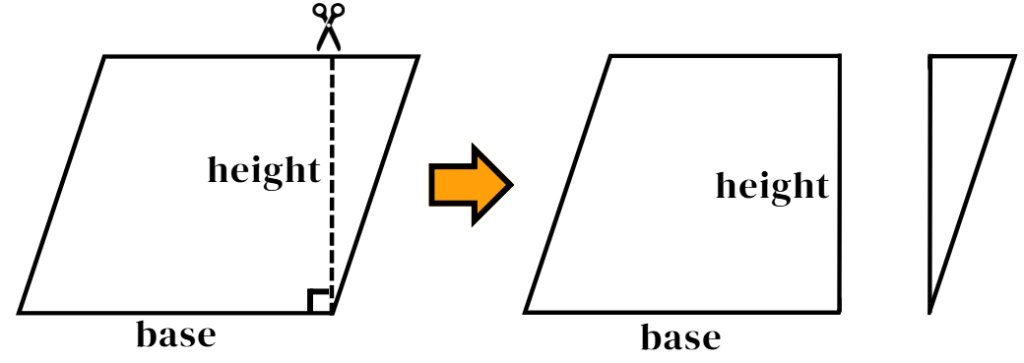
Here is a parallelogram. If you cut off a triangle from one side and slide it to the other, you can form a rectangle! This neat transformation doesn’t change the area.
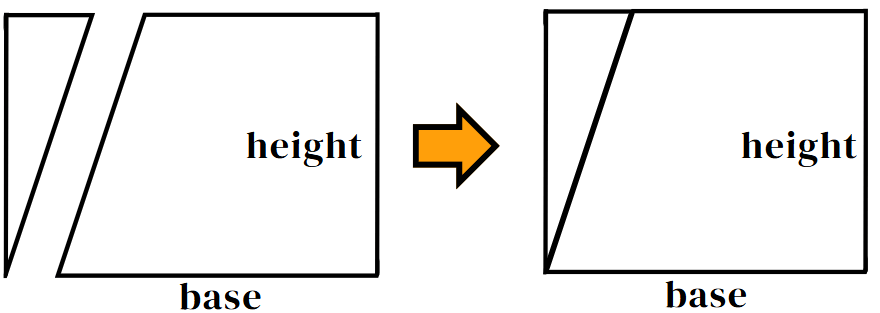
That’s why the area of a parallelogram uses the same idea as the area of a rectangle:
Area the Parallelogram = base × height
Important tip: The height is not the side of the parallelogram—unless that side forms a right angle with the base! Think of height as the straight-up distance from the base to the top, like a ladder standing tall and perfectly upright.
Example: Applying the Parallelogram Area Formula
Example 1
Problem:
What is the area of this parallelogram?
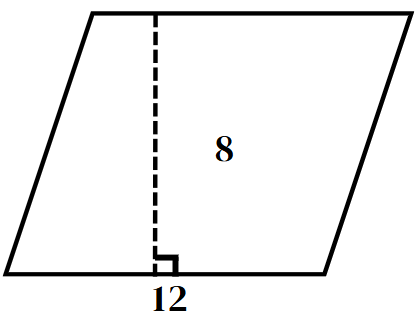
Answer:
base = 12, height = 8
Area = base × height = 12 × 8 = 96
Example 2
Problem:
The area of this parallelogram is 60. If the base is the side with length 12, what is the corresponding height?
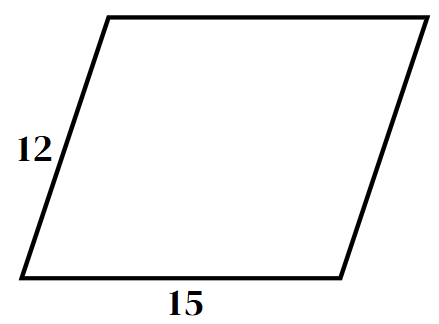
Answer:
Area = 60, base = 12
Area = base × height
60 = 12 × height
height = 60 ÷ 12 = 5
Want more practice?
Wrapping Up the Parallelogram Area Formula
Parallelograms may look like they’re leaning, but their math stands tall and strong! By remembering the base and the perpendicular height, you can find the area of any parallelogram — even if it’s wearing a fancy disguise as a rhombus, rectangle, or square.
To help you see how parallelograms fit into the big picture of geometry, here’s a quick summary of the area formulas for some common shapes:
| Shape | Figure | Area Formula | Special Notes |
|---|---|---|---|
| Square | 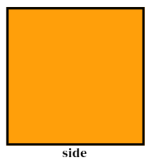 | Area = side² | All four sides are equal |
| Rectangle | 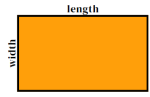 | Area = length × width | Opposite sides are equal |
| Parallelogram | 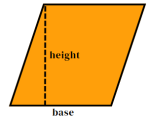 | Area = base × height | Opposite sides are parallel |
| Trapezoid | 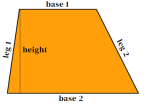 | Area = ½ × (base₁ + base₂) × height | One pair of parallel sides |
Even More Math Worksheets for Practice!
We’ve created a full library of printable resources — from foundational math to logic-based challenges — organized by grade to support every stage of your child’s journey.
Additional Math Topics for Grade 6 – with Free Worksheets
Think Academy Math Program
If you’re looking to build on math strengths or close math gaps, we offer comprehensive K–12 math programs designed to:
- Catch up: Fill in gaps and strengthen foundational skills
- Stay ahead: Maintain a competitive edge and accelerate math progress
- Go further: Take on challenge math competitions, Math kangaroo, AMC competitions
Next Step: Take a personalized evaluation to understand your child’s current math progress and get a tailored roadmap for courses, pacing, and goals.
Try Pengi AI — Smarter Math Practice for Students
Pengi AI supports K–12 learners with personalized math practice, guided explanations, and feedback designed to help them build confidence and improve steadily.