Pengi Editor's Note: This article was originally published by Think Academy. We're sharing it here for educational value. Think Academy is a leading K-12 math education provider.
Best Math Books for Ivy League-Bound Students
Getting into the Ivy League requires more than strong grades. Top universities look for students who demonstrate genuine intellectual depth and passion — and few subjects reveal this more clearly than mathematics. If your child is aiming for Harvard, MIT, Princeton, or similar schools, these math books can help build the deep problem-solving skills that admissions officers notice.
Why Math Books Matter for Competitive Admissions
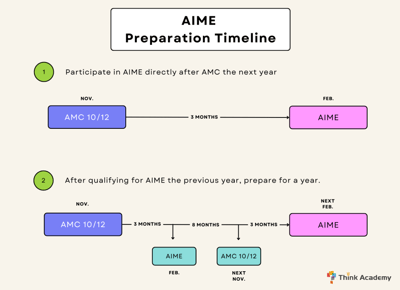
- Contest success requires deep preparation: AMC 10/12, AIME, USAMO, and Putnam success are highly valued by elite admissions offices and require systematic book-based learning.
- Independent intellectual development: Reading and working through rigorous math books signals the kind of self-directed intellectual curiosity that Ivy League schools actively seek.
- Interview and application differentiation: Being able to discuss mathematics at a sophisticated level — beyond AP Calculus — distinguishes applicants in interviews and essays.
Foundational Books (Grades 6–9)
Art of Problem Solving — Volume 1
Level: Grades 6–9
Why it matters: The AoPS series is the standard preparation text for AMC 8, AMC 10, and beyond. Volume 1 covers core topics in number theory, algebra, combinatorics, and geometry at a depth far exceeding school textbooks.
Art of Problem Solving — Volume 2
Level: Grades 8–10
Why it matters: Builds on Volume 1 with more advanced problem-solving techniques. Students who master both volumes are well-prepared for AMC 10/12 and AIME.
How to Solve It — George Pólya
Level: Grades 7–12
Why it matters: A classic work on mathematical problem-solving methodology. Pólya's heuristics — understanding the problem, devising a plan, carrying out the plan, looking back — are foundational thinking tools applicable across all of mathematics and beyond.
Intermediate Books (Grades 9–11)
Competition Mathematics (AoPS Series)
Level: Grades 9–11
Titles to explore:
- Introduction to Algebra
- Introduction to Counting & Probability
- Introduction to Number Theory
- Introduction to Geometry
These subject-specific AoPS books provide deeper treatment of each area needed for AMC 10/12 and AIME.
The Art and Craft of Problem Solving — Paul Zeitz
Level: Grades 10–12 (advanced)
Why it matters: Written by a USAMO and Putnam competitor, this book develops the mindset and toolkit for competition mathematics. It's particularly strong on mathematical reasoning, proof strategies, and exploration.
Principles and Techniques in Combinatorics — Chen Chuan-Chong & Koh Khee-Meng
Level: Grades 10–12
Why it matters: Combinatorics is one of the most tested areas in AMC and AIME. This book provides deep, rigorous coverage from basic counting through advanced techniques.
Advanced Books (Grades 11–12 and Beyond)
An Introduction to the Theory of Numbers — Hardy & Wright
Level: Advanced high school / early college
Why it matters: Number theory is a major component of USAMO and Putnam problems. Hardy & Wright is the classic reference for deep number theory study.
Linear Algebra Done Right — Sheldon Axler
Level: Advanced (late high school / early college)
Why it matters: For students planning to study mathematics, computer science, or engineering at the university level, linear algebra is foundational. Axler's approach builds genuine understanding rather than mechanical computation.
Real Mathematical Analysis — Charles Pugh
Level: Advanced (late high school / early college)
Why it matters: Analysis is the foundation of all higher mathematics. For truly gifted students interested in pure mathematics, starting analysis early builds the rigorous thinking that differentiates exceptional mathematicians.
How to Use These Books Effectively
- Work problems — don't just read: The value in math books comes from struggling with problems. Read a section, attempt problems before looking at hints, and review solutions carefully.
- Build systematically: Don't skip to advanced books prematurely. Strong foundations in algebra and number theory pay dividends in all advanced areas.
- Track your progress: Keep a notebook of key insights, solution strategies, and problems that challenged you. This preparation also serves as material for college essays.
- Compete: Use book learning as preparation for actual competitions — AMC, AIME, USAMO. Competition experience validates your preparation and demonstrates it on your application.
The Math → Admissions Connection
Universities like MIT, Caltech, Harvey Mudd, and the Ivies actively look for evidence of mathematical ability beyond GPA and AP exam scores. USAMO qualification, Putnam top-500 placement, or ARML team experience are the kinds of achievements that make applications stand out.
Building that level of achievement requires years of dedicated book-based study alongside competition experience — starting as early as 7th or 8th grade.
Try Pengi AI — Smarter Math Practice for Students
Pengi AI supports K–12 learners with personalized math practice, guided explanations, and feedback designed to help them build confidence and improve steadily.