
Pengi Editor's Note: This article was originally published by Think Academy. We're sharing it here for educational value. Think Academy is a leading K-12 math education provider.
Different Forms of Linear Functions: Standard, Slope-Intercept & Point-Slope
Linear functions can be written in multiple forms, each highlighting different properties of the line. Understanding all three major forms — Standard Form, Slope-Intercept Form, and Point-Slope Form — gives students the flexibility to work with linear equations in any context.
Standard Form of a Linear Equation
The standard form of a linear equation is:
Ax + By = C
where A, B, and C are integers, and A is non-negative.
Key features:
- Easy to find both x- and y-intercepts quickly.
- Commonly used in systems of equations.
- x-intercept: set y = 0, solve for x → x = C/A
- y-intercept: set x = 0, solve for y → y = C/B
Example:
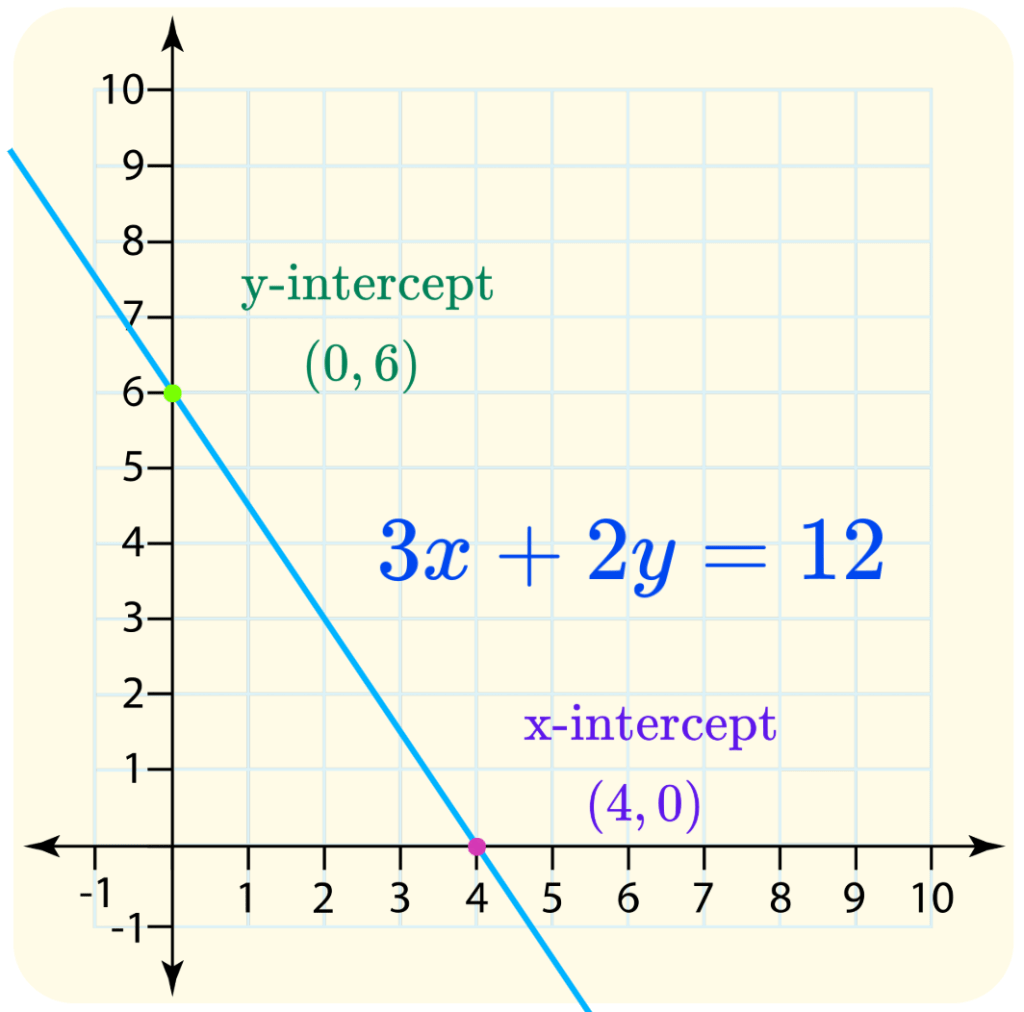
3x + 2y = 12
x-intercept: (4, 0)
y-intercept: (0, 6)
Slope-Intercept Form
The slope-intercept form is:
y = mx + b
where:
- m = slope (rise over run)
- b = y-intercept (where the line crosses the y-axis)
This is the most commonly used form and makes it easy to graph a line directly.
Example:
y = 2x + 3
Slope: 2 (for every 1 unit right, go 2 units up)
y-intercept: (0, 3)
Point-Slope Form
The point-slope form is:
y − y₁ = m(x − x₁)
where:
- m = slope
- (x₁, y₁) = a known point on the line
This form is most useful when you know the slope and one point but not the y-intercept.
Example:
Line with slope 3 passing through (2, 5):
y − 5 = 3(x − 2)
Simplified: y = 3x − 1
Comparing the Three Forms
| Form | Formula | Best Used When... |
|---|---|---|
| Standard | Ax + By = C | Working with systems of equations or intercepts |
| Slope-Intercept | y = mx + b | Graphing, identifying slope and y-intercept |
| Point-Slope | y − y₁ = m(x − x₁) | Given slope and a point (not the y-intercept) |
Converting Between Forms
Slope-Intercept → Standard Form:
y = 2x + 5 → -2x + y = 5 → 2x - y = -5
Point-Slope → Slope-Intercept:
y − 3 = 4(x − 1) → y = 4x − 4 + 3 → y = 4x − 1
Standard → Slope-Intercept:
3x + 4y = 12 → 4y = -3x + 12 → y = −(3/4)x + 3
Practice Problems
- Write the equation y = -2x + 7 in standard form.
- Convert 5x − 3y = 15 to slope-intercept form.
- A line passes through (1, 4) with slope 2. Write it in point-slope form, then convert to slope-intercept form.
Want more printable practice?
Download Free Algebra 1 Worksheets
We've created a full library of printable resources — from foundational math to logic-based challenges — organized by grade to support every stage of your child's journey.
Explore the K–12 Worksheets Hub
More Related Articles
- How to Graph and Solve a Linear Function Step by Step
- Linear Functions: The Features of Parallel and Perpendicular
- How to Represent Linear Functions: Slope-Intercept vs Point-Slope Form
Try Pengi AI — Smarter Math Practice for Students
Pengi AI supports K–12 learners with personalized math practice, guided explanations, and feedback designed to help them build confidence and improve steadily.