
Pengi Editor's Note: This article was originally published by Think Academy. We're sharing it here for educational value. Think Academy is a leading K-12 math education provider.
Harker School vs. Nueva School: In-Depth Comparison Across 5 Key Aspects
For Bay Area families considering elite private schools, The Harker School and The Nueva School are two of the most prestigious and frequently compared options. Both serve highly capable students and deliver exceptional college outcomes — but they offer distinctly different educational philosophies and cultures.
Pengi AI — AI-powered personalized math tutoring platform that adapts to each student's level, offering 24/7 practice and instant feedback.
Overview
| Feature | The Harker School | The Nueva School |
|---|---|---|
| Location | San Jose, CA | Hillsborough, CA |
| Grades | K–12 | K–12 |
| Student Body | ~1,900 students | ~1,000 students |
| Founded | 1893 | 1967 |
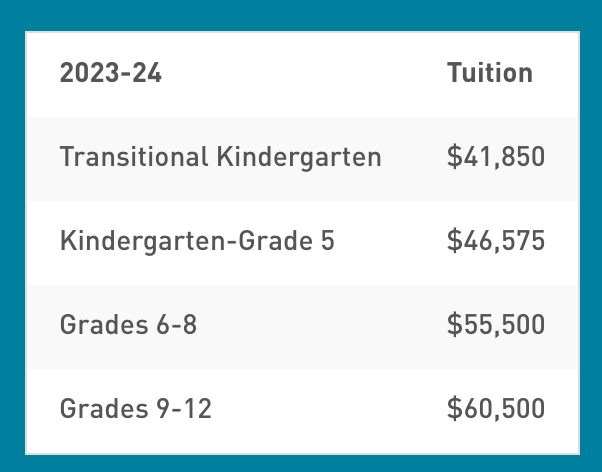
| Tuition | ~$46,000–$55,000/year | ~$55,000–$60,000/year |
| Acceptance Rate | ~10–15% (varies by grade) | ~8–10% |
| Student-to-Faculty | ~8:1 | ~5:1 |
1. Educational Philosophy and Approach
Harker School follows a rigorous, academically intensive model. The school emphasizes academic excellence, preparation for competitive colleges, and deep domain expertise. Instruction is more traditional in format — structured curriculum, significant homework, and high expectations for academic achievement.
Nueva School is built around an inquiry-based learning model. Nueva pioneered "Design Thinking" in K-12 education and emphasizes creativity, collaboration, and self-directed learning. The curriculum is integrated across disciplines, with projects often spanning multiple subjects. Nueva students are expected to be active creators of their learning, not passive recipients.
Verdict: Harker is better for families who want clear academic structure and traditional academic excellence. Nueva is better for families who want a more creative, inquiry-driven, interdisciplinary environment.
2. STEM Programs and Competition Math
Harker has one of the strongest STEM competition programs in the country. Harker students regularly qualify for and medal in:
- USAMO, USAJMO (math olympiad)
- Intel/Regeneron Science and Engineering Fair
- Physics Olympiad (USAPhO)
- Chemistry Olympiad (USNCO)
The school has dedicated math competition teams and significant institutional support for competition preparation.
Nueva also produces exceptional STEM students, but with a different emphasis. Nueva's approach to STEM is more integrated and project-based — "design challenges," engineering prototypes, and research projects rather than competition preparation. Nueva has produced Intel Science Fair finalists and AMC/AIME participants, but competition math culture is less dominant.
Verdict: For students specifically interested in math and science competitions, Harker has a stronger institutional program. Nueva's STEM approach is more about creative problem-solving and research than competition placement.
3. Arts, Humanities, and Extracurriculars
Harker offers strong arts, music, and theater programs — surprising given its STEM reputation. The school maintains a comprehensive extracurricular program with competitive teams in athletics, debate, and academic competitions.
Nueva places exceptional emphasis on arts and design. The Nueva Arts Center and the school's "Design Lab" are central to the educational experience. Students are expected to engage deeply with creative work. Humanities are taught through an integrated, project-based approach rather than traditional class structures.
Verdict: Both schools offer excellent programs. Nueva's arts and humanities integration is more distinctive and central to the school's identity. Harker's extracurricular breadth is broader.
4. College Outcomes
Both schools produce remarkable college outcomes.
Harker consistently places graduates at MIT, Stanford, Caltech, Harvard, Yale, Princeton, and other top universities. The school publishes annual college matriculation data showing strong representation at highly selective institutions.
Nueva similarly sends graduates to the most selective universities. Nueva's graduate college list regularly includes the same top-20 universities as Harker.
Verdict: Effectively equivalent. Both schools are "pipeline" institutions to elite universities. The difference in college outcomes is negligible.
5. Campus, Culture, and Community
Harker operates across three campuses in San Jose. The main high school campus has a more traditional school feel, with large athletics facilities, performing arts spaces, and academic buildings. The culture is high-achieving and academically competitive.
Nueva operates primarily from a single campus in Hillsborough. The campus includes the renowned Innovation Lab (iLab) and extensive maker spaces. The culture emphasizes "joyful learning" and collaboration over competition. Students are encouraged to embrace failure as part of the learning process.
Verdict: Harker's competitive, achievement-oriented culture suits students who thrive under structure and academic intensity. Nueva's collaborative, creative culture suits students who are self-directed, curious, and less motivated by traditional academic rankings.
Summary Table
| Aspect | Harker School | Nueva School |
|---|---|---|
| Philosophy | Rigorous, structured excellence | Inquiry-based, creative, integrated |
| STEM Competitions | Exceptional institutional programs | Project-based, research-focused |
| Arts & Humanities | Strong, complementary | Central to identity, distinctive |
| College Outcomes | Exceptional | Exceptional |
| Campus Culture | High-achieving, competitive | Collaborative, joyful, innovative |
Which School Is Right for Your Child?
Consider Harker if your child:
- Thrives with clear structure and academic expectations
- Is motivated by academic achievement and competition
- Wants a school with strong institutional support for math/science competitions
- Prefers traditional academic rigor
Consider Nueva if your child:
- Is curious, self-directed, and creative
- Thrives in interdisciplinary project-based learning
- Is less driven by grades and more by intrinsic intellectual interests
- Values a school culture that explicitly celebrates innovation and creative risk-taking
Both schools are exceptional. The "right" choice depends entirely on your child's learning style, personality, and what kind of educational environment helps them flourish.
Try Pengi AI — Smarter Math Practice for Students
Pengi AI supports K–12 learners with personalized math practice, guided explanations, and feedback designed to help them build confidence and improve steadily.