Pengi Editor's Note: This article was originally published by Think Academy. We're sharing it here for educational value. Think Academy is a leading K-12 math education provider.
ISEE For Private School Admission: Ultimate Guide & FAQs
What Is the ISEE — and How Does It Work?
The ISEE (Independent School Entrance Exam) is a standardized test administered by the Educational Records Bureau (ERB). It is commonly used by private elementary, middle, and high schools across the U.S. as part of the admissions or transfer process.
- Grade Levels: Available for students applying to Grades 2 through 12. Different levels of the exam match the target grade.
- Core Focus: The ISEE tests a combination of mathematical skills and language abilities, aiming to assess both academic readiness and critical thinking.
This article helps you figure out “when to take the ISEE, what to expect on the test, and how to prepare for it.”
Who Uses the ISEE?
A Quick Look at Top Private Schools’ Requirements
Private schools vary in how they use the ISEE — some require scores, others list it as optional, and a few do not accept it at all.
To help parents navigate this, we reviewed the admissions policies of the Top 10 Private K–12 Schools in America (as ranked by Niche) for the 2026 admissions cycle.
Key Takeaways:
- New York Area day schools typically require either the ISEE or SSAT, often starting from Grade 3 or Grade 5.
- Top Bay Area schools lean toward test-free or test-optional approaches, focusing more on interviews, student work, teacher evaluations, and school performance rather than standardized tests.
- Most schools accept only current-year test results, with a typical testing window from August to the following January. Some schools only accept one score report — so plan ahead before booking a test date.
- If you’re applying to multiple schools, let the earliest deadline guide your child’s first ISEE attempt and whether a second test may be needed.
| Rank | School Name | Location | ISEE/SSAT Policy (Based on 2026 Admissions Info) |
|---|---|---|---|
| #1 | The Brearley School | New York, NY | Required: All applicants must submit ISEE or SSAT. Testing by December 2025 recommended. (The Brearley School) |
| #2 | Riverdale Country School | Bronx, NY | Required for Grades 5–12: ISEE or SSAT accepted. Not required for Grades 3–4.(Riverdale Country School) |
| #3 | The Chapin School | New York, NY | Not Accepted: Middle/Upper School explicitly does not accept ISEE/SSAT. Internal academic assessment used.(chapin.edu) |
| #4 | Horace Mann School | Bronx, NY | Required: Grades 2–4 take Primary ISEE; Grades 6–11 take ISEE (SSAT accepted for boarding applicants).(horacemann.org) |
| #5 | St. John’s School (Houston) | Houston, TX | Required: Primary ISEE needed for Classes 2–4; Class 5 considers ISEE; Middle/Upper accepts one ISEE score report per season (any testing site).(admission.sjs.org) |
| #6 | The Spence School | New York, NY | Required from Grade 3: ISEE or SSAT accepted; Testing window: Aug 2025 – Jan 2026.(spenceschool.org) |
| #7 | Rye Country Day School | Rye, NY | Required: Primary ISEE for Grades 3–4; ISEE or SSAT for Grades 5–12 (no preference).(Rye Country Day School) |
| #8 | Oak Crest Academy – Pomona | Pomona, CA | Not Required: Admissions process emphasizes educational testing, but does not list ISEE/SSAT as requirements.(oakcrestacademy.org) |
| #9 | The Nueva School | Hillsborough, CA | Not Accepted: Upper School explicitly does not require or accept ISEE/SSAT. K–8 uses internal assessment.(nuevaschool.org) |
| #10 | Sidwell Friends School | Washington, DC | Not Required: Official “How to Apply” section mentions only group visits and internal assessments — no ISEE/SSAT listed.(sidwell.edu) |
Note: School rankings are based on the Niche 2026 list of Best Private K–12 Schools in America.
ISEE Levels by Application Grade
The ISEE is divided into four testing levels based on the grade your child is applying to.
| Current Grade | Applying Grade | ISEE Level |
|---|---|---|
| G1 | G2 | Primary Level 2 |
| G2 | G3 | Primary Level 3 |
| G3 | G4 | Primary Level 4 |
| G4 or G5 | G5 or G6 | Lower Level |
| G6 or G7 | G7 or G8 | Middle Level |
| G8 & above | G9 – G12 | Upper Level |
In short: Your child should take the ISEE level that matches the grade they’re applying for.
Test Format
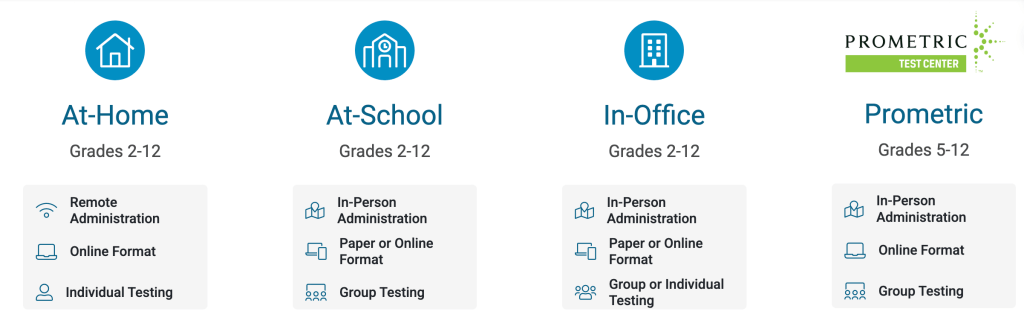
Students can take the ISEE in two formats:
- Online Exam
- Paper Exam
The format depends on the testing location you select when registering.
How Many Times Can You Take the ISEE?
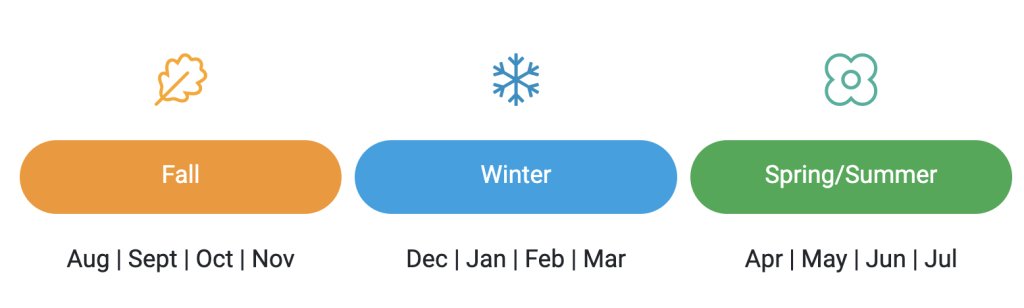
The ISEE is offered during three testing seasons each academic year:
- Fall
- Winter
- Spring
Students may take the ISEE once per season, for a maximum of 3 times per academic year.
✨ Practical Testing Advice
If your target school requires ISEE and admissions are competitive: Consider taking the ISEE twice — once for baseline experience, and again to improve the score.
If the ISEE is optional: Many families choose to take it once, and only consider retaking it if the mock test scores and actual results differ significantly.
How to Register for the ISEE & Check Available Test Dates
ISEE registration is handled through the official ERB portal: Free Online Registration
Once on the site, you can:
- Select your child’s current grade and target application grade
- Choose the ISEE level, location, and test format (online or paper)
- View available test dates in your city or state
Registration & Logistics Tips
- Paper Exam Walk-In Options: Some schools allow walk-in registration for paper-based exams. If you miss a deadline, you may contact the school’s admissions office to ask about availability. Note: Additional fees may apply.
- Fees for Rescheduling, Canceling, or Late Paper Registration: Changes to test appointments or late sign-ups typically involve extra charges, so plan ahead.
- Check Your Target School’s Deadlines First: Before booking a test date, confirm your school’s application deadline and the testing materials submission deadline. Because score reporting takes time, it’s best to work backward from your school’s due dates to choose your child’s test season wisely.
What’s on the ISEE
Primary Level (Grades 2–4)
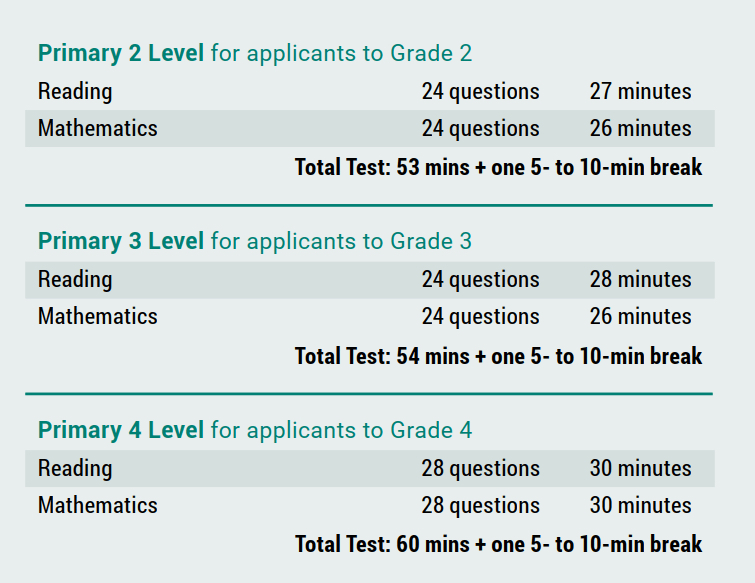
The Primary Level ISEE is designed for students applying to Grades 2–4, and focuses on early literacy, listening, and basic math reasoning skills.
Here’s what it includes:
① Reading: Short reading passages test a child’s ability to understand the main idea, context clues, and basic reasoning.
② Mathematics: Covers foundational skills such as number sense and spatial awareness.
③ Auditory Comprehension: (Primary 2 only) Students listen to a short passage and answer questions to assess listening comprehension and key detail recognition.
Lower / Middle / Upper Level
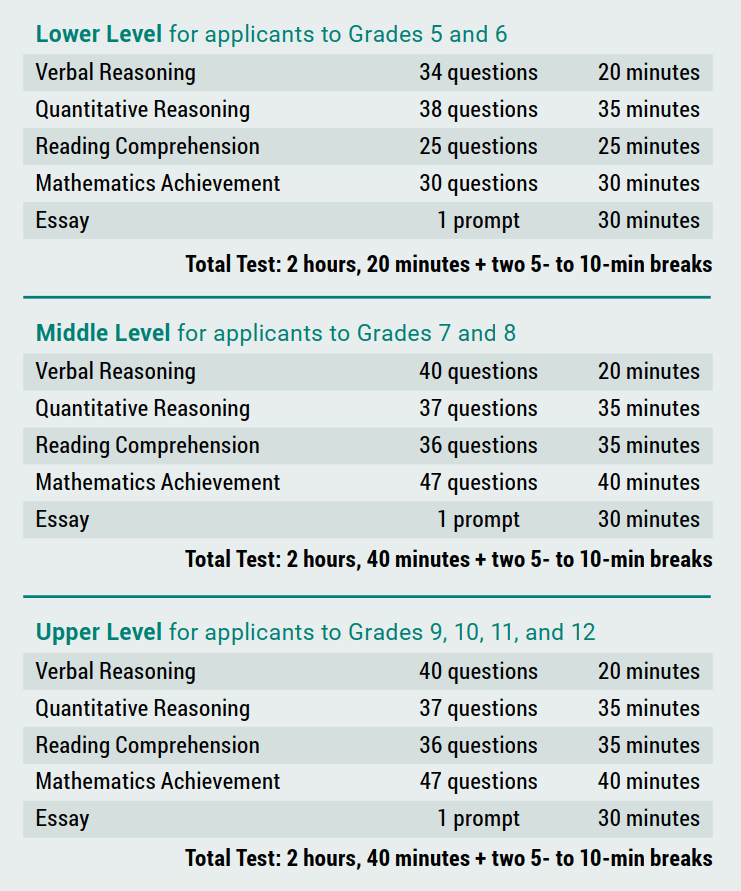
Students applying to Grades 5–12 will take the full ISEE, which includes four main sections:
① Verbal Reasoning:
Assesses your child’s vocabulary knowledge, ability to understand word meanings in context, and sensitivity to subtle differences in word usage.
- Synonyms
- Sentence Completion
② Quantitative Reasoning:
Focuses on mathematical reasoning — not computation. This section tests a student’s ability to apply logic and number sense to solve problems.
- Numbers & Operations
- Algebra
- Geometry
- Measurement
- Data Analysis & Probability
- Problem Solving
③ Reading Comprehension
- Typically includes 5 reading passages from diverse subjects such as: History; Science; Literature; Contemporary life.
- six main question types:
- Main Idea
- Supporting Ideas
- Inference
- Vocabulary
- Organization / Logic
- Tone / Style / Figurative
④ Mathematics Achievement:
Compared to Quantitative Reasoning, this section focuses more on math content knowledge and includes actual calculations. It reflects what students have learned in school and measures their mastery of grade-level math skills.
- Number and Operations
- Algebra
- Geometry
- Measurement
- Data Analysis and Probability
- Problem Solving
⑤ Essay
- Essay (Writing Sample) Students are asked to write a short essay in response to a given prompt.
- The essay is not scored, but it is sent directly to schools along with the ISEE score report. It offers admissions officers a valuable glimpse into a student’s writing ability, thought process, and clarity of expression.
ISEE vs. SSAT: What’s the Difference?
Short Summary:
- ISEE leans heavier on math; SSAT leans heavier on verbal/reading.
- ISEE allows three attempts per year with no guessing penalty; SSAT allows more attempts (8-9 times) but penalizes guessing.
- Both are widely accepted—choose based on the student’s strengths and target schools’ policies.
Detailed Differences
- Usage: ISEE is more common for day schools; SSAT is more common for boarding schools.
- Retake policy: ISEE allows up to 3 times per school year; SSAT allows more attempts across the year.
- Scoring & emphasis: ISEE has two math sections, 50% weight, no guessing penalty. SSAT’s math is one-third of the score with a ¼-point penalty for wrong answers; verbal/reading carry more weight and include analogies and sometimes poetry.
- Verbal item types: ISEE = synonyms + sentence completions; SSAT = synonyms + analogies. Writing: ISEE typically expository; SSAT offers creative or expository prompts.
- Score readouts: ISEE mainly reports stanines (1–9); SSAT emphasizes percentiles.
If you want a more comprehensive comparison between ISEE and SSAT, please see this article: ISEE vs SSAT: Complete Guide for Private School Admissions
Understanding Your ISEE Scores
When and How Will I Receive My Child’s Scores?
After the test, you’ll receive an email notification when the score report is ready. You can access it through your ERB Parent Account.
Estimated score release time:
- Online exams: within 3–5 days
- Paper exams (Grades 2–4): within 7–14 days
- Paper exams (Grades 5–12): within 5–10 days
Which Schools Receive the Scores? Can I Make Changes?
Families can designate schools to receive ISEE scores either during registration, any time before test day, or even after viewing their child’s scores. Once a school is added as a score recipient, it will automatically receive the official score report.
However, once the test begins, you cannot remove recipient schools.
That means: if you select a school to receive scores, it will receive the results from that test.
So before choosing your test season or date, make sure you’ve checked:
- Your target school’s application deadline
- Whether that school requires ISEE scores
- Whether you may want to take the test more than once
What’s Included in the ISEE Score Report?
- Each of the four sections receives a stanine score (1 to 9)
- A corresponding percentile rank is also included
- Higher scores = stronger performance compared to national peers
Schools typically review:
- The overall scores across all four sections
- The student’s essay sample (not scored, but sent with the report)
Want to better understand what’s considered a “good score”? See our full breakdown in What Is a Good ISEE Score — Explanation and Real Cases
How Think Academy Can Help with ISEE Preparation
If your child is preparing for the ISEE — especially the math sections — Think Academy offers targeted support to build both skills and confidence.
Our Proud Results
Over the past year, Think Academy students have achieved outstanding outcomes:
- 91% scored in the Top 10% nationwide on the ISEE
- 86% gained admission to gifted programs, private schools, or other selective tracks
- 95% successfully passed their school’s placement tests
We offer comprehensive K–12 math programs that help students build a strong foundation in number sense, computation, word problems, and competition skills — all essential for ISEE success. Through personalized assessments, we identify each child’s math strengths and areas for growth, and provide tailored guidance on level placement, test season planning, and long-term academic preparation.
Whether your child is aiming for top scores or just getting started, we’re here to support their ISEE journey — and beyond.
ISEE Prep Plan Suggestions
3 Phases to Structure Your ISEE Prep
| Phase | Focus Areas |
|---|---|
| Foundation & Diagnosis | ✅ Understand test level & target schools✅ 1 untimed full mock✅ Build reading, math, vocabulary foundations |
| Targeted Practice | ✅ 2–4 focused sessions per week✅ Error log by type + cause |
| Simulation & Adjustment | ✅ Full mock every 2–3 weeks✅ Pacing practice + question triage✅ Adjust test season or retake plan |
How Much Prep Time Does Your Child Need?
Choose your plan based on your child’s current level and goals:
- 6-Month Plan: Best for families applying to top-tier schools or starting from scratch with foundational skills
- 3-Month Plan: Ideal if your child already has solid school-level math and reading, but needs targeted improvement
- 1-Month Plan: Great for sharpening strategies and building confidence right before test day
Section Challenges
Verbal Reasoning Key Challenges:
- Limited vocabulary
- Subtle synonym differences
- Sentence logic
Quantitative Reasoning Key Challenges:
- Multi-topic problems (number theory + geometry + real-life context)
Reading Comprehension Key Challenges:
- Abstract topics (history, science, argumentative texts)
- Main idea and inference questions
Mathematics Achievement Key Challenges:
- Cumulative knowledge — especially problems that combine fractions, ratios, equations, and geometry.
Essay Key Challenges:
- How to clearly state the main idea and organize paragraphs
Want a detailed breakdown of each ISEE section and an efficient prep strategy? Check out our full guide → How to Prepare for the ISEE: Exam Content and Practice Sets
Smart Test-Taking Strategies
- Do the easy questions first: Skim each section and solve the questions you’re most confident in. Save harder ones for later.
- Learn to let go: If you’re stuck with no idea how to solve a question, don’t spend 3–5 minutes on it — skip and move on.
- Use process of elimination: Especially helpful in Quantitative and Math Achievement to reduce careless mistakes.
- Mark uncertain questions: On the computer-based test, use the flag/mark feature to return to tricky questions at the end.
- Simulate real test conditions: Practice with full-length, timed mock exams — no pausing — to build pacing and stamina.
FAQs
Q1: How many times can my child take the ISEE? Do we have to send every score?
A: Students can take the ISEE once per test season, for a total of up to 3 times per year. If the school requires ISEE scores, you must send them — parents can select schools in the ERB system before or after the test. For “optional” schools, we recommend reviewing the scores first before deciding. ⚠️ Once a test begins, schools already listed as recipients cannot be removed.
Q2: If my child already has SSAT or MAP scores, do we still need the ISEE?
A: It depends on the admissions policy of your target school:
If the school is test-optional or test-free → only submit the strongest score.
If the school requires ISEE → your child will still need to take it.
If the school accepts either SSAT or ISEE → choose based on your child’s strengths and score performance.
Q3: My child has a strong academic foundation — do we still need 6 months to prepare?
A: Not necessarily.
If your child has less test-taking experience or limited reading/vocabulary exposure → we recommend at least 4–6 months to build lasting habits.
If your child is already strong in math and reading, and familiar with standardized testing → a focused 3-month plan with mock exams may be enough.
Q4: If the first test didn’t go well, is it worth retaking?
A: Consider these three things:
Is there time for targeted improvement — not just a second try without a clear plan?
How much time is left before application deadlines? Ideally leave 4–6 weeks.
How far is the current score from your submission goal?
Think Academy: Math Support for ISEE Success
If your child needs support preparing for the ISEE — especially in math — Think Academy is here to help.
Over the past year, 91% of our enrolled students scored in the Top 10% nationally on the ISEE.
We offer comprehensive K–12 math programs that strengthen number sense, computation, word problem solving, and competition skills — building a strong foundation for the ISEE and beyond.
Through personalized assessments, we help families:
- Identify math strengths and gaps
- Choose the right test level and season
- Plan effective prep and long-term math advancement
Let us support your child’s ISEE journey — with strategy, structure, and confidence.
Try Pengi AI — Smarter Math Practice for Students
Pengi AI supports K–12 learners with personalized math practice, guided explanations, and feedback designed to help them build confidence and improve steadily.