Pengi Editor's Note: This article was originally published by Think Academy. We're sharing it here for educational value. Think Academy is a leading K-12 math education provider.
i-Ready, MAP & STAR: Which Test Is Best for Your Child?
Schools across the U.S. use i-Ready, MAP Growth, and STAR Renaissance to track student progress in Math and Reading. Districts usually decide which test is given, so parents cannot choose freely. The key difference is access: while MAP Growth and STAR are school-based (with MAP allowing limited homeschool options), i-Ready can also be taken outside of school through authorized providers like Think Academy.
Understanding how these tests work—and what the scores mean—helps families better interpret results, talk with teachers, and plan learning strategies.
Quick Summary for Busy Parents
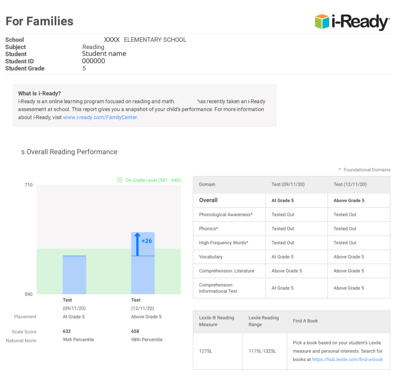
- i-Ready (K–8, some K–12): Adaptive diagnostic plus personalized Math & Reading lessons, given 2–3 times per year. Available in schools and through authorized providers such as Think Academy. Reports include scale scores (100–800), placement levels, and domain performance.
- MAP Growth (K–12): Norm-referenced adaptive test in Math, Reading, Language Usage, and optional Science. Given 2–3 times per year. Reports include RIT scores (140–300), percentile ranks, and growth goals. School-based only, with limited homeschool access via providers like Homeschool Boss.
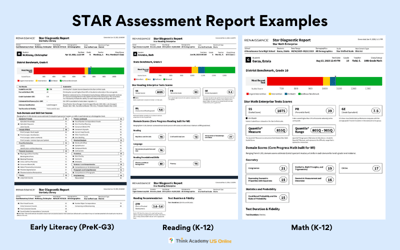
- STAR Renaissance (K–12): Short adaptive tests (15–30 minutes), often monthly. Reports show scaled scores (0–1400), percentiles, and grade equivalents. Strictly school-based; no direct external option.
i-Ready Diagnostic
What it covers
- Math: Numbers & Operations, Algebra, Geometry, Measurement & Data
- Reading: Vocabulary, Literature, Informational Text, Foundational Skills
- Adaptive: Difficulty adjusts after each response
- Unique: Provides personalized lessons after the diagnostic
Format & Scheduling
- 100% online (Chromebooks, iPads, PCs)
- 30–75 minutes per subject
- Administered 2–3 times per year (BOY, MOY, EOY)
Scores
- Scale score: 100–800
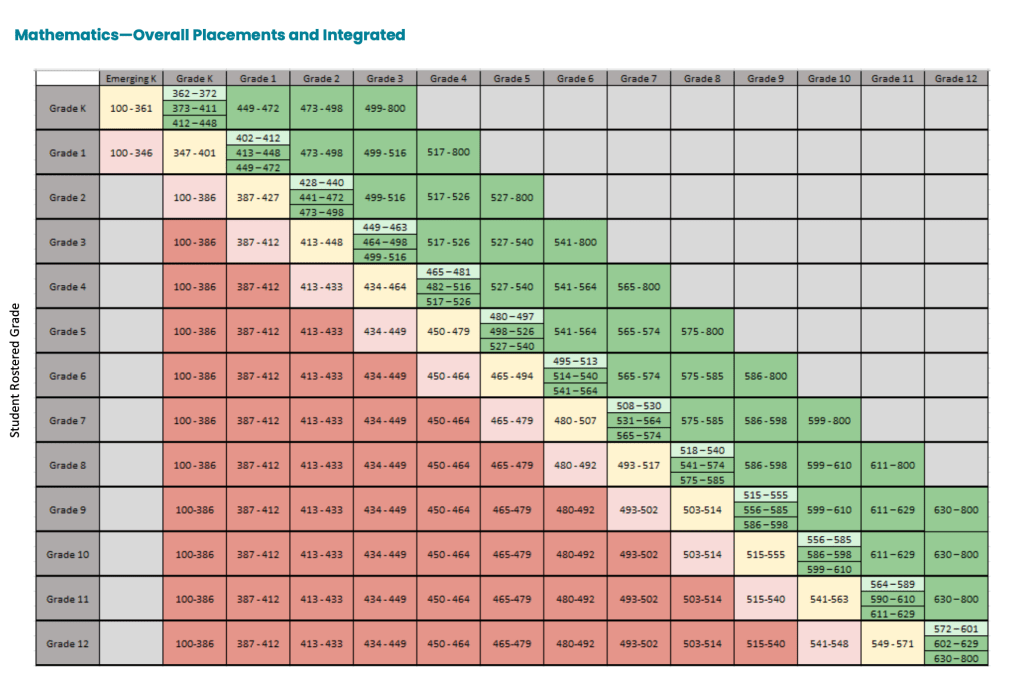
- Reports show Scale score and detailed Score Placement
- Growth trend across windows is the best indicator of progress
Prep for i-Ready
Is your 5th or 6th grader is about to take the i-Ready test for math placement? Our Math Placement Prep Bootcamp includes an official i-Ready test and four live lessons covering essential skills—helping your child assess their level, review key topics, and prepare math placement efficiently.
For more information, see:
- i-Ready FAQs: Complete Guide for First-Time Takers
- i-Ready Diagnostic: Score Access, Interpretation, and Improvement
MAP Growth
What it covers
- Subjects: Math, Reading, Language Usage, optional Science
- Adaptive: Adjusts difficulty after each answer
- Reports: RIT scores, percentiles, growth projections
Format & Scheduling
- Online, 45–60 minutes per subject
- Administered 2–3 times per year
Scores
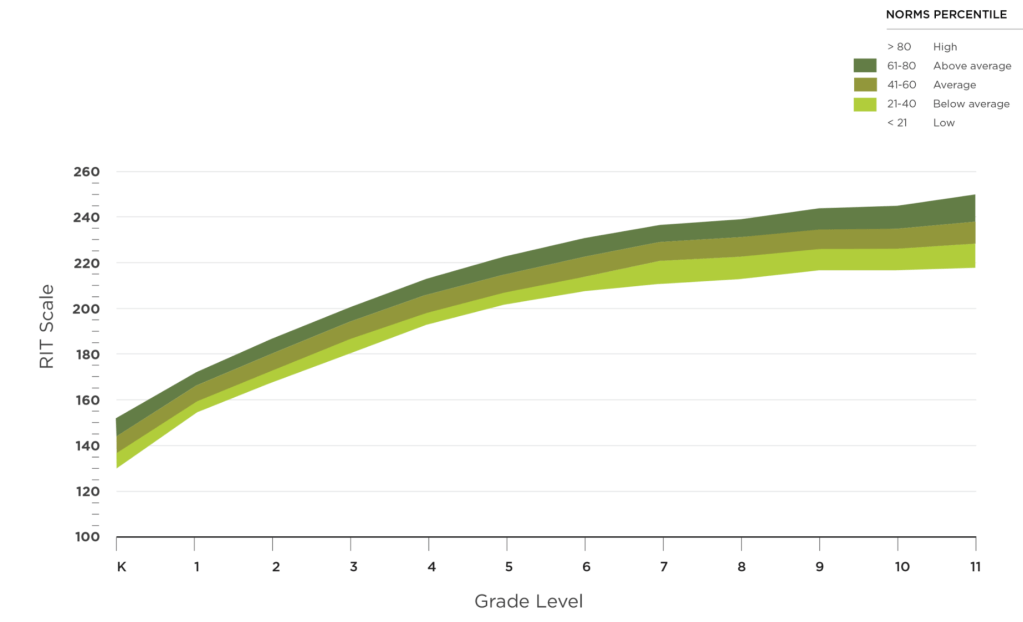
- RIT scale: 140–300
- Example: Grade 5 Math average ≈ 211; 230+ ≈ 90th percentile (advanced)
- Used for growth monitoring and gifted placement decisions
Access
- School-based only; not for direct parent purchase
- Homeschool families can use providers like Homeschool Boss
For more information, see:
NWEA MAP Growth Family Toolkit
STAR Renaissance
What it covers
- Subjects: Reading, Math, Language, optional Early Literacy/Science
- Adaptive, short (15–30 minutes)
Format & Scheduling
- Online, often given monthly for progress checks
- Frequently paired with Accelerated Reader (for reading practice)
Scores
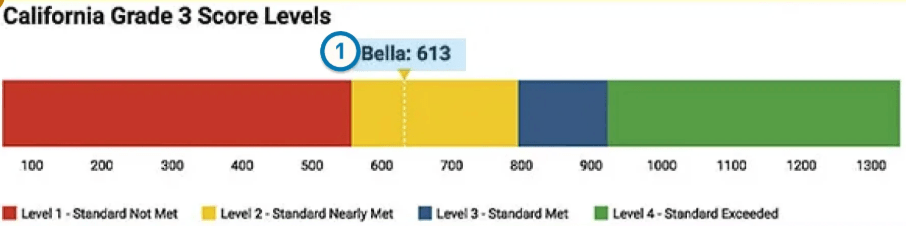
- Scaled score: 0–1400
- Bella’s score of 613 on the Star Reading test results in a placement in Level 2, below the target of Level 3.
- Best for tracking short-term progress
Access
- Strictly school-based; no parent purchase option
For more information, see:
Renaissance STAR Assessments Guide
Comparison at a Glance
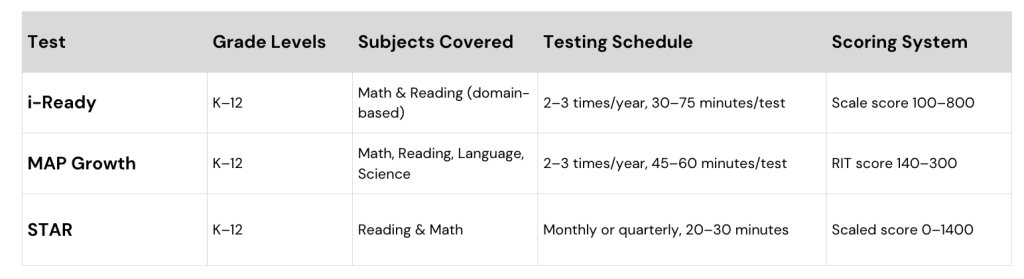
Use this one-view graphic to compare grade spans, schedules, score systems in each program.
Understanding Score Benchmarks
What counts as a “good score” depends on grade level and growth:
- i-Ready: On-level = meeting grade expectations. Above-level may suggest readiness for acceleration.
- MAP Growth: At/above national average = on track; 80th–90th percentile = advanced.
- STAR: Focus on percentile trends across months. Example: Grade 5 Reading score 700+ indicates advanced placement.
| Test | Score Scale | On-Level Example | Advanced Example | Official Benchmark | Officia Report Demo |
|---|---|---|---|---|---|
| i-Ready | 100–800 | Grade 3 Math ≈ 440–500 | Grade 3 student scoring 550+ | i-Ready Diagnostic Grades K–12 Scale Score Placement Tables | How to Interpret i-Ready Scores |
| MAP Growth | 140–300 (RIT) | Grade 5 Reading ≈ 205 | Grade 5 Reading ≥ 220 (~85th percentile) | Normative Data & RIT Scores | Achievement Status & Growth Report (Web Demo) |
| STAR | 0–1400 | 40th percentile = on track | 75th–90th percentile | Star Family Report | Star Assessment Reports – Overview |
Where Are These Tests Used?
- i-Ready: Los Angeles USD, Culver City USD, Torrance USD, Glendale USD, and many districts in Texas, Florida, and New Jersey
- MAP Growth: Chicago Public Schools in Illinois, Seattle in Washington, Clark County in Nevada, KIPP, Success Academy, and many private schools
- STAR Renaissance: Over 60,000 schools nationwide; especially common in Texas, Florida, and Georgia; often paired with Accelerated Reader
Popular Platforms to Prepare
Students don’t need to cram, but some practice helps build comfort:
- i-Ready: Sign in via Login Portal or Clever
- MAP Growth: Sign in via Nwea
- STAR Renaissance: Sign in via Welcome Portal
- Canvas LMS: Canvas often serves as a hub linking to all three.
Choosing the Right Test
Districts decide which test is given; parents rarely choose. However, understanding the differences among i-Ready, MAP Growth, and STAR Renaissance helps families make sense of the reports, collaborate effectively with teachers, and plan meaningful enrichment.
While i-Ready, MAP Growth, and STAR Renaissance all measure student progress, they serve different purposes. i-Ready blends diagnostics with instruction, MAP Growth provides national benchmarking, and STAR offers frequent monitoring.
For additional testing:
- i-Ready: Combines diagnostics with personalized instruction and is available through authorized providers such as Think Academy.
With Think Academy’s support—including official i-Ready diagnostics available outside school schedules—families can turn test results into a roadmap for academic success.
How Think Academy Can Help
If you already know that your school uses i-Ready scores for math placement and you want your child to qualify for the advanced math track, preparation is key. We have designed our Math Placement Prep Bootcamp specifically for 5th and 6th graders to help them get ahead and feel confident.
Math Placement Prep Bootcamp
The Think Academy Math Placement Prep Bootcamp is tailored for Grade 5 and Grade 6 students preparing for upcoming placement exams. Our course focuses on both key concepts and test readiness, ensuring students build a solid foundation before test day.
Here is what the bootcamp includes:
- Free Access to Official i-Ready Assessment
We provide an initial assessment to pinpoint your child’s current math level. This helps identify their strengths and weaknesses across different modules, allowing for more targeted and effective practice.
- Four Live Sessions (2 Hours Each)
Cover the four essential placement test modules: Computation, Algebra, Geometry, and Statistics. Our teachers will provide personalized post-class follow-ups to help students master core concepts and spot areas for improvement.
- Clear Middle-to-High School Math Roadmap
Beyond the test, we can provide a clear long-term plan to guide your child’s math journey from middle school through high school.
Try Pengi AI — Smarter Math Practice for Students
Pengi AI supports K–12 learners with personalized math practice, guided explanations, and feedback designed to help them build confidence and improve steadily.