Pengi Editor's Note: This article was originally published by Think Academy. We're sharing it here for educational value. Think Academy is a leading K-12 math education provider.
Trapezoids: Definition, Fun Facts & Real-Life Uses
From bridges and handbags to the muscles in your back, trapezoids are everywhere. For many students, the shape first appears in math class with the area of a trapezoid formula. But this four-sided figure carries a much deeper story—spanning geometry, language, architecture, and even anatomy.
Why is it called a trapezoid? Who discovered its area formula? And why should students still care today? Let’s trace the journey of the trapezoid.
What Is a Trapezoid in Math? Definitions and Types
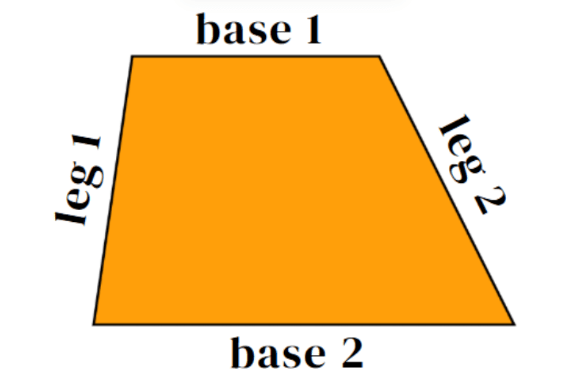
In geometry, a trapezoid is a quadrilateral with exactly one pair of parallel sides.
- The parallel sides are the bases.
- The non-parallel sides are the legs.
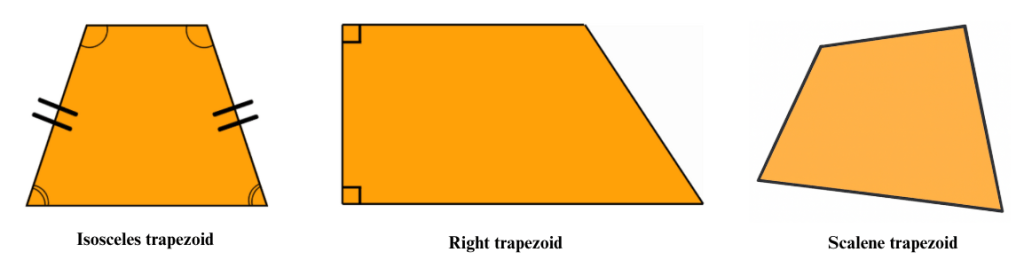
Mathematicians classify trapezoids into official types:
- Isosceles trapezoid: Legs are equal, and base angles are congruent.
- Right trapezoid: At least one leg is perpendicular to a base.
- Scalene trapezoid: No sides or angles are equal.
This definition usually appears in middle school geometry, where trapezoids help bridge triangles, parallelograms, and more advanced polygons.
Why Is It Called a Trapezoid?

The word “trapezoid” has Greek origins:
- Trapeza = “table”
- -oid = “shaped”
Ancient Greek geometers coined the name because the figure resembled a table. The diminutive trapezion meant “little table“. Later, the Romans Latinized it into trapezium.. Today, usage differs:
- In American English, “trapezoid” = quadrilateral with one pair of parallel sides.
- In British English, the same shape is called “trapezium.”
Who Discovered the Trapezoid Formula?
The trapezoid area formula is credited to Hero of Alexandria (1st century AD), a Greek mathematician and engineer. In his famous work Metrica, Hero recorded practical methods for calculating the areas of many shapes—linking mathematics to real-world surveying and construction.
His reasoning was simple yet powerful:
- Place two trapezoids together to form a parallelogram.
- A parallelogram’s area = base × height.
- Divide by 2 to obtain the trapezoid’s area.
Thus, the formula emerges:
\[ A = \frac{1}{2} \times (b_{1} + b_{2}) \times h \]
Where
- 𝑏₁ and 𝑏₂ are the parallel bases
- ℎ is the height (perpendicular distance between the bases).
This elegant proof remains in classrooms today—showing how an idea from 2,000 years ago still underpins modern geometry.
For step-by-step guidance and examples, see our full guide: Area of a Trapezoid – Definition, Formula, and Example.
Trapezoids in Ancient Civilizations
Long before Hero, Egyptians used trapezoids to measure farmland for taxation and irrigation. By dividing irregular plots into trapezoids and rectangles, surveyors linked geometry with governance.
Over centuries, trapezoids became a staple figure in geometry texts worldwide—serving as a bridge between pure math and practical measurement.
Trapezoids Around Us: Real-Life Examples
Once you notice trapezoids, they appear everywhere:
- Architecture & Engineering: Bridges use trapezoid supports for stability; roofs and dams rely on trapezoid angles for water flow.
- Everyday Objects: Popcorn tubs, handbags, lampshades, and even furniture use trapezoid outlines.
- Art & Design: Artists use trapezoid perspectives to create depth, like receding hallways in paintings.


One famous example is the Golden Gate Bridge, whose trapezoid-shaped towers and supports combine strength with iconic beauty.

The Trapezoid in the Human Body
Geometry isn’t just abstract—it’s in us:
- Trapezoid body shape: Broad shoulders and chest tapering to a narrower waist resemble a trapezoid outline.
- Trapezius muscle (often called the trapezoid muscle): A large back muscle that supports posture, lifting, and shrugging.
- Trapezoid bone: One of the eight carpal bones in the wrist, enabling precise thumb movement.
These examples remind us that shapes aren’t abstract—they are biological.
Why the Trapezoid Still Matters
At first glance, the trapezoid might seem like “just another shape.” But it represents the link between abstract reasoning and everyday life:
- For students: Learning trapezoids sharpens spatial reasoning, proof skills, and problem-solving.
- For everyone: Trapezoids quietly support the bridges we cross, the objects we use, and even the muscles that move us.
So the next time you shrug, cross a bridge, or grab a bag—remember, you’re living in a world shaped by trapezoids.
Trapezoids are just the beginning. Middle school geometry is full of shapes and formulas that connect math to the real world. If your child is exploring geometry, here are more topics with free worksheets to keep building their skills:
Additional Math Topics for Grade 6 – With Free Worksheets
More Middle School Geometry Resources Ready for You
We’ve created a full library of printable resources — from foundational math to logic-based challenges — organized by grade to support every stage of your child’s journey.
Explore the K–12 Worksheets Hub
Think Academy Math Program
If you’re looking to build on math strengths or close math gaps, we offer comprehensive K–12 math programs designed to:
- Catch up: Fill in gaps and strengthen foundational skills
- Stay ahead: Maintain a competitive edge and accelerate math progress
- Go further: Take on challenge math competitions, Math kangaroo, AMC competitions
Next Step: Take a personalized evaluation to understand your child’s current math progress and get a tailored roadmap for courses, pacing, and goals.
Try Pengi AI — Smarter Math Practice for Students
Pengi AI supports K–12 learners with personalized math practice, guided explanations, and feedback designed to help them build confidence and improve steadily.